Kejriwal Gives BJP Goa a July 31 Ultimatum on Free Power
Synopsis
AAP convenor Arvind Kejriwal on 16 June 2026 gave Goa's BJP government a 31 July deadline to provide 300 units of free monthly electricity, waive household arrears up to 15 June, and ensure 24-hour uninterrupted power — or face street protests.
Key Takeaways
Kejriwal issued the ultimatum on 16 June 2026 , demanding action by 31 July 2026 .
Demand 1: 300 units of free electricity every month for every Goan family.
Demand 2: Waiver of all electricity bill arrears up to 15 June 2026 .
Demand 3: 24-hour uninterrupted power supply across Goa with no cuts.
AAP has threatened to launch street agitations if the BJP government in Goa does not comply by the deadline.
The demands echo AAP's Delhi electricity subsidy model launched in 2015, here scaled up to 300 units.
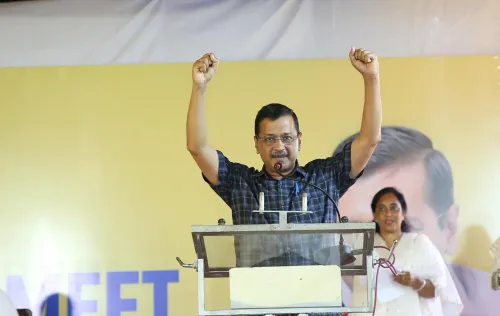
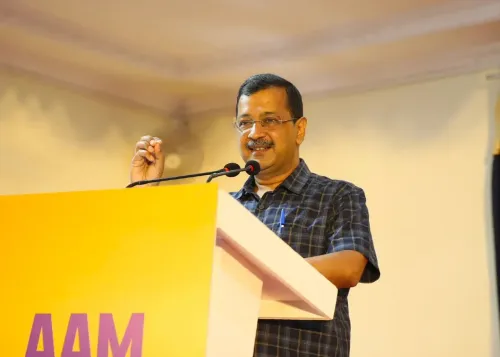
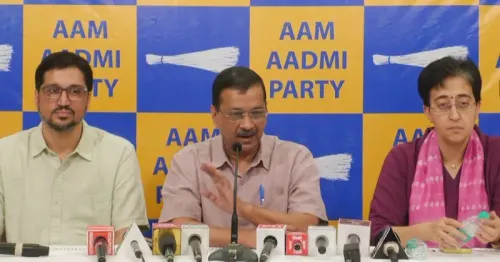
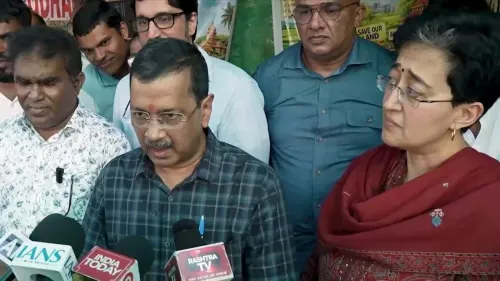
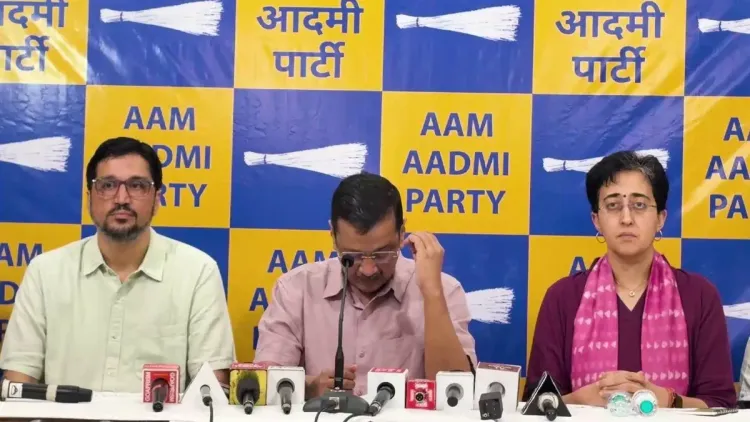
AAP convenor Arvind Kejriwal on Tuesday, 16 June 2026 issued a three-point ultimatum to the BJP government in Goa, demanding free electricity, waiver of pending bills, and round-the-clock power supply — and warning of street protests if the demands are not met by 31 July 2026.
Context
Posting on X, Kejriwal listed three demands he said were being raised 'on behalf of the people of Goa' (गोवा के लोगों की ओर से). First, every family should receive 300 units of free electricity every month. Second, all electricity bill arrears up to 15 June should be waived for all households. Third, Goa should receive 24-hour uninterrupted power supply with no cuts.
He added that if these demands are not implemented by 31 July, the Aam Aadmi Party will take to the streets to secure relief for the public (जनता को राहत दिलाने के लिए सड़कों पर उतरकर आंदोलन करेगी).
Policy Backdrop
AAP has a documented record of using electricity subsidies as a flagship welfare instrument. In 2015, the party's Delhi government introduced a scheme providing up to 200 units of free electricity per month to domestic consumers — a model it has since tried to export to states where it contests elections. The demand of 300 units in Goa represents an upward revision of that benchmark.
Goa, though one of India's smaller and relatively prosperous states, has seen periodic debates over power tariffs and distribution reliability. The BJP has held power in the state and faces opposition pressure on service-delivery issues, particularly in the run-up to electoral cycles.
Stakeholders and Impact
The demands, if accepted, would directly benefit Goan households carrying pending electricity dues and those experiencing supply disruptions. A blanket arrears waiver covering bills up to 15 June 2026 would have fiscal implications for the state's power distribution utility, though the exact quantum of outstanding dues has not been independently verified.
For AAP, the ultimatum fits a well-established pattern: issue a time-bound welfare demand against a rival BJP government, build local visibility, and use any non-compliance as a mobilisation trigger. The party has contested Goa assembly elections before and is keen to deepen its organisational footprint in the state.
What's Next
All eyes are now on the Goa government's response before the 31 July 2026 deadline. If the BJP administration does not act, AAP has signalled it will launch an on-ground agitation — a move that could test the party's street strength in a state far from its Delhi and Punjab bases. How the ruling party responds, and whether it offers any partial concession on tariffs or arrears, will determine the political temperature in Goa heading into the second half of 2026.
Point of View
Making non-compliance a protest trigger and compliance a political win either way. By pitching 300 units — higher than AAP's own Delhi benchmark of 200 units — the party signals it is willing to outbid incumbents on subsidy generosity to build Goa traction. The July 31 deadline is politically calibrated: it gives the BJP little room to manoeuvre quietly while keeping AAP in the news cycle through summer. Whether this translates into genuine organisational strength on the ground in Goa, or remains a social-media pressure tactic, will be the real test of the party's state-level ambitions.
NationPress
15 Sept 2026
Frequently Asked Questions
What are Kejriwal's three electricity demands for Goa?
Kejriwal has demanded that every Goan family receive 300 units of free electricity per month, that all household electricity bill arrears up to 15 June 2026 be waived, and that Goa receive 24-hour uninterrupted power supply with no cuts.
What happens if Goa's BJP government does not meet AAP's demands by 31 July 2026?
Kejriwal has warned that AAP will take to the streets and launch a public agitation in Goa if the three electricity demands are not implemented by 31 July 2026.
Why is AAP demanding 300 units of free electricity in Goa?
AAP is seeking to replicate and expand its Delhi welfare model — which offers up to 200 units free per month — to Goa, framing the demand as relief for ordinary households burdened by bills and power cuts.
Does AAP currently govern Goa?
No. Goa is currently governed by the BJP. AAP has contested Goa assembly elections in the past and is building its presence in the state through welfare-focused campaigns like this one.
What is AAP's track record on free electricity?
AAP introduced a free electricity scheme in Delhi in 2015, providing up to 200 units per month to domestic consumers. The party has used similar promises as an electoral and agitation tool in other states where it challenges the BJP.