Rijiju: Cabinet clears ₹1,491-cr postal estates scheme
Synopsis
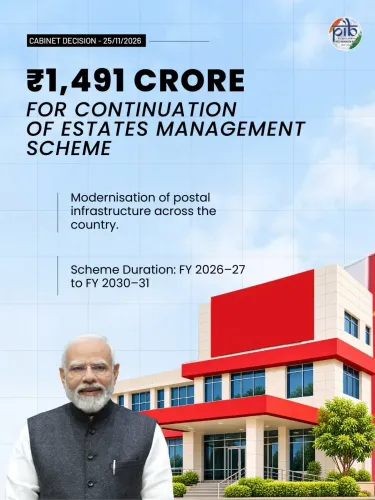
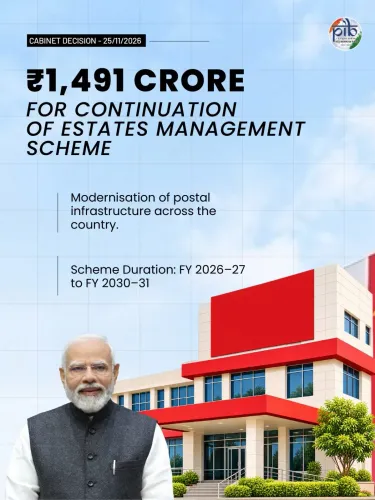
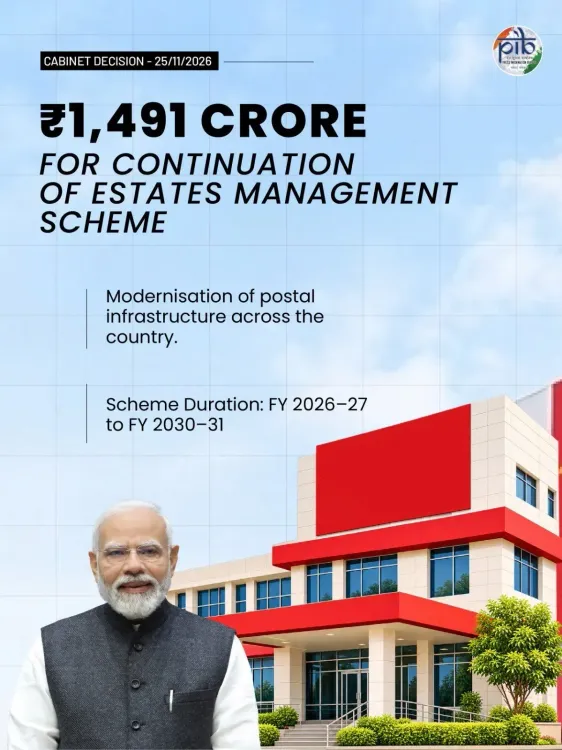
Union Parliamentary Affairs Minister Kiren Rijiju announced that the Union Cabinet, under Prime Minister Narendra Modi, has approved continuation of the Estates Management Scheme for the Department of Posts with an outlay of ₹1,491 crore, aimed at managing and maintaining postal properties.
Key Takeaways
Union Parliamentary Affairs Minister Kiren Rijiju announced the Cabinet decision on 25 November 2026 .
The Union Cabinet approved continuation of the Estates Management Scheme for the Department of Posts.
The approved outlay is ₹1,491 crore .
The scheme covers management and maintenance of properties and estates belonging to the Department of Posts.
Prime Minister Narendra Modi was cited as heading the government that took the decision.
The buildings that keep India's postal network standing just got a fresh financial lease. Union Parliamentary Affairs Minister Kiren Rijiju said on 25 November 2026 that the Union Cabinet, under Prime Minister Narendra Modi, had approved continuation of the Estates Management Scheme for the Department of Posts with an outlay of ₹1,491 crore. The nod is about keeping roofs, counters and staff quarters in working order — not launching a new flagship.
Rijiju wrote: 'Under the leadership of Hon'ble PM Shri @narendramodi ji, the Union Cabinet approves the continuation of the Estates Management Scheme for the Department of Posts with an outlay of ₹1,491 crore.' The Department of Posts, under the Ministry of Communications, is the central arm that runs India's postal services and owns the physical estate those services sit in.
₹1,491 crore for a working postal estate
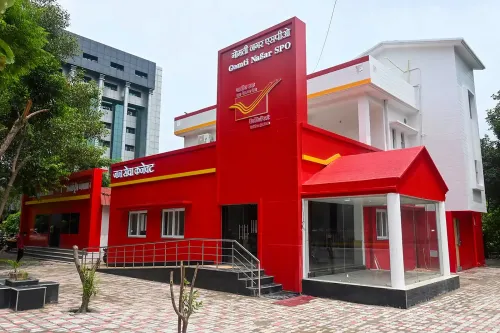
Estates management here means the unglamorous work: repairs, upkeep, and day-to-day control of properties. Post offices, administrative blocks, and housing for postal staff make up a nationwide footprint. When funding lapses, maintenance slips. A continuation approval is how the Union government tries to stop that slip.
Cabinet decisions of this type are routine administrative practice. They exist so public-sector operations do not freeze between budget cycles. The Department of Posts has seen periodic funding for modernisation and asset management under successive governments. This latest outlay sits in that line — sustain the stock, avoid disruption.
Postal staff and the buildings they work in
The immediate stakeholders are postal staff. A scheme that funds estates is, in practice, a scheme that funds the places they work and, in many cases, live. For a department still present in remote tehsils, a usable building is the difference between a service that opens and one that does not.
The Cabinet note does not, by itself, list project-wise allocations or a repair calendar. Those details typically follow in departmental orders and utilisation reports.
After the nod, the paper trail
What follows is not another announcement. It is rollout timelines, fund-utilisation reports, and whether the outlay reappears, recast, in a future Union Budget or a parliamentary discussion. Continuity on paper is easy. Continuity on a leaking sorting-office roof is the test.
India's postal network still doubles as the state's last-mile presence in places private logistics barely reach. The Cabinet has signed a ₹1,491 crore continuation. The next story is whether that money becomes masonry, wiring, and rooms that stay dry.
Point of View
That physical stock is still the last-mile state in large parts of India, which is why a ₹1,491 crore nod is more than a line item. The political test is utilisation — whether repairs reach staff quarters and working counters, not whether the Cabinet note was issued. Watch the next Budget cycle and parliamentary scrutiny for whether this outlay is treated as routine housekeeping or folded into a wider postal modernisation push.
NationPress
25 Nov 2026
Frequently Asked Questions
What did the Union Cabinet approve for the Department of Posts?
The Union Cabinet approved continuation of the Estates Management Scheme for the Department of Posts with an outlay of ₹1,491 crore. Union Parliamentary Affairs Minister Kiren Rijiju announced the decision on 25 November 2026.
What is the Estates Management Scheme?
It is a scheme for the management and maintenance of properties and estates belonging to the Department of Posts. That department, under the Ministry of Communications, runs India's postal services and the buildings those services occupy.
Who announced the Cabinet decision on the postal estates scheme?
Union Parliamentary Affairs Minister Kiren Rijiju announced it, crediting the leadership of Prime Minister Narendra Modi. He posted the outlay figure of ₹1,491 crore along with the continuation approval.
How much money was approved for the Estates Management Scheme?
The approved outlay is ₹1,491 crore. The figure is for continuation of the scheme for the Department of Posts, not a newly named programme.
Why does the Department of Posts need an estates scheme?
The department maintains a large stock of post offices, administrative buildings and staff housing that require continuous upkeep. Continuation funding is meant to keep those assets usable so postal operations and staff facilities are not disrupted.