Arunachal Home Minister: preserve identity with development
Synopsis
Arunachal Home Minister Mama Natung told the Neri Welfare Society at Pakoti that indigenous culture, customs and languages must be protected even as youth gain education and skills. He framed identity and development as one agenda, not a trade-off, and posted the same message on X.
Key Takeaways
Arunachal Pradesh Home Minister Mama Natung on 25 November urged preservation of indigenous culture, customs and languages alongside development.
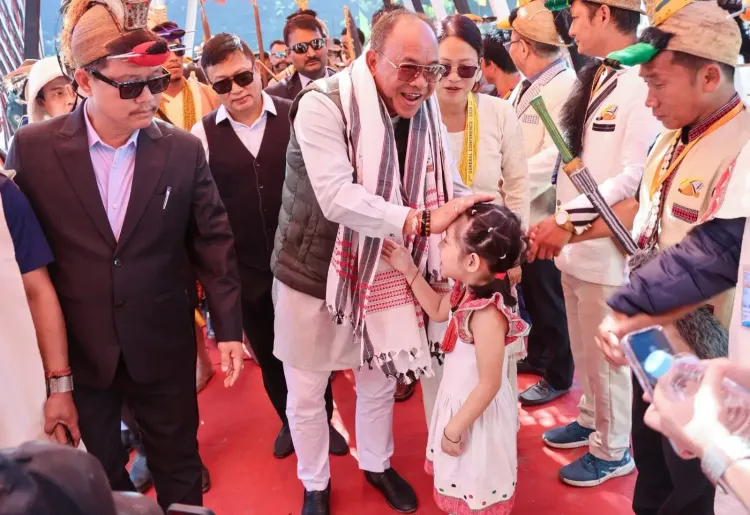
He spoke at the second general conference of the Neri Welfare Society at Pakoti in East Kameng district.
Natung stressed education and skill development to build a self-reliant younger generation.
The Neri Welfare Society was established in 2015 to promote unity, cultural preservation and welfare of the Neri community.
Attendees included MLAs Ealing Tallang and Kumar Waii , NWS chairman Professor Radak Blange Neri , and SCITeG chairman Nyamar Karbak .
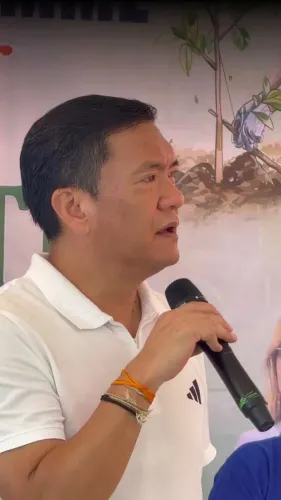
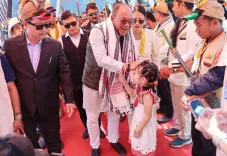
Arunachal Pradesh Home Minister Mama Natung on 25 November called for concerted efforts to preserve indigenous culture, customs and languages while empowering the younger generation through education and skill development. Addressing the second general conference of the Neri Welfare Society (NWS) at Pakoti in East Kameng district, he said cultural identity must move in step with social and economic progress. Natung, who also holds Inter-State Border Affairs, Public Health Engineering and Water Supply, and the Department of Indigenous Affairs (DIA), placed community-based organisations at the centre of that agenda.
Key remarks at the Pakoti conference
The Home Minister highlighted the role of community-based organisations in safeguarding cultural heritage, strengthening social unity and promoting community welfare. He urged the NWS to keep working towards the social, educational and economic advancement of the Neri community, arguing that unity and public awareness were essential for sustainable progress.
Natung called for greater collective participation in community initiatives. He expressed confidence that the NWS would remain a platform for preserving traditional values while creating better opportunities for future generations, and extended his best wishes for its community-development work.
This comes amid a wider debate in the hill state over how roads, markets and schooling in dominant languages can expand without eroding smaller tribal identities. Notably, Natung’s DIA charge puts him at the administrative intersection of culture and development, rather than as a guest speaker offering ceremonial greetings alone.
Education and skills for a self-reliant society
Emphasising the need to prepare young people for future challenges, the minister said education and skill development were crucial to building a self-reliant society. The same message was posted on his official X account, where he wrote: “I also emphasised the importance of education and skill development in empowering the younger generation and building a self-reliant society. My best wishes to NWS for its continued commitment to preserving its rich heritage and advancing the welfare and progress of the Neri community.”
The pairing of heritage with employable skills is a familiar template across the Northeast, where out-migration of educated youth and pressure on local languages are frequently flagged by community bodies. Natung’s formulation treats those as linked problems: a community that cannot transmit its customs, he suggested, will also struggle to organise for economic advancement.
Role of the Neri Welfare Society
The Neri Welfare Society is a community-based organisation in Arunachal Pradesh established in 2015 to promote unity, cultural preservation, and social and economic welfare among the Neri community. The second general conference at Pakoti was positioned as a stocktake of that mandate.
Associations of this kind often fill gaps the state cannot easily reach — from customary dispute resolution to language transmission — particularly in districts such as East Kameng, where settlements are dispersed. Natung’s appeal for the NWS to stay focused on social, educational and economic goals amounts to an official endorsement of that parallel civic architecture.
Who attended and what happens next
The conference was attended by Seppa East MLA Ealing Tallang, Bameng MLA Kumar Waii, NWS chairman Professor Radak Blange Neri, State Council for IT and e-Governance (SCITeG) chairman Nyamar Karbak and other dignitaries. The presence of both local legislators and the SCITeG chair suggests the society is being engaged not only as a cultural body but as a partner on education, digital access and welfare delivery.
What follows will depend on whether the NWS converts the ministerial endorsement into concrete programmes — language work, scholarships, skill camps — and whether the DIA backs those with policy support. For Neri households in East Kameng, the test is practical: whether the next generation can stay rooted in custom and still find work. Community leaders and officials will be watched for follow-up meetings and scheme linkages after the Pakoti conference.
Point of View
And conference rhetoric will not close that gap by itself. The test is whether the Department of Indigenous Affairs turns ‘identity with development’ into language work, school content and livelihood schemes that Neri families can actually use. Without measurable follow-up, the slogan joins a long list of Northeast speeches that praised heritage while leaving the hard policy work unspecified.
NationPress
25 Nov 2026
Frequently Asked Questions
What did Arunachal Home Minister Mama Natung say at the Neri conference?
Mama Natung called for concerted efforts to preserve indigenous culture, customs and languages while empowering youth through education and skill development. He told the Neri Welfare Society at Pakoti that cultural identity must go hand in hand with development.
What is the Neri Welfare Society?
The Neri Welfare Society is a community-based organisation in Arunachal Pradesh established in 2015. It works to promote unity, cultural preservation, and social and economic welfare among the Neri community.
Why did Natung stress education and skill development?
Natung said education and skill development were crucial to preparing young people for future challenges and building a self-reliant society. He linked those tools to community welfare rather than treating heritage and jobs as separate goals.
Who attended the NWS conference at Pakoti?
The conference was attended by Seppa East MLA Ealing Tallang, Bameng MLA Kumar Waii, NWS chairman Professor Radak Blange Neri, SCITeG chairman Nyamar Karbak and other dignitaries. Natung addressed the second general conference of the society in East Kameng district.
Which portfolios does Mama Natung hold besides Home?
Besides Home, Natung oversees Inter-State Border Affairs, Public Health Engineering and Water Supply, and the Department of Indigenous Affairs. That mix places him at the junction of security, basic services and cultural policy in Arunachal Pradesh.