CM Pema Khandu Backs High Level Panel on Demographic Change

Synopsis
Arunachal Pradesh CM Pema Khandu has welcomed the Union Government's High Level Committee on Demographic Change, framing indigenous identity protection and national security as inseparable for border states like Arunachal Pradesh. He credited PM Modi and Home Minister Amit Shah for addressing long-standing North Eastern concerns with 'sensitivity and commitment.'
Key Takeaways
CM Pema Khandu publicly welcomed the Centre's decision to constitute a High Level Committee on Demographic Change on May 26, 2026 .
Khandu credited PM Narendra Modi and Home Minister Amit Shah for addressing border and North Eastern states' concerns with sensitivity.
Arunachal Pradesh maintains the Inner Line Permit (ILP) system to regulate entry and protect tribal demographics in the state.
The move follows a policy lineage including the Assam Accord (1985) , the NRC exercise in Assam (2019) , and the Citizenship Amendment Act (2019) .
The committee's composition, terms of reference and reporting timeline have not yet been officially announced.
Indigenous communities across the North East are the primary stakeholders, with demographic balance tied to land rights and cultural continuity.
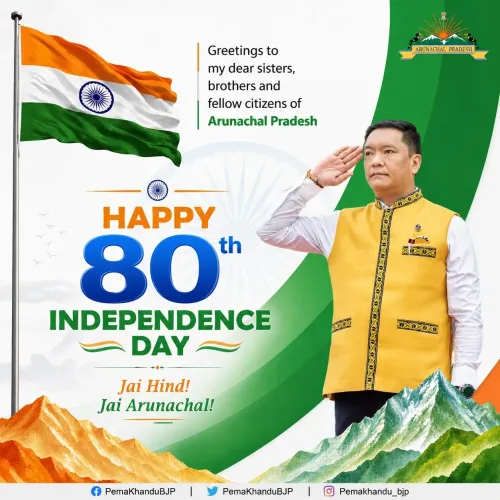
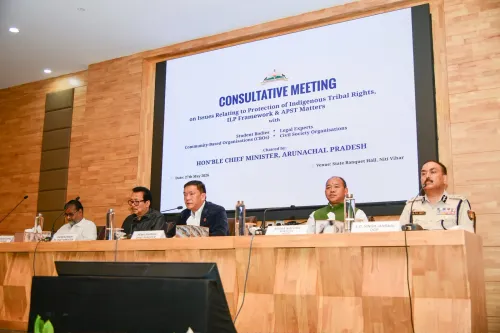
Arunachal Pradesh Chief Minister Pema Khandu on Tuesday, May 26, 2026, welcomed the Union Government's decision to constitute a High Level Committee on Demographic Change, calling it a measure of 'foresight and seriousness' towards an issue with long-term national implications. Khandu credited Prime Minister Narendra Modi and Union Home Minister Amit Shah for addressing the demographic and security concerns of border and North Eastern states. The statement signals strong backing from a key frontier state for the Centre's evolving policy framework on indigenous identity and border demography.
Context
In his post, CM Khandu argued that 'national security and protection of indigenous identity are deeply connected, especially for border states and the North East.' He described safeguarding 'cultural heritage, demographic balance and social harmony' in states like Arunachal Pradesh as 'not merely a policy matter, but a responsibility towards future generations.' The statement frames demographic change not as an administrative concern alone, but as a civilisational one for frontier communities.
Arunachal Pradesh shares sensitive boundaries with China and has long maintained the Inner Line Permit (ILP) system, which requires non-residents — including Indian citizens from other states — to obtain a permit before entering. The ILP is widely regarded as the primary regulatory instrument protecting the state's tribal demographics from rapid demographic shifts.
Policy Backdrop
The formation of the High Level Committee on Demographic Change fits into a broader policy arc that the Union Government has pursued since 2014, connecting border security, immigration control and preservation of indigenous identities across the North East. This lineage includes the Assam Accord of 1985, which committed the Centre to detecting and deporting illegal immigrants while protecting indigenous interests, and the completion of the National Register of Citizens (NRC) exercise in Assam in 2019.
The Citizenship Amendment Act (CAA) of 2019 triggered widespread protests across North Eastern states, with communities expressing concern that accelerated pathways to citizenship could deepen demographic pressures on indigenous populations. The constitution of a dedicated high-level panel signals that the Centre is seeking a structured, cross-state response to these anxieties rather than addressing them piecemeal.
Stakeholders and Impact
Indigenous communities across the North East — including tribal groups in Arunachal Pradesh, Assam, Manipur and Nagaland — are the primary stakeholders in any policy outcome from the committee. For these communities, demographic balance is inseparable from land rights, cultural continuity and political representation. Border state governments have repeatedly argued that unchecked migration from neighbouring countries, particularly Bangladesh and Myanmar, poses a structural threat to social harmony.
The committee's work is also likely to intersect with ongoing fencing projects along India's borders with Bangladesh and Myanmar, as well as pending NRC exercises in other North Eastern states. CM Khandu's public endorsement adds political weight to the initiative and may encourage other North Eastern chief ministers to formally align with the Centre's approach.
What's Next
The composition of the High Level Committee, its terms of reference and its reporting timeline remain to be officially announced. Observers will watch closely for whether the panel's mandate extends to legislative recommendations — such as expanding the Inner Line Permit regime or updating the NRC framework — or focuses on administrative and enforcement measures. Any recommendations touching on citizenship, migration or land rights in the North East are likely to generate significant political debate across party lines.
For Arunachal Pradesh, the broader implication is clear: the state's leadership sees the committee as a long-overdue institutional mechanism to address concerns that local governments have raised for decades. How the Centre translates the panel's eventual findings into actionable policy will determine whether frontier communities feel their demographic anxieties have been heard and acted upon.
Point of View
He elevates the issue beyond electoral politics and into the register of statecraft, making it harder for opposition voices to frame the panel purely as a majoritarian exercise. The statement also reflects a consistent pattern among BJP-governed North Eastern states of co-authoring the Centre's border-security narrative rather than merely receiving it. Whether the committee produces actionable policy or remains symbolic will ultimately test the credibility of this political alignment.
NationPress
10 Oct 2026
Frequently Asked Questions
What is the High Level Committee on Demographic Change in India?
The High Level Committee on Demographic Change is a body constituted by the Union Government under Prime Minister Narendra Modi and Home Minister Amit Shah to examine demographic shifts, particularly in border and North Eastern states, and recommend measures to protect indigenous identities and social harmony. Its exact composition and terms of reference have not yet been officially announced.
Why is demographic change a concern for Arunachal Pradesh?
Arunachal Pradesh is a border state sharing boundaries with China and has a predominantly tribal population. The state uses the Inner Line Permit system to regulate entry of outsiders, reflecting long-standing concerns that unchecked migration could alter the cultural, social and demographic character of indigenous communities.
What is the Inner Line Permit and which states use it?
The Inner Line Permit is a travel document required by Indian citizens from other states to enter certain North Eastern states including Arunachal Pradesh, Nagaland, Mizoram and Manipur. It is a colonial-era instrument retained to protect indigenous tribal populations from demographic and cultural dilution.
How does the High Level Committee relate to the NRC and CAA?
The committee is the latest in a series of Union Government measures addressing demographic concerns in the North East, following the National Register of Citizens exercise completed in Assam in 2019 and the Citizenship Amendment Act of 2019, which itself triggered protests over fears of demographic change in the region.
What did CM Pema Khandu say about the demographic change committee?
CM Pema Khandu welcomed the committee's constitution, saying it reflects 'foresight and seriousness' from PM Modi and Home Minister Amit Shah. He stated that safeguarding cultural heritage, demographic balance and social harmony in border states is 'a responsibility towards future generations,' not merely a policy matter.