CM Pema Khandu Meets AAPSU on Indigenous Rights
Synopsis
Arunachal Pradesh Chief Minister Pema Khandu met the new AAPSU executive body led by President Meje Taku on June 2, 2026, declaring the protection of indigenous rights 'non-negotiable' and pledging united government–student body action on the state's identity and land concerns.
Key Takeaways
CM Pema Khandu met the Central Executive Body of AAPSU on June 2, 2026 in the first official interaction with the newly formed student union leadership.
The Chief Minister declared protecting indigenous rights, identity, and future 'absolutely non-negotiable.' AAPSU President Meje Taku led the student delegation in discussions described as 'candid, constructive and focused.' Both the state government and AAPSU affirmed a united stance on safeguarding indigenous communities in Arunachal Pradesh .
Arunachal Pradesh is protected by the Inner Line Permit (ILP) system, one of India's strongest tribal residency safeguards, which remains central to such dialogues.
Follow-up legislative or administrative action — such as joint committees on land and residency — is expected to be the key measure of outcomes from this meeting.
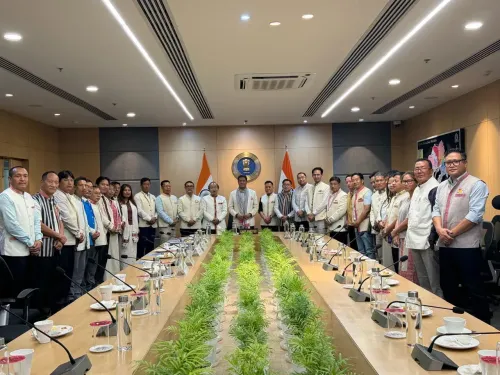
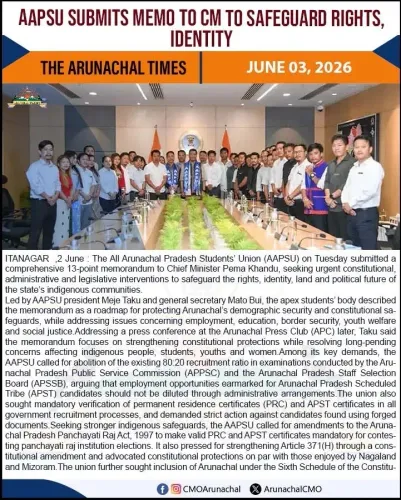
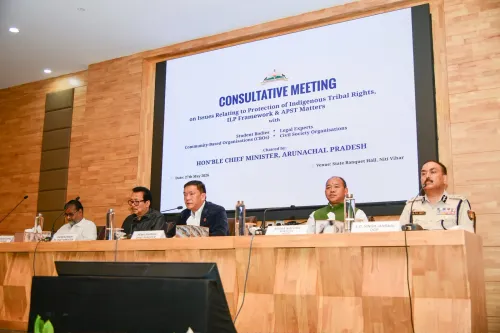
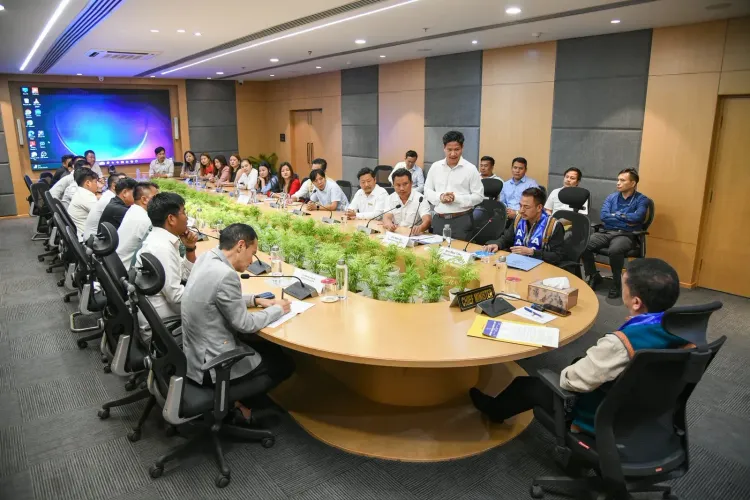
Arunachal Pradesh Chief Minister Pema Khandu on Tuesday, June 2, 2026, reaffirmed that protecting the rights, identity, and future of the state's indigenous people is 'absolutely non-negotiable,' following a formal meeting with the Central Executive Body of the All Arunachal Pradesh Students' Union (AAPSU), led by its newly elected President Meje Taku.
Context
In a post on X, CM Khandu described the meeting as 'highly productive' and noted it was the first official interaction between his administration and the new AAPSU executive body. He said the discussions were 'candid, constructive and focused on issues that have a direct bearing on the future of our State.' The Chief Minister emphasised that the state government and AAPSU 'stand firmly united' on the mission to safeguard indigenous communities.
AAPSU is among the most influential student organisations in Arunachal Pradesh, historically serving as a watchdog on matters of land rights, demographic change, and cultural preservation in the state. The formation of a new executive body under Meje Taku marks a leadership transition at the organisation, and this meeting signals an early effort to establish a working relationship with the state government.
Policy Backdrop
Arunachal Pradesh is a northeastern border state with a predominantly tribal population and longstanding sensitivities around migration, land ownership, and indigenous identity. State governments across administrations have held periodic formal engagements with AAPSU to address these concerns — most notably during the 2019–2020 debates over the Citizenship Amendment Act (CAA), when student bodies across the Northeast raised alarms over its potential demographic impact on tribal communities.
The BJP-led administration under CM Khandu has consistently positioned such dialogues as part of its outreach to regional stakeholders. Constitutional safeguards for tribal land and residency — including the Inner Line Permit (ILP) system, which restricts outsiders from settling in the state — remain central to these conversations. The ILP regime in Arunachal Pradesh is one of the strongest such protections in the country.
Stakeholders and Impact
For Arunachal Pradesh's indigenous communities, formal government–student body consultations carry significant weight. AAPSU has historically mobilised public opinion on issues ranging from land alienation to the regulation of non-indigenous settlers, and its alignment with the state government on these priorities signals a degree of political consensus that can ease legislative action.
The meeting also holds symbolic importance: by meeting the new AAPSU executive as its first official act of engagement, the state government is signalling that indigenous rights concerns will be addressed at the highest level, rather than delegated to bureaucratic channels.
What's Next
Observers will watch for follow-up government orders, joint committees, or formal recommendations that may emerge from the dialogue — particularly on land and residency regulations. Any inclusion of AAPSU recommendations in the state's legislative agenda would mark a concrete outcome of the engagement. CM Khandu's framing of indigenous protection as 'non-negotiable' sets a high public bar for follow-through, making subsequent government action on these issues a key political test for his administration.
Frequently Asked Questions
What did CM Pema Khandu discuss with AAPSU?
CM Pema Khandu met the Central Executive Body of AAPSU on June 2, 2026, for discussions described as candid and constructive, focused on issues directly affecting the future of Arunachal Pradesh, particularly the protection of indigenous rights, identity, and land.
Who is the new AAPSU president?
Meje Taku is the President of the newly formed Central Executive Body of the All Arunachal Pradesh Students' Union (AAPSU), who led the student delegation in the June 2026 meeting with CM Pema Khandu.
What is AAPSU and why does it matter in Arunachal Pradesh?
AAPSU, the All Arunachal Pradesh Students' Union, is one of the state's most influential student organisations, historically advocating for indigenous land rights, cultural preservation, and restrictions on non-indigenous settlers in the border state.
What is the Inner Line Permit and how does it protect Arunachal Pradesh?
The Inner Line Permit (ILP) is a government-issued travel document required for all non-residents to enter and stay in Arunachal Pradesh. It is one of India's strongest legal safeguards for tribal identity and land, restricting outsiders from settling in the state.
Why are indigenous rights a sensitive issue in Arunachal Pradesh?
Arunachal Pradesh is a predominantly tribal border state sharing a long frontier with China. Concerns over migration, land alienation, and cultural dilution have made indigenous identity protection a defining political issue, with student bodies like AAPSU serving as key pressure groups on successive state governments.