How Can Youth Propel Arunachal Towards ‘Viksit Arunachal 2047’?
Synopsis
In a powerful address, Arunachal Pradesh's Chief Minister Pema Khandu urges the youth to lead the charge towards a developed state by 2047, emphasizing the importance of informed participation and cultural pride. As the state commemorates a key historical event, he calls for a deeper connection with roots and active engagement in socio-economic transformation.
Key Takeaways
Youth Engagement: Vital for achieving 'Viksit Arunachal 2047'.
Historical Significance: February 14 commemorates Major Khathing's legacy.
Cultural Identity: Importance of preserving local heritage.
Economic Initiatives: Focus on hydropower and self-reliance.
Women Empowerment: Essential for socio-economic transformation.
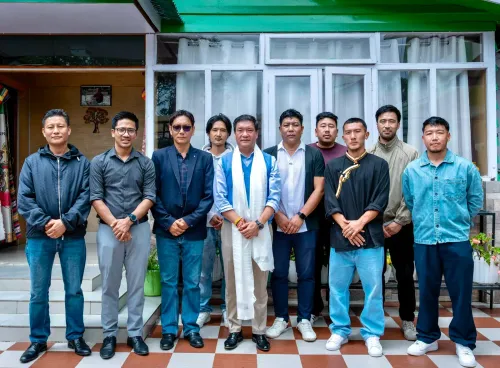
Tawang (Arunachal Pradesh), Feb 14 (NationPress) The Chief Minister of Arunachal Pradesh, Pema Khandu, has urged the state’s youth to spearhead the initiative to create a ‘Viksit Arunachal’ by the year 2047. He emphasized the necessity of being well-informed and engaged with public policies, maintaining cultural pride, and fostering economic self-sufficiency.
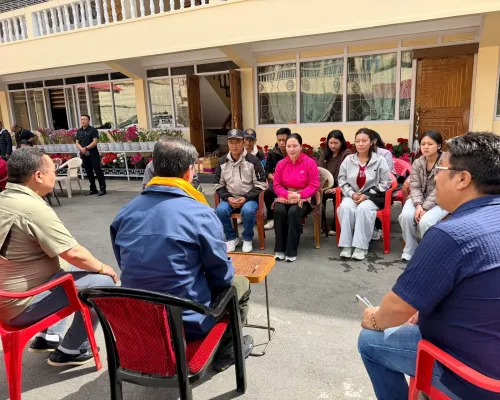
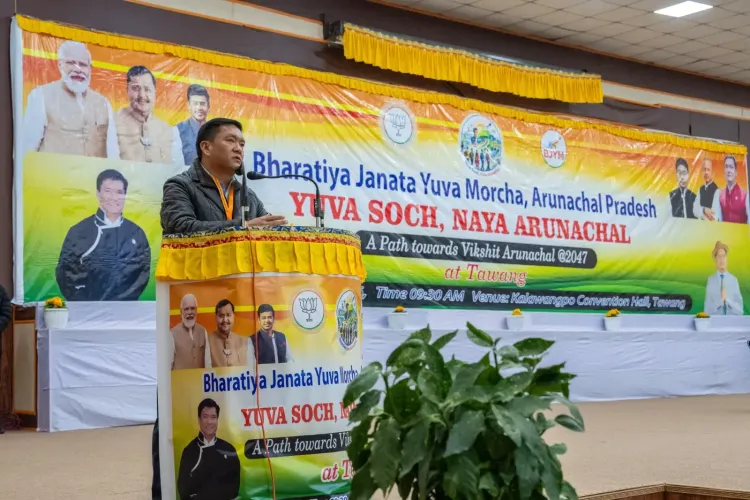
In his address at the ‘YuvaSoch, Naya Arunachal’ interactive event organized by the Bharatiya Janata Yuva Morcha (BJYM) in Tawang, the Chief Minister encouraged young individuals to transcend mere words and actively participate in government initiatives and policies to effect genuine social change.
Khandu noted that this platform has facilitated meaningful discussions on various pressing issues that will shape the future of Arunachal Pradesh.
Marking the significance of February 14, he pointed out that this date is crucial for Tawang and the state, as it commemorates 75 years since Major Ralengnao “Bob” Khathing raised the national flag in Tawang in 1951, a milestone that integrated the region into India.
Recalling this pivotal expedition, Khandu described Major Khathing as a multi-talented figure—a teacher, soldier, administrator, and diplomat—and referred to his mission as a critical moment in fortifying India’s northeastern frontier.
He highlighted that the operation was executed in line with Sardar Vallabhbhai Patel’s vision, subsequent to the 1914 Simla Agreement, which paved the way for the delineation of the McMahon Line. “Without a single shot being fired, Major Bob Khathing assured the peaceful integration of Tawang. Regrettably, his significant contributions were largely overlooked in mainstream narratives for many years,” Khandu remarked.
He recalled that during the Azadi Ka Amrit Mahotsav in 2022, Prime Minister Narendra Modi urged states to acknowledge and honor unsung heroes. In response, Arunachal Pradesh established a committee to research and document local freedom fighters and historical figures, thereby resurrecting their long-forgotten contributions to public knowledge.
The Chief Minister urged the youth to delve into the history and culture of their tribes and communities, warning that a society disconnected from its roots risks losing its identity.
Khandu asserted that both “Viksit Bharat 2047” and “Viksit Arunachal 2047” can only be achieved if the youth take the right steps, underscoring the importance of continuous learning beyond formal education.
“Simply being a graduate or post-graduate is insufficient. If you are unaware of government policies and programs, you cannot effectively contribute to society,” he remarked, adding that BJYM workers should serve as a link between the government and the populace.
Discussing the Seva Aapke Dwar initiative initiated in 2017, which aims to connect the administration with citizens, the Chief Minister mentioned that over 15 lakh beneficiaries have received benefits through this program thus far. He encouraged youth organizations to engage actively in similar outreach endeavors.
Reiterating the principles of “Nation First, Party Second, Self Last” and “Sabka Saath, Sabka Vikas,” Khandu called for a concentrated effort on Antyodaya—uplifting the most impoverished through effective implementation of government schemes.
Looking back at developments since 2014, he noted that the Northeast has garnered unprecedented attention at the national level, citing frequent visits by Union Ministers to remote districts in Arunachal Pradesh and sustained focus on the region in successive Union Budgets.
He termed the recent Union Budget presented by Finance Minister Nirmala Sitharaman as historic, praising its focus on youth aspirations, farmers, and business communities. He also welcomed the provisions for developing Buddhist heritage sites, highlighting Arunachal Pradesh’s unique position as a state where both Mahayana and Theravada traditions coexist.
On the economic front, Khandu referred to hydropower as Arunachal Pradesh’s “lowest hanging fruit,” noting that nearly 19,000 MW of projects are at various stages of development against a potential exceeding 50,000 MW.
He stated that the 2,000 MW Lower Subansiri project is nearing completion, while the Dibang Multipurpose Project and the 3,097 MW Etalin project are progressing steadily.
The Chief Minister revealed that the state has secured 12 percent free power and up to 26 percent equity participation in hydropower projects, which will greatly enhance revenue generation in the upcoming years.
Furthermore, he addressed the mining sector, indicating that coal blocks have been auctioned and exploration of minerals such as graphite and vanadium is in progress, which will bolster the state’s economy.
“Arunachal must strive for self-sufficiency. Being classified as a special category state should not be a point of pride but a reminder of our need for self-reliance,” he asserted.
Emphasizing the role of women in the state's socio-economic transformation, Khandu pointed out that over 1.5 lakh women are currently involved with Self Help Groups across Arunachal Pradesh, contributing to rural economic development.
He also mentioned the Vibrant Villages Programme being implemented in border areas, stating that improved infrastructure, connectivity, and livelihood initiatives are transforming remote villages through coordinated efforts of district administrations, the Army, and central forces.
Welcoming the introduction of the Women’s Reservation provision under the Nari Shakti Vandan Adhiniyam from 2029, the Chief Minister urged young women to engage actively in leadership and policy-making.
He highlighted the significance of preserving indigenous languages, traditions, and attire, encouraging the youth to advocate for local identity and to be “vocal for local.” The Chief Minister announced plans to enhance research and preservation of tribal heritage through institutional initiatives.
Point of View
This initiative by Arunachal Pradesh's Chief Minister Pema Khandu highlights the critical role of youth in shaping the future. By fostering engagement and awareness, the state can harness its potential for sustainable development, ultimately contributing to national progress and unity.
NationPress
20 Sept 2026
Frequently Asked Questions
What is the vision for Arunachal Pradesh by 2047?
The vision is to achieve a developed Arunachal Pradesh, termed 'Viksit Arunachal', through informed youth engagement, cultural pride, and economic self-reliance.
How can youth participate in this vision?
Youth can actively engage with government policies, participate in outreach initiatives, and promote local heritage and culture.
What is the significance of February 14 for Arunachal Pradesh?
February 14 marks 75 years since Major Ralengnao 'Bob' Khathing hoisted the national flag in Tawang, symbolizing the region's integration with India.
Why is economic self-reliance important for Arunachal Pradesh?
Economic self-reliance is crucial for sustainable development, enabling the state to stand on its own feet and reduce dependency on external support.
What initiatives support women's empowerment in Arunachal Pradesh?
The Chief Minister highlighted the involvement of over 1.5 lakh women in Self Help Groups, contributing significantly to rural economic growth.