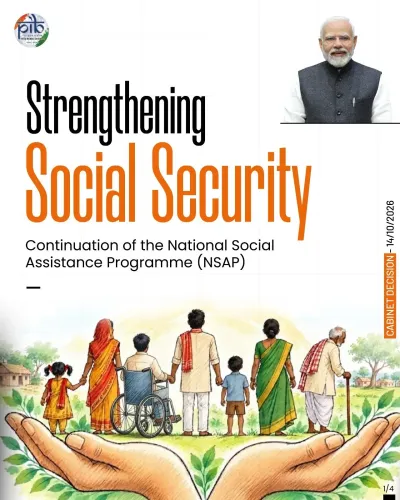
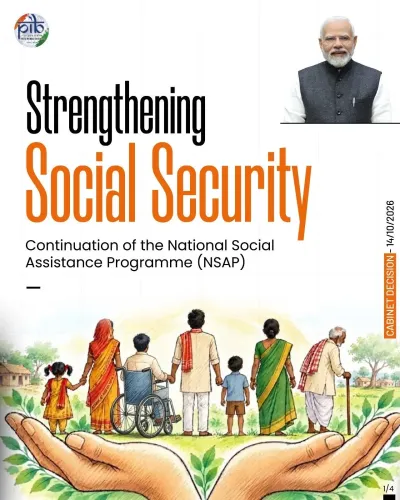
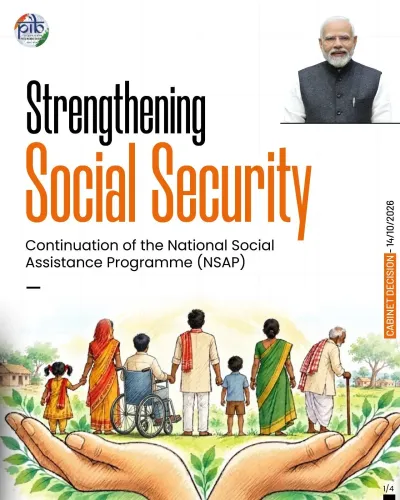
Cabinet Clears NSAP Extension Worth ₹53,428 Cr for 3.2 Cr Beneficiaries
Synopsis
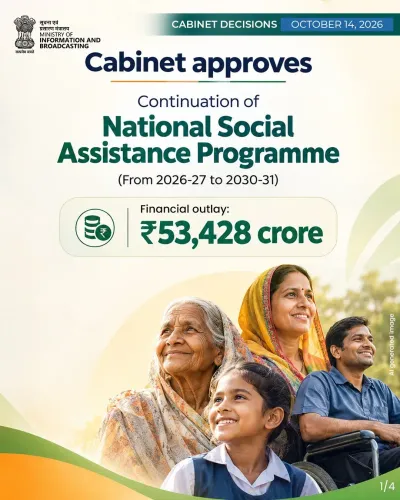
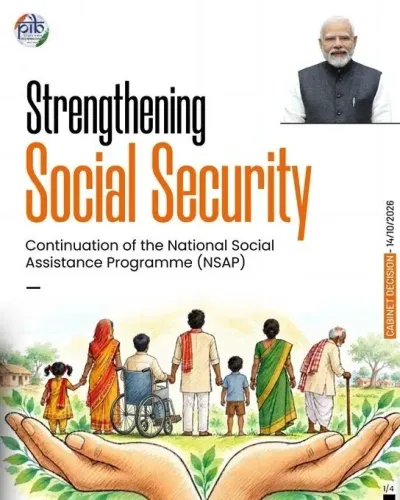
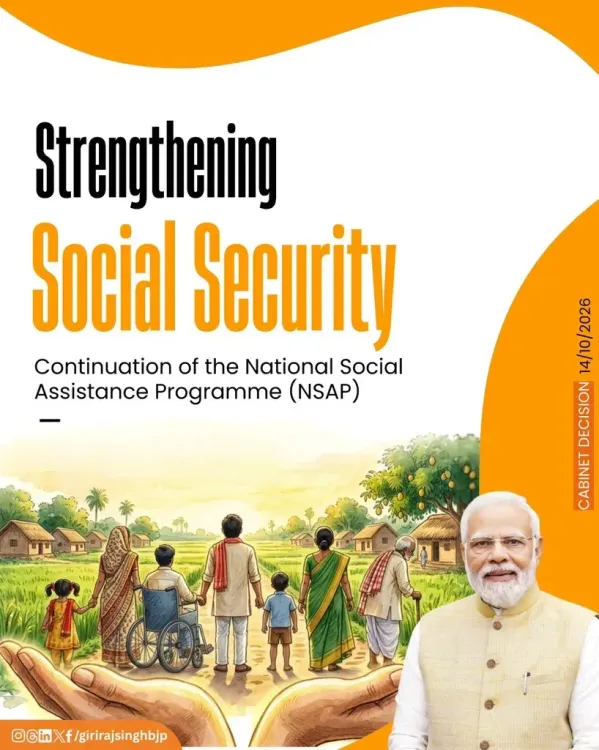
The Union Cabinet has approved the continuation of the National Social Assistance Programme (NSAP) for 2026-27 to 2030-31 with a total outlay of ₹53,428 crore, sustaining cash pensions for 3.20 crore elderly citizens, widows, and persons with disabilities across India.
Key Takeaways
The Union Cabinet approved the continuation of NSAP for a five-year period: 2026-27 to 2030-31 .
The total approved outlay is ₹53,428 crore over the five-year period.
3.20 crore beneficiaries — elderly citizens, widows, and persons with disabilities — will continue to receive social security assistance.
NSAP has been operational since August 1995 and is administered by the Ministry of Rural Development .
The renewal follows a recurring pattern of multi-year cabinet approvals aligned with five-year plan cycles.
Per-beneficiary pension rate revisions and state-level fund release orders are the key details still to be announced for the new cycle.
Thirty-one years after it first reached India's most vulnerable citizens, the National Social Assistance Programme (NSAP) is set to run for another five years — and the numbers behind the renewal tell the story of its scale. The Union Cabinet has approved the continuation of NSAP from 2026-27 through 2030-31, committing a total outlay of ₹53,428 crore to sustain cash support for 3.20 crore beneficiaries across the country. Union Textiles Minister Giriraj Singh shared the cabinet decision on Wednesday, October 14, 2026.
Who NSAP's ₹53,428 crore actually reaches
The programme's reach is deliberately narrow — and deliberately vital. NSAP directs non-contributory pensions to three groups who fall entirely outside the formal social security net: senior citizens, widows, and persons with disabilities. These are individuals with no provident fund, no employer pension, no institutional safety net of any kind. For them, the central pension is frequently the only guaranteed income in the household.
Singh's post, in Hindi, framed the renewal in those terms: the scheme will ensure that 'बुजुर्गों, विधवाओं और दिव्यांगजनों को आर्थिक सहारा मिलेगा' — 'the elderly, widows, and persons with disabilities will continue to receive financial support.' At 3.20 crore active beneficiaries, NSAP is one of the largest direct-benefit welfare instruments the central government operates in rural India.
A scheme born in 1995, still the backbone of rural welfare
NSAP was launched in August 1995 as a fully centrally funded programme — a rare design in an era when most welfare delivery was shared between the Union and states. The Ministry of Rural Development administers it, and successive governments have renewed it in alignment with five-year plan cycles, periodically revisiting per-beneficiary pension rates alongside each continuation. The 2026-31 renewal follows that established pattern, locking in funding across the next half-decade.
What makes the continuity significant is context: NSAP beneficiaries are, by definition, those who cannot wait out a funding gap. Any lapse in disbursement hits elderly women living alone in villages, widows with no other earning member, and disabled persons with no employment fallback — populations with zero financial cushion. The cabinet's five-year horizon provides the fund-flow predictability that state governments and district administrations need to keep disbursements uninterrupted.
What comes next — pension rates and state-level rollout
The approval sets the envelope; the details that will define NSAP's real impact over the next five years are still to come. State-wise fund release orders and — critically — any revision in per-beneficiary pension amounts will be the next markers to watch as the 2026-27 fiscal year gets underway. Welfare advocates have long argued that the per-beneficiary amounts, unchanged for extended periods in the past, need to track inflation to remain meaningful. Whether this renewal is accompanied by a rate revision will determine how much the ₹53,428 crore figure translates into on-the-ground purchasing power for the country's most vulnerable.
Point of View
428 crore for 3.20 crore of India's poorest citizens matters ahead of multiple state election cycles. The BJP has consistently framed direct-benefit transfers as evidence of 'last-mile governance,' and NSAP fits neatly into that narrative. The real policy test, however, is whether this renewal includes a revision in per-beneficiary pension amounts; if it does not, the headline outlay may mask stagnating real-value support. Watch for the fine print in state-wise fund release orders in the coming weeks.
NationPress
14 Oct 2026
Frequently Asked Questions
What is the National Social Assistance Programme (NSAP)?
NSAP is a centrally sponsored, non-contributory pension scheme launched in August 1995 by the Government of India to provide direct cash assistance to elderly citizens, widows, and persons with disabilities who have no other source of income or institutional social security cover. It is administered by the Ministry of Rural Development.
How much money has been approved for NSAP 2026-31?
The Union Cabinet has approved a total outlay of ₹53,428 crore for the continuation of NSAP from 2026-27 to 2030-31, covering the five-year period.
How many people benefit from NSAP?
As of the current cabinet approval, NSAP covers 3.20 crore beneficiaries across India, including senior citizens, widows, and persons with disabilities.
Why did the Cabinet need to approve NSAP's continuation?
NSAP is renewed through periodic cabinet approvals aligned with five-year budget cycles. Each renewal fixes the total financial outlay and confirms the programme's continuation, ensuring uninterrupted fund flow to states and districts for beneficiary disbursements.
Will pension amounts under NSAP increase in the 2026-31 cycle?
The cabinet approval confirms the total outlay and continuation of NSAP, but specific per-beneficiary pension rate revisions are expected to be announced through state-wise fund release orders. No revision figure has been confirmed yet in the announcement shared on October 14, 2026.