Cabinet Clears PM Surya Sarovar Yojana: 5,000 MW Floating Solar, ₹5,070 Cr
Synopsis
The Modi Cabinet has approved the Pradhan Mantri Surya Sarovar Yojana with a ₹5,070 crore outlay to build 5,000 MW of floating solar projects on water bodies, each co-located with at least 10,000 MWh of energy storage — a major push toward India's 500 GW clean energy goal.
Key Takeaways
The Union Cabinet approved Pradhan Mantri Surya Sarovar Yojana (PM-SSY) on 31 July 2026 .
Total budgetary outlay: ₹5,070 crore .
Target: 5,000 MW of floating solar PV projects on water bodies across India.
Every project must include co-located Energy Storage Systems of at least 10,000 MWh capacity.
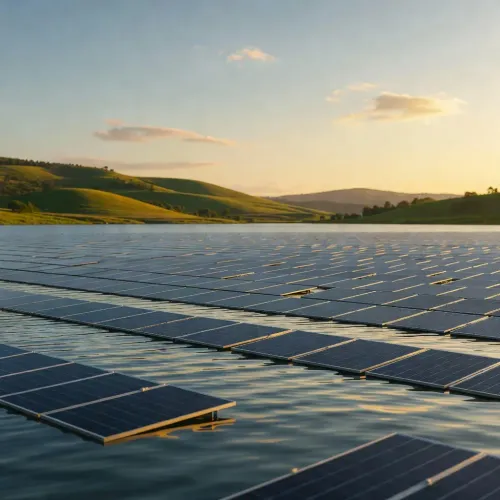
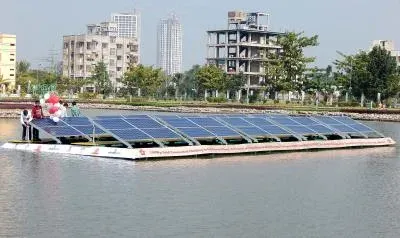
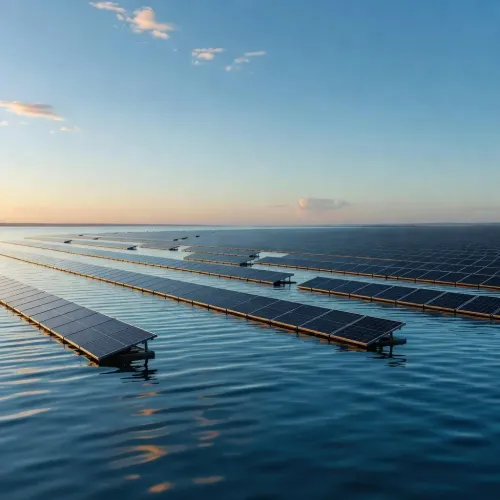
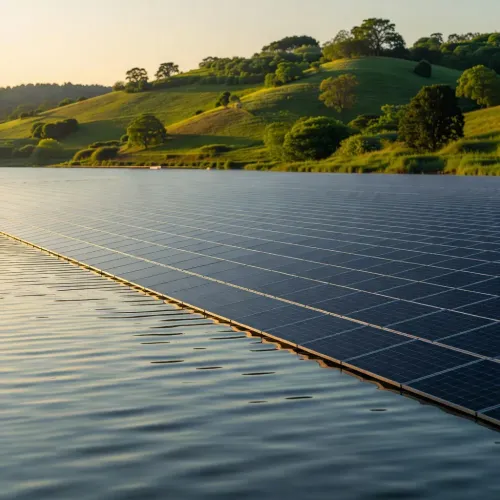
Floating solar reduces land-use conflicts and lowers reservoir evaporation losses.
The scheme advances India's 500 GW non-fossil fuel capacity commitment made at COP26, Glasgow, 2021 .
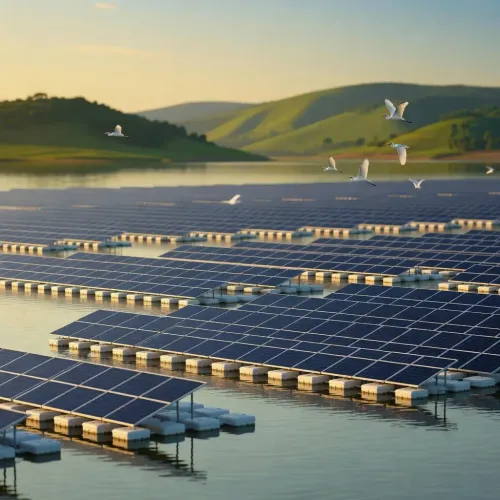
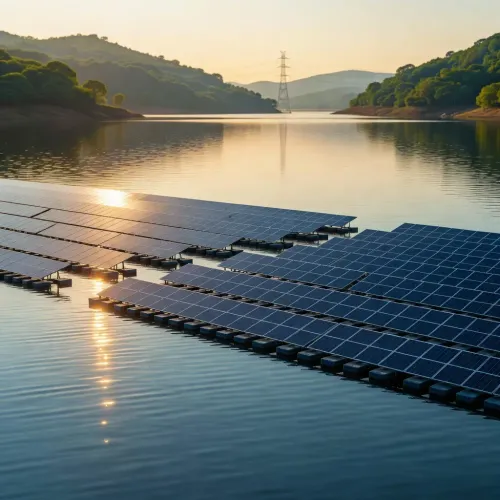
India just made a serious bet on water and sunlight. Union Science and Technology Minister Dr. Jitendra Singh announced on Friday, 31 July 2026 that the Union Cabinet, chaired by Prime Minister Narendra Modi, has approved the Pradhan Mantri Surya Sarovar Yojana (PM-SSY) — a dedicated national scheme to build 5,000 MW of floating solar photovoltaic projects across India's water bodies, backed by a budgetary outlay of ₹5,070 crore.
Floating Solar on Water Bodies — What PM-SSY Actually Does
The scheme is not just about generating power. Every installation under PM-SSY must come with co-located Energy Storage Systems of at least 10,000 MWh of storage capacity — meaning the solar power generated on reservoirs and lakes will be stored and dispatched to the grid on demand, not just when the sun shines. That co-location requirement is the scheme's sharpest design choice: it directly attacks the intermittency problem that has long been solar energy's Achilles' heel.
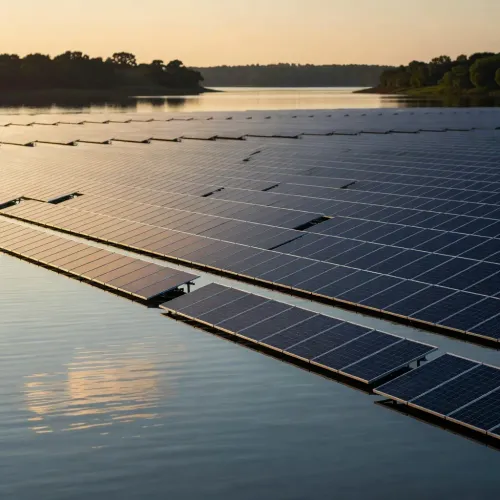
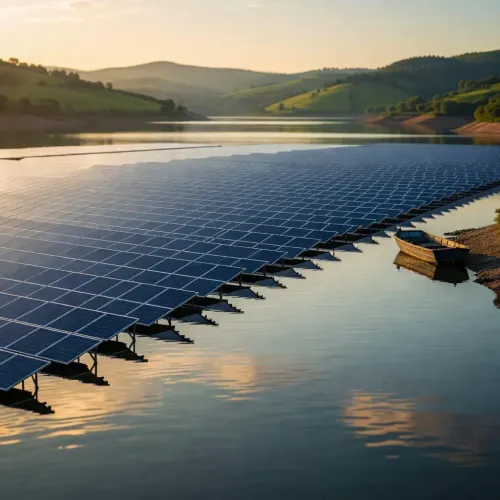
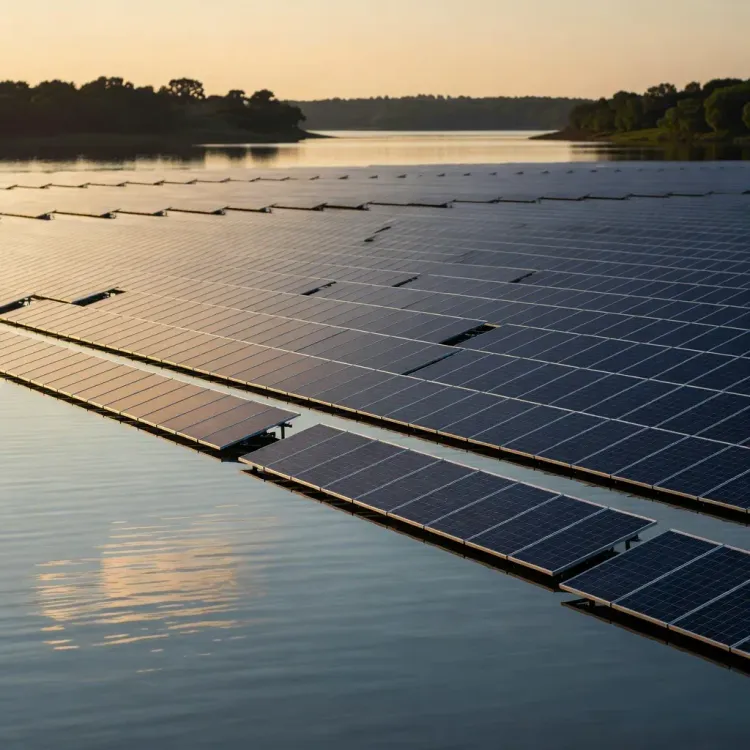
Floating solar panels installed on water surfaces carry an additional practical dividend — they reduce evaporation from reservoirs, preserving water for irrigation and drinking supply. No agricultural land is consumed. The same surface does double duty.
Where PM-SSY Fits India's 500 GW Renewable Ambition
India committed at COP26 in Glasgow in 2021 to reach 500 GW of non-fossil fuel power capacity by 2030. That target, ambitious when announced, now demands consistent, large-scale scheme launches to remain credible. PM-SSY's 5,000 MW floating solar target carves out a distinct niche — one that sidesteps the land-acquisition disputes that have slowed ground-mounted solar parks in several states.
The lineage runs back to the Jawaharlal Nehru National Solar Mission launched in 2010, which first put utility-scale solar on India's policy map. In the sixteen years since, India has built one of the world's largest solar fleets. PM-SSY represents the next frontier: taking that capacity onto India's vast network of reservoirs, lakes, and irrigation canals.
What Happens Next: Tenders, Sites, and State Utilities
Cabinet approval is the starting gun, not the finish line. The critical next steps are the identification of specific water-body sites and the issuance of tenders by implementing agencies — likely in coordination with state power utilities and renewable energy developers. States with large reservoir networks and high power demand will be the ones to watch as site lists emerge.
With ₹5,070 crore committed at the Centre and a mandatory storage component built into every project, PM-SSY arrives with more structural rigour than earlier solar programmes. Whether the tender pipeline moves at the pace the 2030 deadline demands is the real test.
Point of View
Leaving grid integration as an afterthought. By embedding 10,000 MWh of storage into the scheme's DNA, the Cabinet is signalling that dispatchability, not just megawatts, is now the metric that counts. The floating-solar format also offers a politically elegant workaround to land-acquisition friction that has stalled ground-mounted projects in multiple states. Whether this design discipline survives the tender and implementation phase — historically where Indian infrastructure schemes lose momentum — will define PM-SSY's real legacy.
NationPress
31 Jul 2026
Frequently Asked Questions
What is Pradhan Mantri Surya Sarovar Yojana?
Pradhan Mantri Surya Sarovar Yojana (PM-SSY) is a central government scheme approved in July 2026 to develop 5,000 MW of floating solar photovoltaic projects on India's water bodies, with co-located energy storage of at least 10,000 MWh, backed by a ₹5,070 crore budgetary outlay.
What is the budget for PM Surya Sarovar Yojana?
The Union Cabinet has approved a total budgetary outlay of ₹5,070 crore for the Pradhan Mantri Surya Sarovar Yojana.
What is floating solar energy and why is it used on water bodies?
Floating solar involves mounting photovoltaic panels on water surfaces such as reservoirs and lakes. It avoids using agricultural or forest land, reduces water evaporation from reservoirs, and can be combined with existing hydropower infrastructure for better grid integration.
How does PM-SSY contribute to India's 2030 renewable energy target?
India has committed to 500 GW of non-fossil fuel power capacity by 2030. PM-SSY's 5,000 MW floating solar target, with integrated storage, adds dispatchable clean energy to India's grid and directly supports that national goal.
What is the energy storage requirement under PM Surya Sarovar Yojana?
Every floating solar project under PM-SSY must be co-located with an Energy Storage System of at least 10,000 MWh total capacity, ensuring the power generated can be stored and supplied to the grid on demand.