CM Samrat Choudhary Backs Rs 4,371 Cr VISTAR Stats Scheme
Synopsis
Bihar CM Samrat Choudhary welcomed the Central Cabinet's approval of VISTAR — a Rs 4,371.10 crore initiative to modernise India's statistical system through skill development, improved surveys, university courses, faster data collection and new technology.
Key Takeaways
The Central Cabinet, under PM Narendra Modi , approved the VISTAR initiative for statistical modernisation.
The scheme carries an outlay of ₹4,371.10 crore .
VISTAR covers skill development , survey methodology reform , university certificate courses , higher-frequency data collection , and new technology adoption .
Bihar CM Samrat Choudhary amplified the announcement on X, linking it to the broader 'Viksit Bharat' governance vision.
The scheme builds on incremental upgrades pursued by MoSPI since the early 2010s, now consolidated under a single funded programme.
State-level rollout details, university partnership timelines, and operational guidelines are yet to be announced.
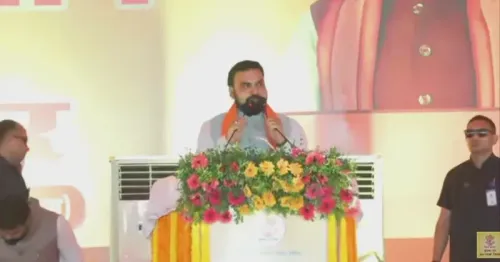
India's statistical backbone is about to get a major overhaul. Bihar Chief Minister Samrat Choudhary on Wednesday, 4 November 2026, highlighted a landmark Central Cabinet decision — approved under the leadership of Prime Minister Narendra Modi — to launch the Viksit Bharat Sankhyikiya Parivartan, Vishleshan evam Anusandhan Pahel, or VISTAR, with an outlay of ₹4,371.10 crore.
Choudhary shared the news on X, writing that VISTAR 'देश की सांख्यिकीय व्यवस्था को अधिक आधुनिक, सक्षम और प्रभावी बनाने में महत्त्वपूर्ण भूमिका निभाएगी' — meaning it 'will play an important role in making the country's statistical system more modern, capable and effective.' For a government increasingly anchored to evidence-based policymaking, that is not a minor administrative update. It is a structural bet on better data.
What VISTAR Actually Does
The scheme is built around five concrete pillars: skill development within statistical departments, reform of survey methodologies, introduction of certificate courses in universities, increased frequency of data collection, and adoption of new technologies to strengthen the evaluation framework. Each pillar targets a known weakness in how India measures itself — from infrequent large surveys that date quickly, to a shortage of trained statistical manpower at the state level.
The Ministry of Statistics and Programme Implementation (MoSPI) has been nudging these reforms incrementally since the early 2010s, upgrading survey frequency and data quality in fits and starts. VISTAR, by contrast, bundles that ambition into a single funded initiative with a named outlay. The scale — over four thousand crore rupees — signals that the government regards data infrastructure as serious public investment, not a back-office expense.
Why Bihar's CM Is Amplifying a Central Scheme
Samrat Choudhary's decision to amplify this Cabinet announcement from Patna carries its own logic. Bihar is among the states where the gap between administrative data and ground reality has historically been widest — a gap that distorts welfare targeting, GDP estimates, and development planning. A modernised national statistical system, with university-linked certificate programmes and upgraded survey cadres, could meaningfully improve how Bihar's own economy and social indicators are measured and acted upon.
It also fits the broader BJP-NDA political messaging around 'Viksit Bharat' — the developed-India vision anchored in 2047 — where data quality is framed as a governance foundation, not a technocratic afterthought.
The Gap VISTAR Is Trying to Close
India's statistical system has long faced a credibility problem. Survey cycles run long, unit-level data releases are delayed, and the pipeline of trained statisticians thins out sharply at the district level. The proposed university certificate courses are a direct response to that last point — building a feeder pool of data-literate professionals closer to where the numbers actually need to be collected.
The push to increase data collection frequency is equally pointed. Policymakers currently rely on surveys that can be two to three years old by the time results are published — a lag that blunts the precision of spending decisions worth trillions of rupees. If VISTAR delivers on its methodology-reform pillar, the downstream impact on welfare scheme targeting alone would be significant.
The state-level rollout details, integration timelines, and university-partnership specifics are still to be announced. But the Cabinet's approval marks the starting gun. India's data revolution, if it comes, will be counted — and VISTAR is the government's wager that it finally will be.
Point of View
The Cabinet is trying to solve a generational shortage of trained statisticians at the district level, where the numbers that drive welfare spending are actually collected. For Bihar CM Samrat Choudhary, amplifying this announcement is strategically coherent: states with historically weak statistical systems stand to gain the most from improved survey frequency and methodology, both in development planning and in how their economic performance is reflected in national accounts. The larger signal is that 'Viksit Bharat 2047' is increasingly being framed not just as an infrastructure ambition but as a data ambition — and VISTAR puts real money behind that claim.
NationPress
4 Nov 2026
Frequently Asked Questions
What is the VISTAR scheme approved by the Cabinet?
VISTAR — short for 'Viksit Bharat Sankhyikiya Parivartan, Vishleshan evam Anusandhan Pahel' — is a central government initiative approved by the Cabinet under PM Narendra Modi with an outlay of Rs 4,371.10 crore to modernise India's statistical system through skill development, improved surveys, university certificate courses, more frequent data collection, and new technologies.
What is the budget allocated for VISTAR?
The Central Cabinet has approved an outlay of Rs 4,371.10 crore for the VISTAR statistical modernisation initiative.
What will VISTAR change about India's statistical system?
VISTAR aims to increase data collection frequency, reform survey methodologies, introduce certificate courses in universities to build a pipeline of trained statisticians, upgrade skills within statistical departments, and adopt new technologies to strengthen the overall evaluation framework.
Why did Bihar CM Samrat Choudhary talk about a central government scheme?
As a senior BJP leader and Bihar Chief Minister, Samrat Choudhary routinely highlights major Central Cabinet decisions. Bihar also stands to benefit significantly from improved national statistical infrastructure, which would sharpen how the state's development indicators are measured and welfare schemes are targeted.
Which ministry oversees VISTAR?
The Ministry of Statistics and Programme Implementation (MoSPI) is the nodal ministry for India's statistical system and is expected to oversee the implementation of the VISTAR initiative, building on the incremental reforms it has pursued since the early 2010s.