Cabinet clears two new semiconductor projects worth ₹3,936 crore in Gujarat
Synopsis
India's cabinet has greenlit two semiconductor facilities in Gujarat worth ₹3,936 crore — including the country's first commercial GaN-based Mini/Micro-LED display plant — taking the India Semiconductor Mission's total approved portfolio to 12 projects and ₹1.64 lakh crore. With two units already shipping commercially, the mission is moving from announcement to execution.
Key Takeaways
The Union Cabinet approved two semiconductor projects on 6 May 2025 with a combined investment of ₹3,936 crore in Gujarat .
Crystal Matrix Limited will build India's first commercial GaN-based Mini/Micro-LED display facility in Dholera , producing 72,000 sq m of display panels annually.
Suchi Semicon Private Limited will set up an OSAT facility in Surat with capacity for over 1,033 million chips per year .
The two projects are expected to create jobs for approximately 2,230 skilled professionals .
Total India Semiconductor Mission approvals now stand at 12 projects with cumulative investments of ₹1.64 lakh crore .
Design ecosystem support has been extended to 315 academic institutions and 104 startups .
The Union Cabinet, chaired by Prime Minister Narendra Modi, on Tuesday, 6 May 2025, approved two new semiconductor projects under the India Semiconductor Mission (ISM), pushing the total number of approved projects under the mission to 12 with cumulative investments now reaching approximately ₹1.64 lakh crore. The two new facilities, to be set up in Gujarat, carry a combined investment of around ₹3,936 crore and are expected to generate employment for approximately 2,230 skilled professionals.
What the Two Projects Cover
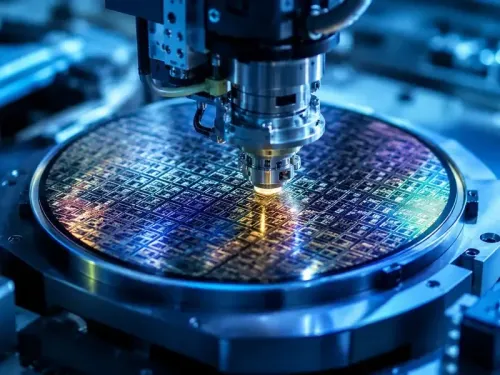
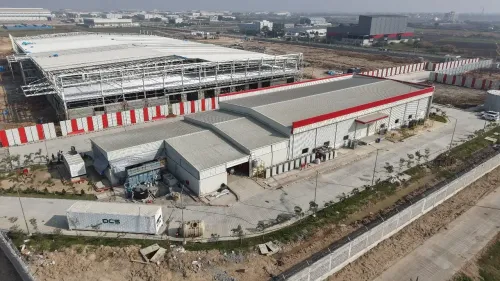
The first project, to be developed by Crystal Matrix Limited in Dholera, Gujarat, will establish India's first commercial Mini/Micro-LED display facility based on Gallium Nitride (GaN) technology. The facility will focus on compound semiconductor fabrication and assembly, testing, marking, and packaging (ATMP), with GaN foundry services including epitaxy on six-inch wafers. The plant is projected to produce 72,000 square metres of display panels and 24,000 sets of RGB wafers annually.
Products from this facility are expected to serve a wide range of applications — from televisions, smartphones, and automotive displays to emerging technologies such as extended reality (XR) devices and smartwatches.
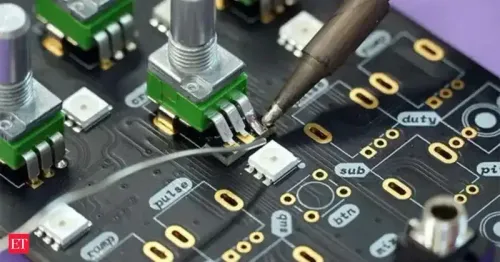
The second project has been approved for Suchi Semicon Private Limited, which will set up an Outsourced Semiconductor Assembly and Test (OSAT) facility in Surat, Gujarat. This unit will manufacture discrete semiconductors with a proposed production capacity of over 1,033 million chips per year, catering to sectors including power electronics, analog integrated circuits, automotive, industrial automation, and consumer electronics.
India's Semiconductor Mission: Where It Stands
With these two additions, the ISM portfolio has grown to 12 approved projects, collectively attracting investments of roughly ₹1.64 lakh crore. The government noted that several previously approved projects are already at different stages of implementation — two units have commenced commercial shipments, while two more are expected to begin operations in the near future.
Notably, India's semiconductor design ecosystem is also expanding, with infrastructure support extended to 315 academic institutions and 104 startups, signalling a broader push beyond manufacturing into indigenous chip design capability.
Strategic Significance for Make in India
The approvals mark a meaningful escalation in India's ambition to reduce dependence on imported chips — a vulnerability exposed sharply during the global semiconductor shortage of 2021–22, which disrupted automotive and consumer electronics production worldwide. India has since moved aggressively to attract both global chip majors and domestic players.
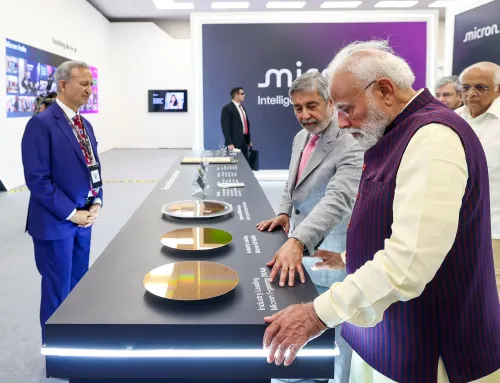
The choice of Dholera — a greenfield smart city and special investment region — and Surat, an established industrial hub, reflects a deliberate effort to build semiconductor clusters in Gujarat, which has emerged as a focal point of India's chip manufacturing strategy. Tata Electronics and Micron Technology have previously received ISM approvals for facilities in the same state.
What Comes Next
The government has indicated that these projects will complement India's growing strength in chip design and enhance domestic semiconductor capabilities across critical sectors. Industry observers will watch closely whether execution timelines hold, given that semiconductor fabrication facilities — particularly those involving compound semiconductors and GaN technology — demand highly specialised supply chains and technical talent that India is still scaling up. With cumulative ISM investments now crossing ₹1.64 lakh crore, the pace of on-ground commissioning will be the real measure of the mission's progress.
Point of View
Not just another assembly unit. But the harder question is execution: compound semiconductor fabrication is among the most technically demanding in the industry, and India's talent pipeline and specialised supply chains are still nascent. The ISM's cumulative ₹1.64 lakh crore figure is impressive on paper, but with only two of twelve approved projects currently shipping commercially, the gap between approvals and operational capacity remains wide. The real test of Make in India's semiconductor ambition will come not at the cabinet table, but on the factory floor.
NationPress
29 Sept 2026
Frequently Asked Questions
What did the Union Cabinet approve for India's semiconductor sector?
The Union Cabinet approved two new semiconductor projects in Gujarat under the India Semiconductor Mission (ISM) on 6 May 2025, with a combined investment of ₹3,936 crore. The approvals take the total ISM project count to 12, with cumulative investments of approximately ₹1.64 lakh crore.
What is the Crystal Matrix Limited project in Dholera?
Crystal Matrix Limited will set up India's first commercial Mini/Micro-LED display facility based on Gallium Nitride (GaN) technology in Dholera, Gujarat. The plant will produce 72,000 square metres of display panels and 24,000 sets of RGB wafers annually, serving applications in TVs, smartphones, automotive displays, and XR devices.
What will the Suchi Semicon facility in Surat produce?
Suchi Semicon Private Limited will establish an Outsourced Semiconductor Assembly and Test (OSAT) facility in Surat with a production capacity of over 1,033 million discrete semiconductor chips per year. These chips will cater to power electronics, automotive, industrial automation, and consumer electronics sectors.
How many jobs will the two new semiconductor projects create?
The two projects are expected to generate employment for approximately 2,230 skilled professionals, according to the government's announcement.
Where does the India Semiconductor Mission stand overall?
With the latest two approvals, the ISM now has 12 approved projects with cumulative investments of roughly ₹1.64 lakh crore. Two units have already commenced commercial shipments, two more are expected to begin operations soon, and design support has been extended to 315 academic institutions and 104 startups.