Cabinet Okays 3% DA Hike for 1.17 Crore Central Staff
Synopsis
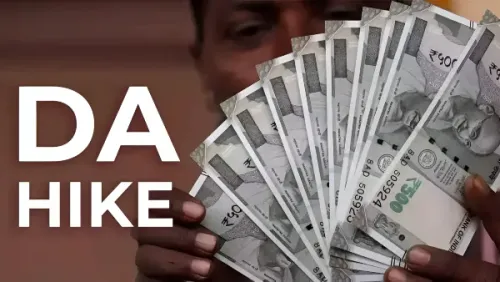
The Union Cabinet has approved a 3 per cent hike in Dearness Allowance and Dearness Relief effective 1 July 2026, benefiting approximately 48.54 lakh central government employees and 68.71 lakh pensioners — announced by Agriculture Minister Shivraj Singh Chouhan as a Diwali gift from PM Modi.
Key Takeaways
The Union Cabinet approved a 3% increase in Dearness Allowance (DA) for central government employees and Dearness Relief (DR) for pensioners on 28 October 2026 .
The hike is effective from 1 July 2026 , meaning arrears will be paid out to eligible beneficiaries.
Approximately 48.54 lakh central government employees will benefit from the DA revision.
Approximately 68.71 lakh pensioners will benefit from the corresponding DR revision.
DA and DR revisions are conducted twice annually under the 7th Central Pay Commission framework, linked to the All India Consumer Price Index for Industrial Workers.
The announcement was made during Diwali week , continuing the government's tradition of timing the festive-season revision for maximum public visibility.
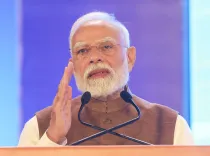
Just in time for Diwali, the Union Cabinet has approved a 3 per cent hike in Dearness Allowance (DA) for central government employees and Dearness Relief (DR) for pensioners — a combined benefit reaching over 1.17 crore people across India. Union Agriculture Minister Shivraj Singh Chouhan announced the decision on Wednesday, 28 October 2026, calling it a 'big Diwali gift' from the Modi government.
Who benefits — and by how much
The numbers are substantial. Approximately 48.54 lakh central government employees will see their DA rise, while 68.71 lakh pensioners receive a corresponding boost in Dearness Relief. The revision will be effective from 1 July 2026, meaning eligible recipients can expect arrears to be paid out alongside the revised amounts going forward.
Chouhan credited Prime Minister Narendra Modi for the decision, posting in Hindi: 'Kendriya Cabinet ne kendriya sarkar ke karamchariyon ke Mahangai Bhatte (DA) aur pensionbhogiyon ki Mahangai Rahat (DR) mein 3% ki vriddhi ko manjuri di hai' — ('The Union Cabinet has approved a 3 per cent increase in Dearness Allowance for central government employees and Dearness Relief for pensioners.').
The biannual rhythm behind the revision
This is not a one-off gesture. Under the framework established by the 7th Central Pay Commission, effective January 2016, DA and DR are revised twice every year — typically in March and October — calculated from the All India Consumer Price Index for Industrial Workers (AICPI-IW). The mechanic is deliberately insulated from political discretion: published inflation data drives the formula, and governments across the political spectrum have upheld it.
What governments do control is the timing and framing of the announcement. Choosing Diwali week to clear the revision is a well-worn tradition — it maximises the goodwill of a pay increase that would have arrived anyway, and this cabinet is no exception.
Why the scale matters
At over 1.17 crore direct beneficiaries, this is not a marginal adjustment. Central government employees and pensioners are spread across every state and union territory, and their increased spending power — even from a modest 3 per cent bump — translates into a measurable pulse in consumer demand during the festive season. The revision also signals where the inflation index has moved over the past six months, providing a real-world data point that markets and analysts track closely.
The next scheduled revision will be based on the following six-month index cycle. If inflation trends hold, that announcement is expected around March 2027.
Point of View
Formula-driven exercise — but the Modi government's decision to clear and publicise it in Diwali week reflects a deliberate political communication strategy that ties a structural entitlement to a festive act of largesse. With over 1.17 crore direct beneficiaries spanning every constituency, the announcement carries disproportionate political resonance relative to its policy novelty. The 7th Pay Commission framework, now a decade old, has effectively depoliticised the calculation while leaving the announcement window as the last lever governments can pull. Analysts watching fiscal health will note that a 3 per cent DA increment across this beneficiary base carries a non-trivial annual outgo for the exchequer — a cost the government has chosen to absorb ahead of a festive demand cycle.
NationPress
28 Oct 2026
Frequently Asked Questions
What is the DA hike approved by the Cabinet in October 2026?
The Union Cabinet approved a 3 per cent increase in Dearness Allowance for central government employees and Dearness Relief for pensioners, effective from 1 July 2026.
How many people benefit from the October 2026 DA hike?
Approximately 48.54 lakh central government employees and 68.71 lakh pensioners — over 1.17 crore people in total — will benefit from the revision.
From when is the 3% DA hike effective?
The 3 per cent DA and DR hike is effective from 1 July 2026, meaning eligible recipients will receive arrears for the months since that date.
How often is Dearness Allowance revised for central government employees?
Under the 7th Central Pay Commission framework, DA and DR are revised twice a year — typically in March and October — based on the All India Consumer Price Index for Industrial Workers.
When is the next DA hike expected after October 2026?
The next scheduled DA/DR revision is expected around March 2027, based on the six-month inflation index cycle followed under the 7th Pay Commission framework.