Rijiju: Cabinet passes resolution on Modi as longest-serving elected PM
Synopsis
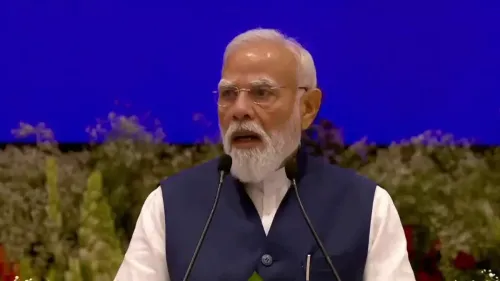
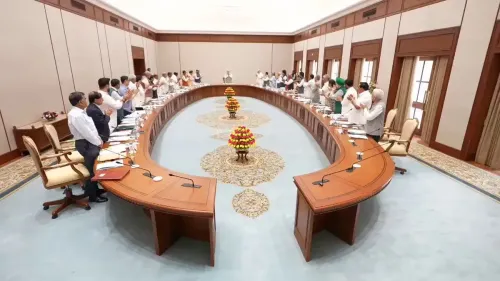
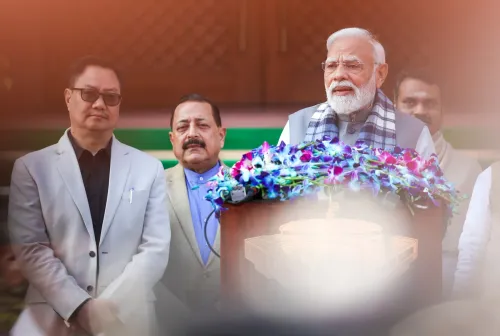
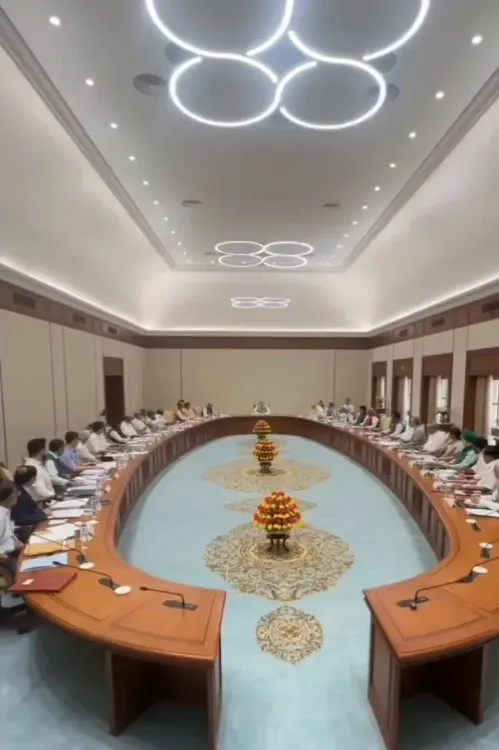
The Union Cabinet has passed a formal resolution congratulating Prime Minister Narendra Modi on becoming India's longest-serving elected Prime Minister. Parliamentary Affairs Minister Kiren Rijiju announced the milestone on 10 June 2026, linking it to the government's Viksit Bharat vision of national transformation by 2047.
Key Takeaways
The Union Cabinet passed a formal resolution congratulating PM Narendra Modi on becoming India's longest-serving elected Prime Minister.
The announcement was made by Union Parliamentary Affairs Minister Kiren Rijiju on 10 June 2026 .
Modi has led three consecutive NDA governments since first being sworn in on 26 May 2014 .
The resolution ties the milestone to the government's Viksit Bharat vision of transforming India into a developed nation by 2047 .
Cabinet resolutions of this nature carry formal institutional weight and may be noted in upcoming Parliamentary sessions.
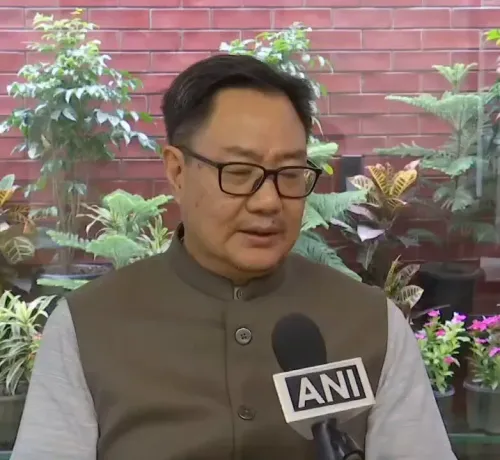
Union Parliamentary Affairs Minister Kiren Rijiju announced on Wednesday, 10 June 2026 that the Union Cabinet has passed a formal resolution congratulating Prime Minister Narendra Modi on becoming India's longest-serving elected Prime Minister — a milestone the minister described as rooted in 'trust, transformation and nation-building.'
Context
Narendra Modi was first sworn in as Prime Minister on 26 May 2014 following the BJP's outright majority in the 16th Lok Sabha. He subsequently secured re-election in 2019 and again in 2024, making him the leader of three consecutive National Democratic Alliance governments. The Cabinet's resolution marks the point at which his continuous tenure in office has surpassed that of any other elected Prime Minister in India's history.
Rijiju posted on X that 'behind this historic milestone lies a remarkable story of trust, transformation and nation-building,' tying the occasion to the government's #ViksitBharat vision. The formal Cabinet resolution elevates what might otherwise be a political milestone into an official institutional record.
Policy Backdrop
The Union Cabinet — India's highest executive decision-making body — has the authority to adopt formal resolutions on matters of national significance. Cabinet resolutions recognising prime ministerial milestones have periodically been used by governments to underscore continuity of leadership and policy direction.
Since 2014, the BJP-led executive has consistently highlighted tenure length alongside flagship programmes spanning infrastructure, welfare delivery and administrative reform. The government's overarching development framework, Viksit Bharat, envisions transforming India into a developed nation by 2047 — a goal the ruling coalition has repeatedly linked to sustained political continuity at the Centre.
Stakeholders and Impact
The resolution directly involves the full complement of Union Cabinet ministers and the broader NDA ruling coalition, signalling unified institutional endorsement of the milestone. For the BJP, the move reinforces a central electoral and governance narrative: that longevity in office correlates with policy delivery and national progress.
Opposition parties are likely to contest the framing of the milestone as a purely institutional rather than political act, given that Cabinet resolutions of this nature carry the weight of the executive machinery. The move also draws attention to Viksit Bharat as the programmatic anchor the government is using to contextualise Modi's record tenure.
What's Next
The resolution may be formally noted or debated when Parliament convenes for its next session, providing an opportunity for both the treasury benches and the opposition to place their respective readings of the milestone on the record. The Prime Minister's Office may also issue follow-up statements linking the occasion to specific governance priorities or programme targets under the Viksit Bharat roadmap.
With Modi's third term ongoing, the Cabinet's formal acknowledgement sets a political and institutional benchmark that future governments will reference when measuring executive continuity against developmental outcomes in India.
Point of View
The government is weaving electoral longevity into its broader developmental narrative ahead of future legislative sessions. This pattern of linking tenure continuity to policy ambition has been a consistent feature of BJP governance since 2014, and the Cabinet resolution deepens that institutional framing. Opposition parties will likely argue the move blurs the line between state ceremony and partisan celebration.
NationPress
26 Oct 2026
Frequently Asked Questions
Why did the Union Cabinet pass a resolution for PM Modi?
The Union Cabinet passed a formal resolution to officially recognise and congratulate Prime Minister Narendra Modi on becoming India's longest-serving elected Prime Minister, a milestone announced by Minister Kiren Rijiju on 10 June 2026.
When did Narendra Modi first become Prime Minister of India?
Narendra Modi was first sworn in as Prime Minister on 26 May 2014 following the BJP's majority in the 16th Lok Sabha, and has since led three consecutive NDA governments after wins in 2014, 2019 and 2024.
What is Viksit Bharat and why is it linked to this milestone?
Viksit Bharat is the government's vision to transform India into a developed nation by 2047; the BJP-led government has consistently linked Modi's extended tenure to the sustained policy continuity it says is required to achieve that goal.
What is the significance of a Union Cabinet resolution?
A Union Cabinet resolution is a formal decision by India's highest executive decision-making body and carries official institutional weight, distinguishing it from a political party statement or a ministerial congratulatory message.
Who is Kiren Rijiju and what is his role?
Kiren Rijiju is a senior BJP leader from Arunachal Pradesh serving as Union Minister of Parliamentary Affairs and Minister of Minority Affairs; in his parliamentary affairs role he is a key government spokesperson on legislative and Cabinet business.