Cabinet Salutes PM Modi as Longest-Serving Elected PM
Synopsis
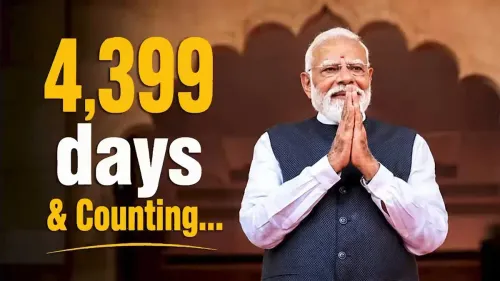
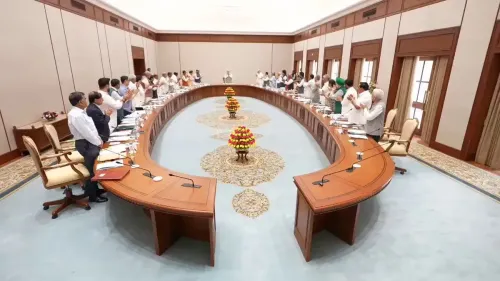
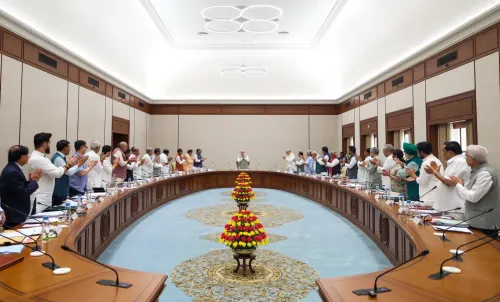
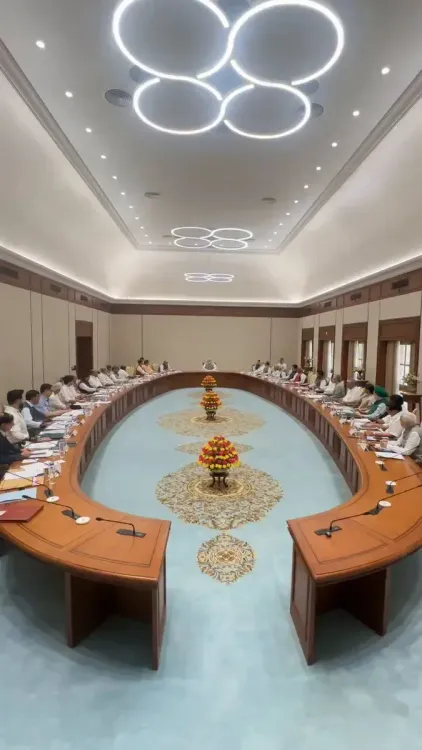
The Union Cabinet on 10 June 2026 passed a special resolution honouring PM Narendra Modi as India's longest-serving elected Prime Minister in consecutive terms. Union Minister Sarbananda Sonowal described a standing ovation inside the Cabinet for Modi's 'seva and samarpan' to the nation, marking what the government called a historic democratic milestone.
Key Takeaways
The Union Cabinet passed a special resolution on 10 June 2026 congratulating PM Narendra Modi on becoming India's longest-serving elected Prime Minister in consecutive terms.
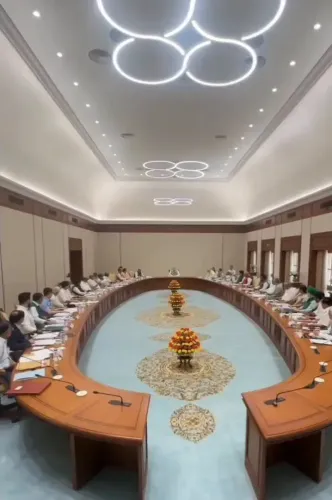
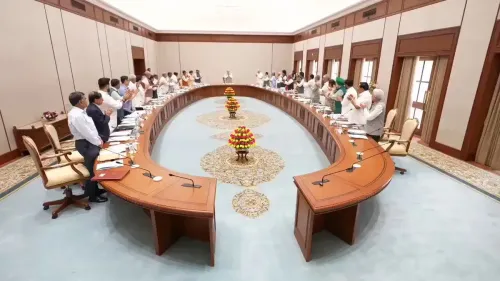
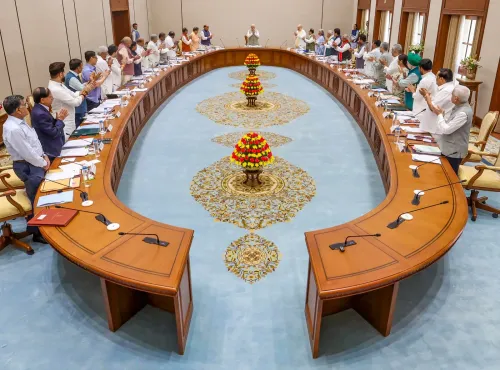
Union Minister Sarbananda Sonowal reported a standing ovation inside the Cabinet meeting in honour of PM Modi's service and dedication.
PM Modi first took office in May 2014 and has since led the BJP-led NDA government through multiple consecutive Lok Sabha victories.
The BJP's consecutive majorities ended a post-1989 era of coalition governments and frequent Prime Ministerial changes.
Cabinet resolutions marking the Prime Minister's tenure milestones are part of the government's broader communication of political stability.
The next general election is due by 2029 , and further commemorative tributes are expected across party and parliamentary platforms.
Union Ports and Shipping Minister Sarbananda Sonowal joined a wave of national celebration on Wednesday, 10 June 2026, as the Union Cabinet passed a special resolution congratulating Prime Minister Narendra Modi on becoming the longest-serving elected Prime Minister of India in consecutive terms.
Context
Minister Sonowal shared the moment on social media, describing a 'standing ovation honouring PM Modi Ji for his Seva aur Samarpan (service and dedication) to Bharat.' The post reflected the mood inside the Cabinet meeting, where colleagues rose to mark what the government characterised as a historic milestone in Indian democratic governance.
The Union Cabinet — the apex executive body comprising the Prime Minister and senior Union Ministers — periodically passes formal resolutions to place significant national moments on official record. Tuesday's resolution marks one such symbolic act, underscoring the political weight the ruling dispensation attaches to the occasion.
Policy Backdrop
Narendra Modi was first sworn in as Prime Minister in May 2014, when the Bharatiya Janata Party secured a majority in the Lok Sabha — ending a quarter-century of coalition governments at the Centre. He was re-elected in May 2019 and again in 2024, making him the first Prime Minister since Jawaharlal Nehru to lead the country through multiple consecutive full terms.
India's post-1989 political landscape was defined by short-lived coalition arrangements and frequent changes of Prime Minister. The BJP's back-to-back majorities reversed that pattern, and the party has consistently highlighted continuity of leadership as a governance dividend for the country.
Stakeholders and Impact
Sarbananda Sonowal, a senior BJP leader and former Chief Minister of Assam, has been a member of the Union Cabinet since 2021 and is among the party's prominent voices from Northeast India. His public endorsement of the Cabinet resolution amplifies the message beyond Delhi to the party's regional base.
Cabinet resolutions of this nature are directed at multiple audiences: the party's rank and file, allied coalition partners, and the broader electorate ahead of the next general election due by 2029. Symbolic milestones are routinely leveraged to reinforce narratives of political stability and strong leadership.
What's Next
The resolution and the accompanying celebrations are likely to be followed by further tributes across Parliament, state assemblies governed by the BJP-led NDA, and party platforms. As PM Modi continues his term, additional tenure milestones may prompt similar commemorative gestures from the Cabinet and allied organisations.
The broader question for observers remains how the government translates the symbolism of record-setting tenure into policy momentum — particularly on infrastructure, ports modernisation, and waterways development, areas directly under Minister Sonowal's charge.
Point of View
A record-setting tenure is powerful institutional symbolism. Minister Sonowal's amplification from the Northeast is strategic: it projects unity across the party's diverse regional leadership. The gesture also sets a benchmark that opposition parties will need to address in their own counter-narratives ahead of the next election cycle.
NationPress
25 Oct 2026
Frequently Asked Questions
Why did the Union Cabinet pass a resolution for PM Modi in June 2026?
The Union Cabinet passed a special resolution on 10 June 2026 to formally congratulate PM Narendra Modi on becoming the longest-serving elected Prime Minister of India in consecutive terms, marking the occasion as a historic democratic milestone.
Who is the longest-serving elected Prime Minister of India in consecutive terms?
According to the Union Cabinet's resolution of June 2026, Prime Minister Narendra Modi holds this distinction, having served continuously since May 2014 through multiple re-elections.
What did Sarbananda Sonowal say about PM Modi's record tenure?
Union Minister Sarbananda Sonowal described a standing ovation inside the Cabinet for PM Modi, praising his 'seva aur samarpan' — service and dedication — to India.
When did Narendra Modi first become Prime Minister of India?
Narendra Modi was first sworn in as Prime Minister in May 2014, after the BJP secured a Lok Sabha majority, and has since been re-elected to lead successive NDA governments.
What is the significance of the Cabinet resolution honouring PM Modi?
Cabinet resolutions of this kind place milestone moments on official government record and serve as symbolic affirmations of political continuity, often used to reinforce a ruling party's narrative of stable governance.