Cabinet Marks Modi's Historic PM Tenure Milestone
Synopsis
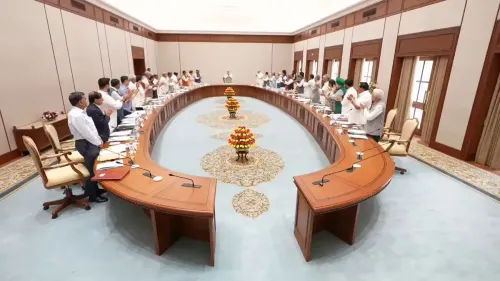
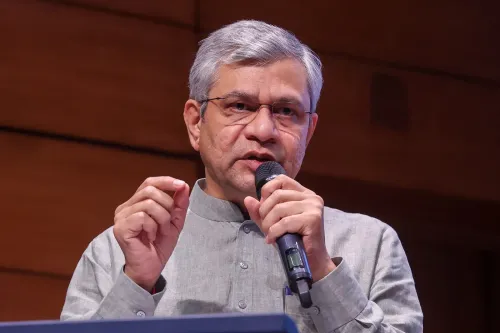
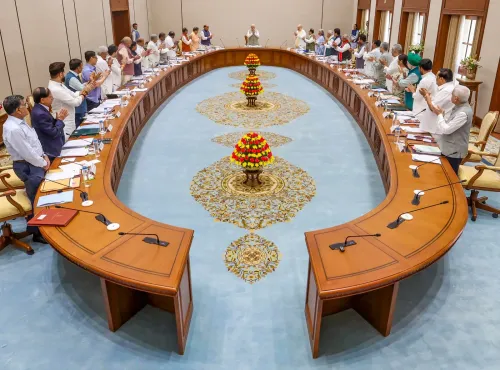
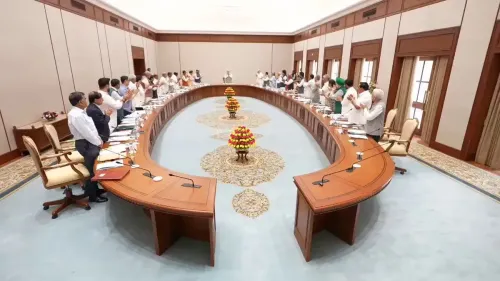
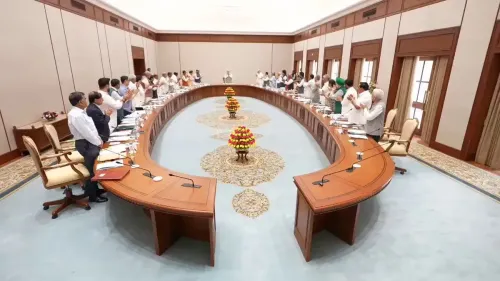
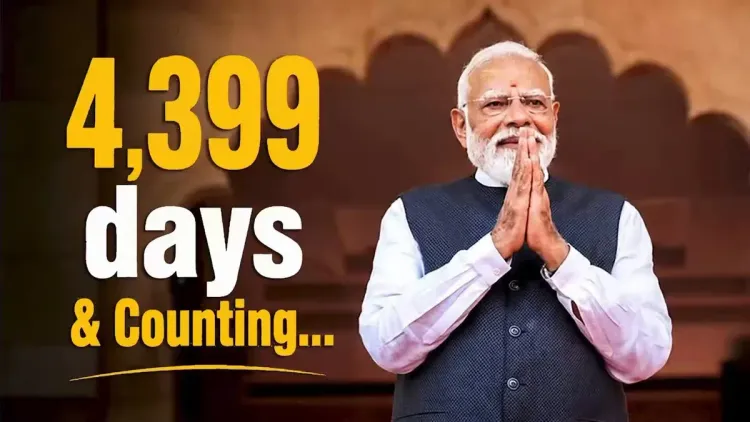
The Union Cabinet passed a resolution on 10 June 2026 declaring Prime Minister Narendra Modi the longest-serving elected Prime Minister of India. Union Minister Ashwini Vaishnaw announced the milestone on X, calling it a historic moment in India's democratic journey. The resolution formally congratulates Modi on the distinction.
Key Takeaways
The Central Cabinet passed a resolution on 10 June 2026 marking a historic milestone in India's democracy.
PM Narendra Modi was declared the longest-serving elected Prime Minister of India.
Union Minister Ashwini Vaishnaw announced the Cabinet decision on X on 11 June 2026 .
The previous benchmark was held by India's first PM, Jawaharlal Nehru , who served from 1947 to 1964 .
Modi has served as PM since 26 May 2014 , winning general elections in 2014, 2019, and 2024 .
The formal resolution is expected to be published in the Gazette of India .
Union Minister Ashwini Vaishnaw announced on Thursday, 11 June 2026 that the Central Cabinet had passed a resolution a day earlier declaring 10 June 2026 a historic milestone in India's democratic journey, marking Prime Minister Narendra Modi's achievement of becoming the longest-serving elected Prime Minister of India. The Cabinet also formally congratulated PM Modi on this distinction, which the resolution described as an ऐतिहासिक मील का पत्थर ('a historic milestone') in India's democratic journey.
Context
Vaishnaw posted on X, sharing that the Union Cabinet had passed a resolution on 10 June 2026 recognising PM Modi as the country's longest-serving elected Prime Minister. The post carried the hashtag #LongestServingElectedPMModi, signalling a coordinated official acknowledgement of the milestone. The distinction specifically applies to elected Prime Ministers, a qualifier that anchors the record within India's post-Constitution parliamentary history.
PM Modi was first sworn into office on 26 May 2014 following the BJP-led NDA's decisive victory in the general elections that year. He was re-elected in 2019 and again in 2024, making him the first Prime Minister since Jawaharlal Nehru to win three consecutive general elections.
Policy Backdrop
The previous benchmark for the longest tenure by an elected Prime Minister was held by Jawaharlal Nehru, India's first Prime Minister, who served from 1947 to 1964. Nehru's tenure, however, began before India's first general election in 1951-52, which is why the Cabinet resolution's specific reference to 'elected' Prime Minister carries constitutional and historical weight.
Indian governments have periodically issued formal Cabinet resolutions marking milestones in the country's constitutional and democratic history since 1947. Such resolutions, once adopted, are typically published in the Gazette of India and form part of the official record of the Union government's collective decisions.
Stakeholders and Impact
The resolution is a collective act of the Council of Ministers, lending it the weight of the entire Cabinet rather than a single party's position. For the BJP and the broader NDA coalition, the milestone reinforces a political narrative of electoral continuity and stable governance over more than a decade.
Opposition parties are likely to contest the framing, noting that Nehru's overall time in office exceeded the milestone date if his pre-election tenure is included. The qualifier 'elected' is therefore expected to become the central point of political debate around the Cabinet resolution.
What's Next
The formal Cabinet resolution is expected to be published in the Gazette of India, providing an official government record of the declaration. Commemorative events, parliamentary references, and further statements from senior NDA leaders are anticipated in the days following the announcement. The milestone is also likely to feature prominently in the ruling party's political messaging ahead of upcoming state assembly elections.
Point of View
Giving it constitutional and archival permanence. The specific use of the word 'elected' is a deliberate legal-historical framing designed to pre-empt comparisons with Nehru's overall time in office, and will almost certainly define the terms of opposition pushback. For the BJP, anchoring the milestone in a collective Cabinet resolution also distributes ownership across the entire NDA coalition, reinforcing the narrative of a broad governing mandate rather than a single leader's achievement. The announcement, timed a day after the milestone date, suggests a carefully orchestrated rollout with further commemorative activity expected.
NationPress
26 Oct 2026
Frequently Asked Questions
Who is the longest-serving elected Prime Minister of India?
As per a Cabinet resolution passed on 10 June 2026, Prime Minister Narendra Modi has been declared the longest-serving elected Prime Minister of India, surpassing the previous record associated with Jawaharlal Nehru.
When did Narendra Modi first become Prime Minister?
Narendra Modi was first sworn in as Prime Minister of India on 26 May 2014, following the BJP-led NDA's victory in the 2014 general election. He was subsequently re-elected in 2019 and 2024.
What did the Central Cabinet resolution on 10 June 2026 say?
The Cabinet resolution declared 10 June 2026 a historic milestone in India's democratic journey and formally congratulated PM Modi on becoming the country's longest-serving elected Prime Minister.
How long did Jawaharlal Nehru serve as Prime Minister?
Jawaharlal Nehru served as India's first Prime Minister from 1947 until his death in 1964. The Cabinet resolution specifically references 'elected' Prime Ministers, a qualifier that distinguishes Modi's record within India's post-Constitution electoral history.
Who announced the Cabinet resolution about Modi's PM tenure milestone?
Union Minister Ashwini Vaishnaw, who holds the Railways, Information and Broadcasting, and Electronics and IT portfolios, announced the Cabinet resolution on X on 11 June 2026.