Cabinet Gives Modi Standing Ovation on Tenure Milestone
Synopsis
The Union Cabinet gave Prime Minister Narendra Modi a unanimous standing ovation on 10 June 2026, with Labour and Sports Minister Mansukh Mandaviya sharing the moment on X under the hashtag #LongestServingElectedPMModi, celebrating Modi's record tenure as India's longest-serving elected Prime Minister.
Key Takeaways
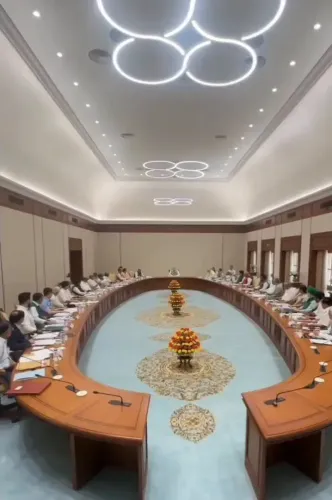
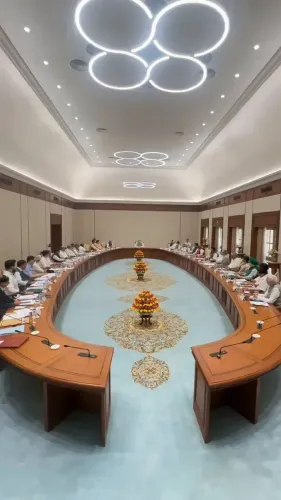
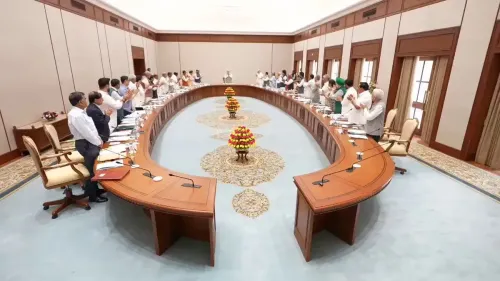
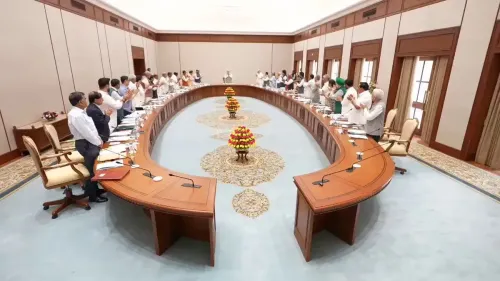
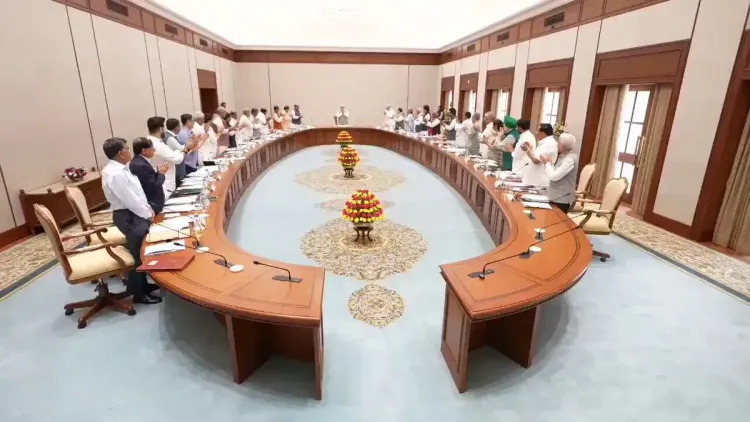
Union Labour and Sports Minister Mansukh Mandaviya posted a video on 10 June 2026 showing the entire Union Cabinet giving a standing ovation to PM Modi .
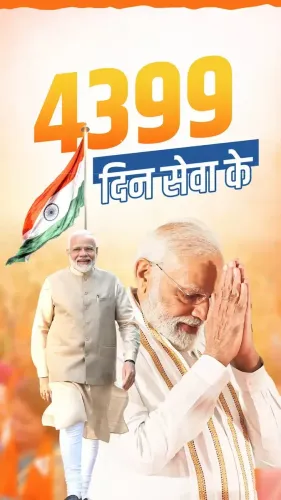
The post carried the hashtag #LongestServingElectedPMModi , framing Modi 's tenure as a record among India's elected prime ministers.
Modi was first sworn in on 26 May 2014 and is currently serving his third consecutive term after the 2024 general election.
The BJP's framing distinguishes between elected and unelected or appointed tenures, differentiating Modi 's record from that of Jawaharlal Nehru .
The cabinet gesture reflects a coordinated party communication strategy to highlight leadership continuity ahead of future electoral cycles.
Union Labour and Sports Minister Mansukh Mandaviya on Wednesday, 10 June 2026, shared a video of the Union Cabinet giving a unanimous standing ovation to Prime Minister Narendra Modi, marking what the ruling party is calling a historic milestone in his tenure as India's head of government.
Context
Mandaviya's post, accompanied by a video of the cabinet moment, carried the hashtag #LongestServingElectedPMModi and referred to Modi as 'Bharat's Pradhansevak' — a phrase meaning 'India's Prime Servant' that Modi has used to describe his own public role. The standing ovation, delivered collectively by the entire council of ministers, was shared widely on social media by senior BJP leaders.
The gesture underscores a coordinated effort within the ruling establishment to mark the Prime Minister's tenure as an electoral record among India's post-independence leaders.
Policy Backdrop
Narendra Modi was first sworn in as Prime Minister on 26 May 2014 following the BJP-led NDA's victory in the general election. He secured a second consecutive term after the 2019 general election and began a third term following the 2024 general election, making him one of the longest-serving occupants of 7, Lok Kalyan Marg.
Jawaharlal Nehru, India's first Prime Minister, served continuously from 1947 until his death in 1964, a tenure of nearly 17 years. The BJP's framing of Modi's tenure as a record among elected prime ministers draws a distinction between appointed or unelected tenures and those backed by successive electoral mandates.
Stakeholders and Impact
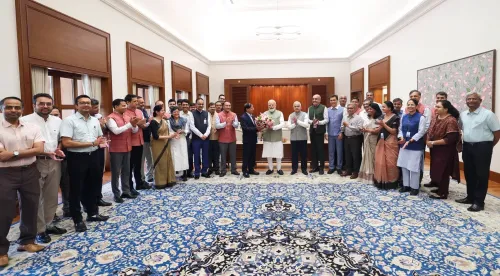
The cabinet standing ovation is a symbolic act involving all senior members of the Union Cabinet, signalling internal cohesion and public alignment behind the Prime Minister's leadership narrative. For the BJP and its communication machinery, such moments serve as high-visibility affirmations of party unity ahead of any future electoral cycle.
For the broader public, the milestone feeds into an ongoing national conversation about governance continuity, the stability of the current administration, and the trajectory of India's political leadership since 2014. Opposition parties have historically contested the framing of such milestones, arguing that length of tenure must be assessed alongside governance outcomes.
What's Next
The BJP and allied ministers are expected to continue amplifying the tenure milestone through parliamentary sessions and public events in the coming weeks. Any formal government or parliamentary resolution marking the exact benchmark would elevate the occasion from a party communication exercise to an official state acknowledgement.
With the next general election due no earlier than 2029, the trajectory of Modi's tenure — and whether it extends further — will remain a central theme in India's political discourse. The cabinet's collective gesture on 10 June 2026 signals that the ruling party intends to make leadership continuity a defining plank of its public messaging in the years ahead.
Point of View
Amplified by a senior minister on social media, is textbook BJP political communication: converting an institutional moment into a shareable narrative asset. By framing Modi's tenure specifically as an 'elected' record, the party sidesteps a direct comparison with Nehru's longer uninterrupted stint while still claiming a historic first. This kind of coordinated ministerial social-media activity, recurring since 2014, reflects a disciplined top-down messaging architecture that few Indian political formations have matched. The milestone framing also serves a forward-looking purpose — reinforcing the 'continuity and stability' argument the BJP is likely to deploy as it looks toward 2029.
NationPress
28 Jul 2026
Frequently Asked Questions
Is Narendra Modi the longest-serving Prime Minister of India?
The BJP describes Modi as India's longest-serving 'elected' Prime Minister, a framing that distinguishes his successive electoral mandates from tenures that were unelected or unbroken by elections. Jawaharlal Nehru served continuously from 1947 to 1964 , but the BJP's claim rests on the 'elected' qualifier.
Why did the Union Cabinet give Modi a standing ovation?
The Union Cabinet gave PM Modi a unanimous standing ovation to mark what the ruling BJP is celebrating as a milestone in his tenure as India's longest-serving elected Prime Minister, as shared by Minister Mansukh Mandaviya on 10 June 2026 .
Who is Mansukh Mandaviya?
Mansukh Mandaviya is a senior BJP leader and Union Minister holding the portfolios of Labour and Employment and Youth Affairs and Sports in the Modi government.
When did Narendra Modi become Prime Minister?
Narendra Modi was first sworn in as Prime Minister on 26 May 2014 . He was re-elected in 2019 and again in 2024 , making him the only Indian Prime Minister to win three consecutive majority mandates.
What does 'Pradhansevak' mean?
'Pradhansevak' is a Hindi term meaning 'Prime Servant' or 'Chief Servant.' PM Modi has used the phrase to describe his own role, framing the office of Prime Minister as one of public service rather than power.