Calcutta HC orders EVM data deletion for Bengal urban civic polls in November
Synopsis
Facing an EVM shortage ahead of November municipal elections, the West Bengal Election Commission won court clearance to wipe old data from preserved voting machines — but the Calcutta High Court carved out three KMC wards and Contai municipality, where separate legal proceedings remain live. The ruling keeps Bengal's civic poll schedule intact while highlighting the state's persistent backlog of unresolved electoral litigation.
Key Takeaways
The Calcutta High Court division bench on 14 October 2026 directed the WBEC to erase old EVM data for reuse in upcoming urban civic polls.
The order exempts three specific KMC wards and Contai municipality in East Midnapore , where separate cases remain pending.
A Supreme Court stay order applies to certain Contai municipality wards; other wards remain under Calcutta HC jurisdiction.
West Bengal urban civic body elections are scheduled for November 2026 , with results expected in December 2026 .
The bench is led by Chief Justice Ravindra Vithalrao Ghuge and Justice Om Narayan Rai .
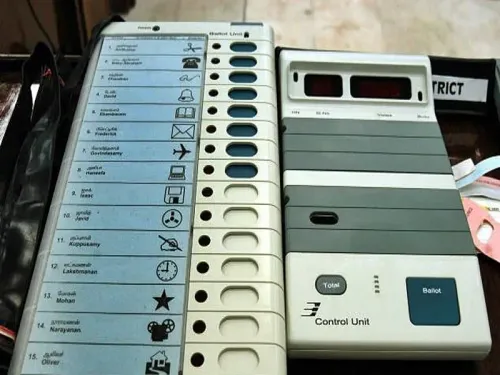
A division bench of the Calcutta High Court on Wednesday, 14 October 2026, directed the West Bengal Election Commission (WBEC) to erase old data stored in electronic voting machines (EVMs) used in previous elections, clearing the way for their reuse in upcoming urban civic body polls across the state. The order covers elections to several municipal bodies, including the Kolkata Municipal Corporation (KMC) and the Howrah Municipal Corporation.
Key Carve-Outs in the Order
The bench — comprising Chief Justice Ravindra Vithalrao Ghuge and Justice Om Narayan Rai — explicitly directed that old EVM data must not be erased in the case of three specific wards of the KMC and the Contai municipality in East Midnapore district. These wards remain subject to separate legal proceedings.
State Additional Advocate General Bilabial Bhattacharya informed the bench on Wednesday that the Supreme Court's stay order applied only to certain wards under the Contai municipality, while specific wards in other municipalities were still under the consideration of the Calcutta High Court itself. The division bench factored this distinction into its directive.
Why the WBEC Approached the Court
Several EVMs had been preserved over time due to pending litigation surrounding past urban civic body elections. With the WBEC facing a shortage of available EVMs, the commission approached the High Court seeking permission to delete old data from the preserved machines and redeploy them for the forthcoming polls.
At a prior hearing on 12 October, the Chief Justice's bench had queried the WBEC on two counts: whether old EVM data could be saved to a hard disk, and whether deletion was a necessary precondition for reuse. The commission confirmed that deletion was technically feasible and procedurally required before the machines could be used again.
Timeline for the Upcoming Polls
Urban civic body elections across West Bengal are scheduled to be held in November 2026, with results expected to be declared in December 2026. Wednesday's order effectively unblocks the EVM inventory the WBEC needs to conduct those polls, barring the machines tied to the three KMC wards and Contai municipality.
Broader Context
West Bengal's municipal election cycle has been punctuated by repeated legal challenges, with EVMs from multiple past polls impounded as evidence in ongoing cases. This is not the first time the WBEC has had to seek judicial clearance to release election hardware from court-ordered holds. The Commission's EVM inventory constraints reflect the cumulative weight of unresolved electoral litigation in the state — a pattern that critics argue underlines the need for faster disposal of election-related cases.
With the November poll schedule now intact, attention shifts to whether the three KMC wards and Contai municipality will see their cases resolved before election day.
Point of View
Hardware impoundment, and last-minute court interventions raises a legitimate question about whether the state's election machinery has the institutional resilience to handle a genuinely contested result.
NationPress
14 Oct 2026
Frequently Asked Questions
What did the Calcutta High Court order regarding EVMs in West Bengal?
The Calcutta High Court directed the West Bengal Election Commission to delete old data stored in EVMs used in previous elections so the machines can be reused in upcoming urban civic body polls scheduled for November 2026. The court, however, barred deletion of data from EVMs linked to three specific KMC wards and the Contai municipality in East Midnapore.
Why did the WBEC need court permission to delete EVM data?
Several EVMs had been preserved as evidence in pending legal cases relating to past urban civic body elections, effectively locking them out of circulation. Because the WBEC did not have enough machines for the forthcoming polls, it approached the Calcutta High Court for permission to clear the old data and redeploy the EVMs.
Which areas are exempt from the EVM data deletion order?
Three specific wards of the Kolkata Municipal Corporation and the Contai municipality in East Midnapore district are exempt. A Supreme Court stay order covers certain Contai wards, while the Calcutta High Court itself is still hearing matters related to specific KMC wards.
When are the West Bengal urban civic body elections scheduled?
The polls for several urban civic bodies in West Bengal, including the Kolkata Municipal Corporation and Howrah Municipal Corporation, are scheduled to be held in November 2026, with results expected in December 2026.
Who are the judges on the Calcutta High Court bench that issued this order?
The order was issued by a division bench comprising Chief Justice Ravindra Vithalrao Ghuge and Justice Om Narayan Rai of the Calcutta High Court.