CBSE gets 56,000 re-evaluation pleas, foils 3.8 million-packet cyber attack
Synopsis
CBSE is fighting two fires at once: more than 56,000 students have queued for re-evaluation in days, and its portal just absorbed a 3.8 million-packet DDoS hit. With the chairman and secretary transferred over the On-Screen Marking row, this is no longer a routine results cycle — it's a credibility test for India's biggest school board.
Key Takeaways
CBSE received over 56,000 verification and re-evaluation applications by 9.30 pm on 4 June .
A 3.8 million-packet denial-of-service attack on the portal was successfully thwarted.
Fees: ₹100 per subject for verification, ₹25 per question for re-evaluation; window open till midnight 6 June .
Aadhaar-based authentication has been introduced this year for applicant verification.
CBSE Chairman Rahul Singh and Secretary Himanshu Gupta were transferred amid the OSM controversy.
A one-member panel under S.
Radha Chauhan will report on OSM procurement within a month.
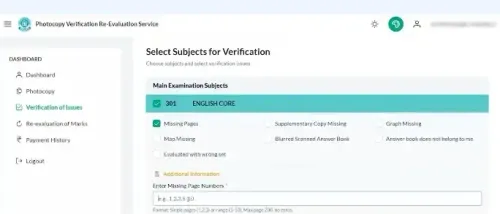
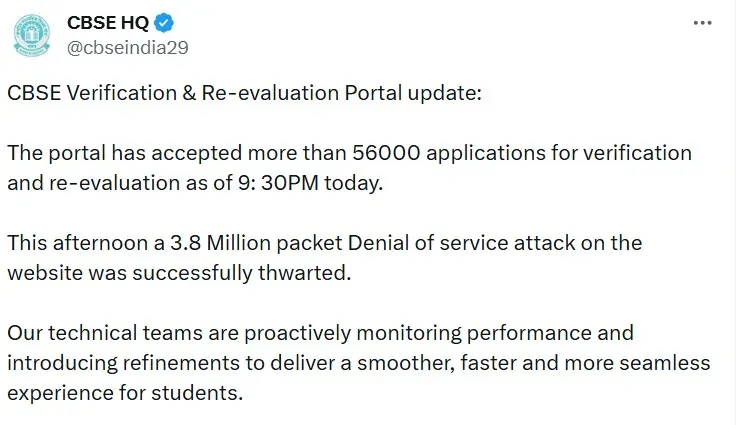
The Central Board of Secondary Education (CBSE) on 4 June said it had received more than 56,000 applications for answer-sheet verification and re-evaluation, even as its technical team thwarted a 3.8 million-packet denial-of-service attack on the official portal during the ongoing application window. The Board confirmed the developments in a post on social media platform X, signalling both heavy student demand and rising cyber risk around the digital evaluation cycle.
What CBSE said
'More than 56,000 applications for verification and re-evaluation were accepted by 9.30 pm,' the Board said in its statement. It added that 'our technical teams are proactively monitoring performance and introducing refinements to deliver a smoother, faster, and more seamless experience for students.'
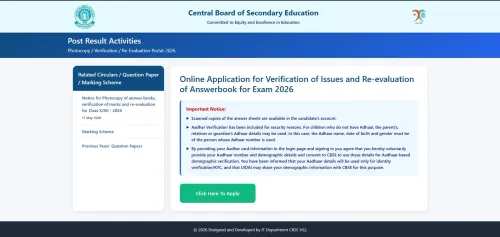
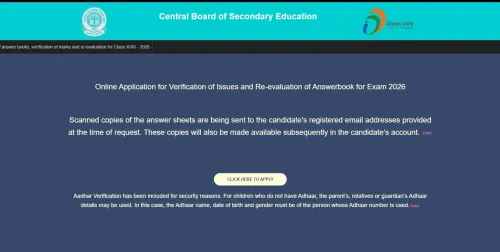
The online facility went live on 2 June and will remain open until midnight on 6 June. Applications can be filed only through the official portal, with offline submissions not entertained this year.
Fees and Aadhaar authentication
Students must pay ₹100 per subject for verification and ₹25 per question for re-evaluation. In a notable tightening, CBSE has introduced Aadhaar-based authentication for the first time to verify applicant identity and curb fraudulent requests.
Context: OSM controversy and top-level transfers
The surge in re-evaluation requests comes amid sharpening scrutiny of CBSE's newly rolled-out On-Screen Marking (OSM) system. Earlier this week, CBSE Chairman Rahul Singh and Secretary Himanshu Gupta were transferred after allegations of irregularities tied to the digital evaluation process.
The Centre has constituted a one-member inquiry committee headed by S. Radha Chauhan, Chairperson of the Capacity Building Commission, to examine the procurement and implementation of OSM services. The panel has been asked to submit its findings to the Department of Personnel and Training within one month.
Complaints driving the spike
Grievances range from answer-sheet mix-ups and marking discrepancies to grade allocation errors. The issue gained wider visibility after Class 12 student Sarthak Sidhant presented his observations on the OSM system before a parliamentary panel on education, drawing appreciation from committee members.
What's next
With the verification window closing on 6 June, the Board is expected to begin processing requests soon after, while the Chauhan committee's report could reshape how CBSE conducts digital evaluation in future cycles.
Point of View
000-application number in barely two days is not just demand — it is a vote of no-confidence in the marking cycle that produced these results. Layered on top of the On-Screen Marking controversy and the abrupt transfer of CBSE's top two officials, the Board is now defending both its servers and its credibility simultaneously. The Radha Chauhan inquiry must go beyond procurement and audit the OSM workflow end-to-end; otherwise next year's cycle will inherit the same trust deficit. Aadhaar gating is a sensible curb on fraud, but it cannot substitute for evaluation accuracy.
NationPress
18 Oct 2026
Frequently Asked Questions
How many re-evaluation applications has CBSE received so far?
CBSE has received more than 56,000 applications for verification and re-evaluation of answer scripts as of 9.30 pm on 4 June. The window opened on 2 June and remains active until midnight on 6 June.
What are the CBSE re-evaluation fees for 2025?
Students must pay ₹100 per subject for verification of marks and ₹25 per question for re-evaluation. All payments and submissions must be made through the official online portal, as offline applications are not accepted.
What was the cyber attack on the CBSE portal?
CBSE reported that its systems successfully thwarted a 3.8 million-packet denial-of-service (DoS) attack on the portal during the application period. The Board said its technical teams are continuously monitoring performance to keep the service stable.
Why were CBSE Chairman Rahul Singh and Secretary Himanshu Gupta transferred?
Both officials were transferred earlier this week amid controversy over alleged irregularities linked to the On-Screen Marking (OSM) system. The Centre has set up a one-member committee under S. Radha Chauhan to examine OSM procurement and implementation, with a report due within a month.
What is Aadhaar-based authentication in the CBSE re-evaluation process?
For the first time, CBSE has introduced Aadhaar-based authentication for verification and re-evaluation applications. The step is aimed at confirming applicant identity and preventing fraudulent or duplicate submissions.