Cotton Productivity Mission: CCI procures 522 lakh quintals, ₹41,530 crore paid to farmers
Synopsis
India's Cotton Corporation has completed one of its largest-ever MSP procurement drives — 522 lakh quintals, ₹41,530 crore paid directly to farmers — while a new ₹5,659 crore Cotton Productivity Mission aims to take Indian cotton from farm to global fashion market. The scale of the operation signals a structural shift in how the Centre is approaching cotton-sector reform.
Key Takeaways
The Cotton Corporation of India (CCI) procured over 522 lakh quintals of seed cotton through nearly 24 lakh farmer transactions in one of its largest-ever MSP drives. ₹41,530 crore was directly transferred into farmers' Aadhaar-linked bank accounts.
The MSP for seed cotton has been raised by approximately 7 per cent for Cotton Season 2026–27 .
The Cotton Productivity Mission–Kapas Kanti has been approved with an outlay of ₹5,659 crore over five years .
The Kasturi Cotton Bharat initiative will promote Indian cotton globally through certification, traceability, and sustainability standards.
The Kapas Darshan Bulletin was launched to deliver timely market, weather, and cultivation advisories to cotton farmers.
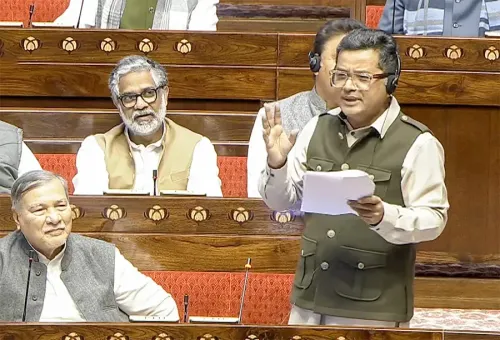
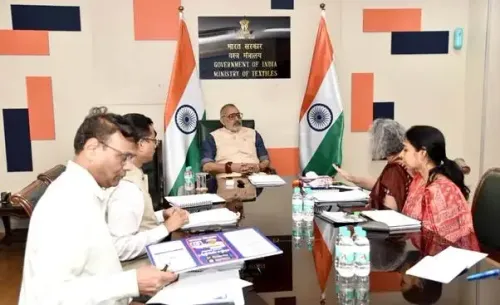
Textiles Minister Giriraj Singh on 2 August described cotton as the cornerstone of India's rural economy and reaffirmed the government's commitment to farmer welfare, citing record procurement figures and a newly approved productivity mission. The announcement came alongside the signing of four Memoranda of Understanding (MoUs) aimed at strengthening the country's cotton ecosystem.
Record MSP Procurement by CCI
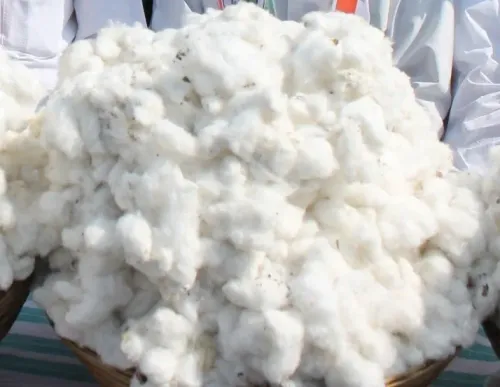
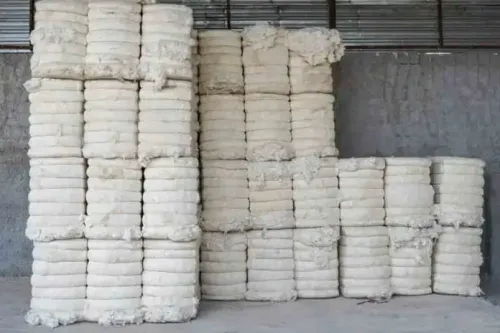
The Cotton Corporation of India (CCI) conducted one of the largest Minimum Support Price (MSP) procurement drives in its history, acquiring over 522 lakh quintals of seed cotton (kapas) through nearly 24 lakh farmer transactions. A total of ₹41,530 crore was directly transferred into farmers' Aadhaar-linked bank accounts, bypassing intermediaries and ensuring timely payment at scale.
The MSP for seed cotton has also been raised by approximately 7 per cent for Cotton Season 2026–27, a move the ministry says will reinforce income security for cotton-growing communities across the country.
Cotton Productivity Mission — Kapas Kanti
The recently approved Cotton Productivity Mission–Kapas Kanti carries an outlay of ₹5,659 crore over five years. The mission targets higher yields and better quality, modernisation of cotton processing infrastructure, and the promotion of traceability and branding through the Kasturi Cotton Bharat initiative.
Minister Singh described Kasturi Cotton Bharat as India's vehicle for taking premium domestic cotton from 'Farm to Fashion to Global Market', backed by internationally accepted certification, traceability, and sustainability standards. The initiative positions Indian cotton as a premium global commodity rather than a bulk raw material.
Kapas Darshan Bulletin and New MoUs
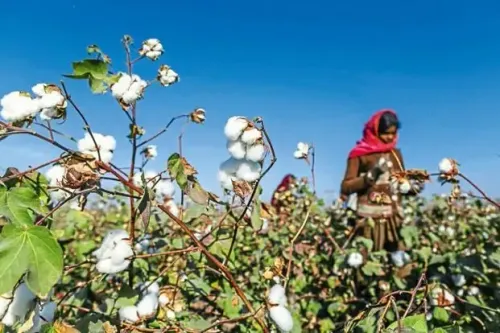
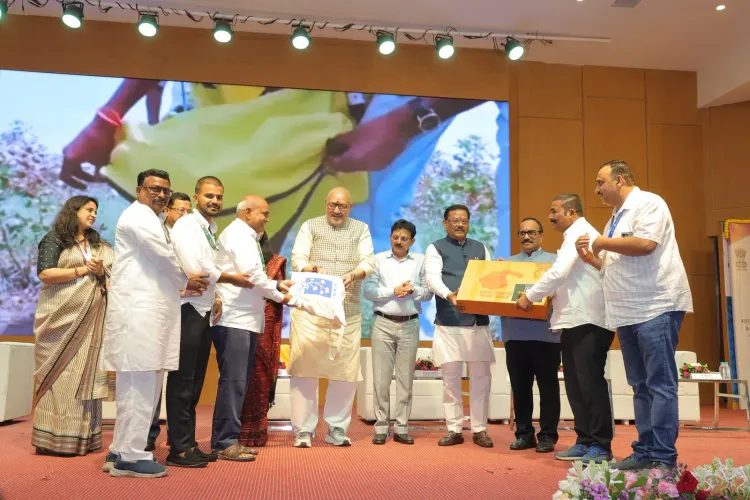
A key highlight of the programme was the launch of the 'Kapas Darshan' Bulletin, designed to provide cotton farmers with timely advisories covering weather patterns, market prices, scientific cultivation practices, quality management, and relevant government schemes. The bulletin is intended to close the information gap that has historically left smallholder farmers exposed to price and climate volatility.
Four MoUs were signed at the event to reinforce institutional linkages across the cotton value chain, though specific signatories were not detailed in the official communication.
Ministry's Value Chain Vision
Padmini Singla, Joint Secretary (Fibre) at the Ministry of Textiles, said India's cotton sector is entering a transformative phase driven by innovation, sustainability, and productivity enhancement. The ministry has framed its long-term ambition as covering the full value chain — from Farm to Fibre, Fibre to Fabric, and Fabric to Fashion.
Minister Singh expressed confidence that coordinated efforts among the government, farmers, industry, and research institutions would accelerate sectoral growth and contribute to the broader Viksit Bharat vision. With the Kapas Kanti mission now operational and procurement infrastructure scaled up, the next phase will test whether these investments translate into sustained farm income gains on the ground.
Point of View
But the deeper question is sustainability — MSP-driven procurement at this scale requires continuous fiscal commitment that the government has not always maintained across commodity cycles. The Kapas Kanti mission's ₹5,659 crore outlay is modest relative to the structural challenges facing Indian cotton: yields remain well below global benchmarks, and the sector is still recovering from the pink bollworm crisis. Kasturi Cotton Bharat is a promising branding play, but premium positioning requires consistent quality at origin — something that demands investment in extension services and farmer training, not just certification frameworks. The real test will come when global cotton prices fall and the government must choose between fiscal prudence and MSP support.
NationPress
16 Sept 2026
Frequently Asked Questions
What is the Cotton Productivity Mission–Kapas Kanti?
The Cotton Productivity Mission–Kapas Kanti is a government scheme approved with an outlay of ₹5,659 crore over five years, aimed at improving cotton yields and quality, modernising processing infrastructure, and promoting Indian cotton globally through the Kasturi Cotton Bharat branding initiative.
How much did CCI pay farmers in the latest MSP procurement drive?
The Cotton Corporation of India transferred ₹41,530 crore directly into the Aadhaar-linked bank accounts of farmers after procuring over 522 lakh quintals of seed cotton (kapas) through nearly 24 lakh transactions — one of the largest MSP drives in CCI's history.
By how much has the cotton MSP been increased for 2026–27?
The MSP for seed cotton has been raised by approximately 7 per cent for Cotton Season 2026–27, according to the Ministry of Textiles, to ensure remunerative prices and strengthen income security for cotton farmers.
What is Kasturi Cotton Bharat?
Kasturi Cotton Bharat is an initiative under the Ministry of Textiles that positions premium Indian cotton in global markets through internationally accepted standards of certification, traceability, and sustainability, following a 'Farm to Fashion to Global Market' model.
What is the Kapas Darshan Bulletin?
The Kapas Darshan Bulletin is a newly launched advisory publication for cotton farmers providing timely information on weather, market prices, scientific cultivation practices, quality management, and government schemes relevant to the cotton sector.