Cabinet clears ₹5,659 crore Mission for Cotton Productivity, targets 32 lakh farmers by 2031
Synopsis
The Union Cabinet has cleared a ₹5,659 crore cotton mission running through 2031 — India's most structured push yet to fix a sector stuck at low yields and poor quality. With a lint productivity target nearly double the current level and Kasturi Cotton Bharat as its global branding arm, this is as much a trade play as an agricultural one.
Key Takeaways
The Union Cabinet approved ₹5,659.22 crore for the Mission for Cotton Productivity covering 2026–27 to 2030–31 .
Lint productivity target set to rise from 440 kg/ha to 755 kg/ha , with total output projected at 498 lakh bales by 2031 .
Approximately 32 lakh farmers across 140 districts in 14 states will be covered in the initial rollout.
Kasturi Cotton Bharat initiative to provide traceability, certification, and global branding for Indian cotton.
Mission to be implemented by the Ministry of Agriculture and Ministry of Textiles , involving 10 ICAR institutes and 2,000 ginning factories .
Natural fibres including flax, ramie, bamboo, and banana to be integrated into India's fibre base under the same framework.
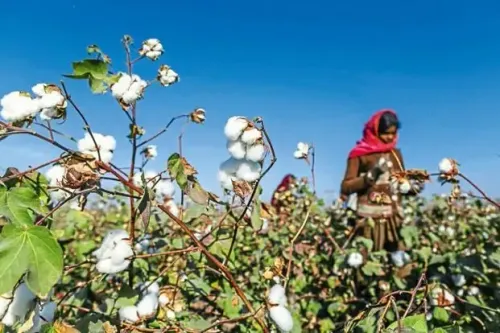
The Union Cabinet, chaired by Prime Minister Narendra Modi, on Tuesday, 6 May 2025, approved a ₹5,659.22 crore outlay for the Mission for Cotton Productivity covering the period 2026–27 to 2030–31. The mission aims to address persistent bottlenecks, declining growth, and quality concerns plaguing India's cotton sector, with approximately 32 lakh farmers expected to benefit directly.
What the Mission Covers
The mission is anchored in the government's 5F vision — Farm to Fibre to Factory to Fashion to Foreign — and targets a comprehensive overhaul of the cotton value chain. A central focus is the development of high-yielding variety (HYV) seeds that are resistant to disease, pests, and climate stress. Modern farming techniques such as the High Density Planting System (HDPS), Closer Spacing (CS), and Integrated Cotton Management will be scaled up through state governments, Krishi Vigyan Kendras, and State Agricultural Universities (SAUs).
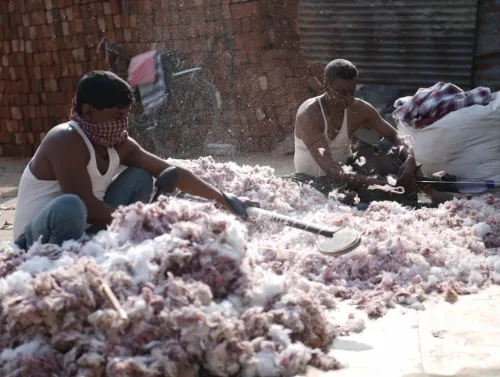
The mission also prioritises the promotion of Extra Long Staple (ELS) Cotton and the modernisation of ginning and processing factories, including the adoption of best processing practices. Strengthening cotton testing infrastructure with modern, standardised, and accredited facilities will ensure reliable quality assessment and global benchmarking.
Kasturi Cotton Bharat and Traceability
A key branding pillar of the mission is Kasturi Cotton Bharat, which seeks to position Indian cotton as a premium, sustainable, and globally trusted product. The initiative includes robust traceability and certification mechanisms, targeting a reduction in trash content to less than 2 per cent. Digital integration of market yards (mandis) will enable transparent price discovery and direct market access for farmers through e-platforms.
Production Targets and Farmer Impact
The mission envisages cotton production reaching 498 lakh bales (of 170 kg lint each) by 2031, achieved by enhancing lint productivity from 440 kg/ha to 755 kg/ha. An initial rollout will cover 140 districts across 14 states through state Departments of Agriculture and the Indian Council of Agricultural Research (ICAR), with 2,000 ginning and processing factories brought under the programme.
The mission will be implemented jointly by the Ministry of Agriculture and Farmers Welfare and the Ministry of Textiles, involving 10 ICAR institutes, one Council for Scientific and Industrial Research (CSIR) institute, and 10 centres of the All India Coordinated Research Project (AICRPs) on Cotton operating in major cotton-growing states.
Sustainability and Fibre Diversification
Beyond cotton, the mission seeks to diversify India's fibre base by incorporating natural fibres including flax, ramie, sisal, milkweed, bamboo, and banana. It also promotes cotton waste recycling and circular economy practices to reduce the environmental footprint and generate additional value streams. These initiatives are intended to align India's textile sector with evolving global demand for sustainable and traceable materials.
The mission is described by the government as a milestone in making India self-reliant in the cotton sector, with its multi-ministry, multi-institution framework signalling a more coordinated approach than previous standalone schemes.
Point of View
659 crore mission is well-scoped in ambition, but the real test lies in seed delivery and technology adoption at the farm level, where previous schemes have routinely stalled. The Kasturi Cotton Bharat branding push is strategically sound given global buyer appetite for traceable, sustainable cotton, but traceability infrastructure in Indian mandis remains nascent. The inclusion of natural fibres like flax and bamboo is a quiet but significant signal that the Centre is hedging on cotton's long-term dominance in the domestic textile mix.
NationPress
26 Sept 2026
Frequently Asked Questions
What is the Mission for Cotton Productivity approved by the Union Cabinet?
It is a five-year government scheme with a ₹5,659.22 crore outlay, running from 2026–27 to 2030–31, aimed at boosting cotton yields, improving quality, and strengthening the entire cotton value chain. The mission targets lint productivity of 755 kg/ha by 2031, up from the current 440 kg/ha.
How many farmers will benefit from the cotton productivity mission?
Approximately 32 lakh farmers are expected to benefit directly from the mission, with the initial rollout covering 140 districts across 14 major cotton-growing states.
What is Kasturi Cotton Bharat?
Kasturi Cotton Bharat is a branding and traceability initiative under the mission designed to position Indian cotton as a premium, sustainable, and globally trusted product. It includes certification mechanisms and targets a reduction in cotton trash content to less than 2 per cent.
Which ministries will implement the cotton productivity mission?
The mission will be jointly implemented by the Ministry of Agriculture and Farmers Welfare and the Ministry of Textiles, with the support of 10 ICAR institutes, one CSIR institute, and 10 All India Coordinated Research Project centres on Cotton.
What production target has been set under the mission?
The mission targets the production of 498 lakh bales of cotton (at 170 kg lint each) by 2031, achieved by nearly doubling lint productivity from 440 kg/ha to 755 kg/ha over the five-year period.