VB-G RAM G: Rural job scheme expands to 375 works, up 41% from earlier list
Synopsis
India's rural job scheme just got its biggest overhaul yet: 375 permissible works, up 41% from the previous 266, now include ice stupas, bamboo craft units, cyclone shelters and forest-fire lines — a signal that the Centre is reframing wage employment as a tool not just for income support, but for building climate-resilient rural infrastructure.
Key Takeaways
The Ministry of Rural Development notified 375 permissible works under VB-G RAM G on 5 October 2026 — a 41% expansion over the previous 266 works .
The largest category is water security with 128 works , including ice stupas (artificial glaciers) listed for the first time.
Core rural infrastructure covers 111 works ranging from rural roads and schools to solar street lighting and biogas plants.
98 livelihood-related works include cold storage units, SHG worksheds, cashew and oilseed processing units, and aquaculture structures.
A new, first-of-its-kind category of 38 works addresses extreme weather events and disaster preparedness, including cyclone shelters and forest-fire management infrastructure.
Work identification will follow a decentralised planning process , with local communities driving priority-setting.
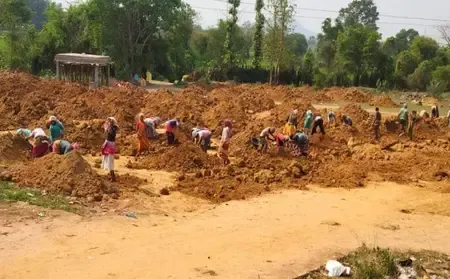
The Ministry of Rural Development has notified 375 permissible categories of works under the Viksit Bharat–Guarantee for Rozgar and Ajeevika Mission (Gramin), or VB-G RAM G, through a notification issued on 5 October 2026. The expanded schedule marks a 41% increase over the 266 works permitted under the previous framework, covering water security, core rural infrastructure, livelihood-related infrastructure, and a new category dedicated to extreme weather preparedness.
How the 375 Works Are Categorised
The largest segment within the new schedule is water security, which accounts for 128 works. This is followed by core rural infrastructure with 111 works, livelihood-related infrastructure with 98 works, and a newly introduced extreme weather and disaster preparedness category comprising 38 works.
The ministry stated that 'the new Schedule represents a 41 per cent expansion over the 266 works under the previous framework.'
Water Security: Canals, Ice Stupas and Harvesting Structures
Under the water security segment, permissible works span the construction, repair and maintenance of canals, flood and diversion channels, check dams, gully plugs and underground dykes. Rejuvenation of ponds and traditional water bodies, construction of percolation tanks, recharge pits, injection wells and other water harvesting structures are also included.
Notably, ice stupas — artificial glaciers — have been included for the first time as a region-specific measure to improve water availability and support agricultural activities. The schedule further permits works on drip and sprinkler irrigation systems, field-level water distribution channels and reclamation of waterlogged land. Afforestation linked to soil and moisture conservation — covering bamboo, mangrove, coconut, rubber and agro-forestry plantations — has also been incorporated.
Core Rural Infrastructure: Roads, Schools and Renewable Energy
The core rural infrastructure category covers construction and maintenance of rural roads, culverts, footpaths, gram panchayat buildings, anganwadi centres, rural libraries, health centres and veterinary centres. School-related works — including additional classrooms, laboratories, toilets, kitchen sheds, compound walls and playgrounds — have been brought within scope.
Waste management and renewable energy infrastructure are also included: recycling plants, waste segregation sheds, compost pits, greywater treatment units, solar street lighting systems and biogas plants. The framework additionally allows development of rural parks, bus stands, drinking water kiosks, seed banks, multipurpose youth centres and emergency evacuation shelters in border areas. Accessibility is also addressed, with the schedule specifically permitting stairs and ramps for persons with disabilities in government buildings.
Livelihood Infrastructure: SHGs, Cold Storage and Processing Units
The 98 livelihood-related works include training and skill development centres, worksheds for self-help groups (SHGs), rural haats and market yards, food grain and agricultural produce storage, and cold storage units to support post-harvest infrastructure. SHG and federation buildings, dairy and livestock facilities, fisheries structures, nurseries, poly-houses, and shelters for cattle, goats, pigs and poultry are also permissible.
Processing infrastructure is notably widened: the schedule covers mini flour mills, cashew processing units, oilseed processing facilities, integrated agro-processing units for cleaning, grading and packaging, and bamboo craft and biodegradable product processing units. Plantations linked to tea, coffee, horticulture, sericulture and medicinal trees are also included, broadening the range of agricultural and allied activities that can generate rural employment.
New Disaster Preparedness Category and Decentralised Planning
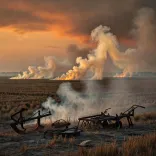
For the first time, a dedicated category of 38 works addresses extreme weather events. These include cyclone and flood shelters, embankments, spurs, flood protection walls, retaining walls and stabilisation ponds. Post-disaster restoration of rural roads and community assets is also covered, along with windbreak and shelterbelt plantations and forest-fire management infrastructure such as firebreaks, fuel buffer zones and animal protection trenches.
The ministry noted that 'the new framework seeks to move beyond a conventional list of asset types and align wage employment with the creation of durable rural assets and measurable development outcomes.' Identification and approval of works will follow a decentralised planning process, with local communities playing a central role in determining priorities. The updated schedule is expected to expand the scope of rural employment generation significantly under the VB-G RAM G mission going forward.
Point of View
Forest-fire lines and cyclone shelters alongside anganwadis and rural roads is an acknowledgement that extreme weather is now a structural challenge for rural India, not an episodic one. The critical question, however, is implementation: a longer menu of works only delivers if gram panchayats have the technical capacity to plan, execute and maintain them — a capacity gap that has historically hobbled rural employment schemes regardless of their design ambition. The decentralised planning mandate is the right intent; whether it is backed by commensurate technical support at the block and panchayat level will determine whether this framework produces durable assets or padded muster rolls.
NationPress
6 Oct 2026
Frequently Asked Questions
What is VB-G RAM G and what has the government announced about it?
VB-G RAM G stands for Viksit Bharat–Guarantee for Rozgar and Ajeevika Mission (Gramin), India's rural wage employment framework. On 5 October 2026, the Ministry of Rural Development notified an expanded schedule of 375 permissible categories of works under the mission — up 41% from the 266 works previously allowed — covering water security, rural infrastructure, livelihoods and, for the first time, disaster preparedness.
What are the four main categories of works under the new schedule?
The 375 works are split across four categories: water security (128 works), core rural infrastructure (111 works), livelihood-related infrastructure (98 works), and a new extreme weather and disaster preparedness category (38 works). Each category targets a distinct development need in rural areas.
Why have ice stupas been included in the rural employment schedule?
Ice stupas — artificial glaciers — have been included as a region-specific water conservation measure to improve water availability and support agricultural activities, particularly in high-altitude areas where glacial melt and water scarcity are acute concerns. Their inclusion reflects an effort to tailor the rural employment framework to local ecological conditions.
Who will decide which works are taken up under VB-G RAM G?
The Ministry of Rural Development has stipulated a decentralised planning process, with local communities playing a central role in identifying and prioritising works. This is intended to ensure that asset creation responds to ground-level needs rather than being driven top-down.
How does this expansion compare to the previous rural employment framework?
The previous framework permitted 266 categories of works. The new schedule of 375 works represents a 41% increase. Beyond the addition of new work types, the most significant structural change is the introduction of a dedicated disaster preparedness category — the first time such works have been formally embedded in the rural employment schedule.