CM Fadnavis Wins Centre Nod for Direct Onion Procurement
Synopsis
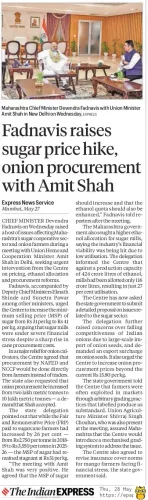
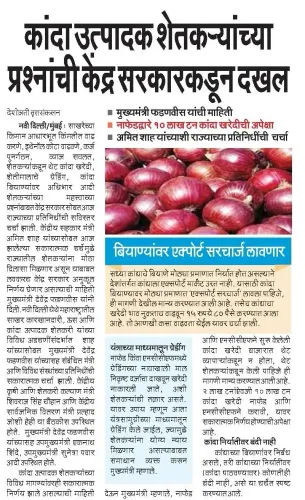
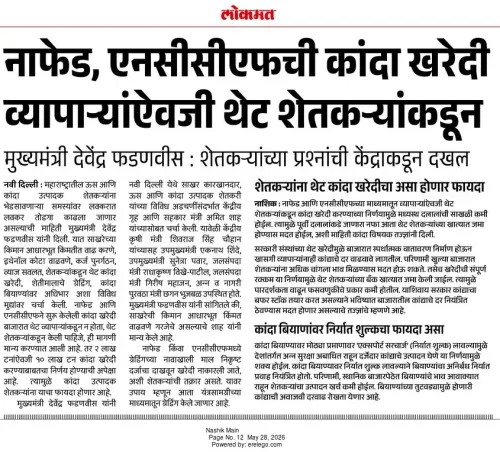
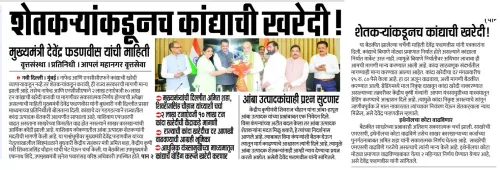
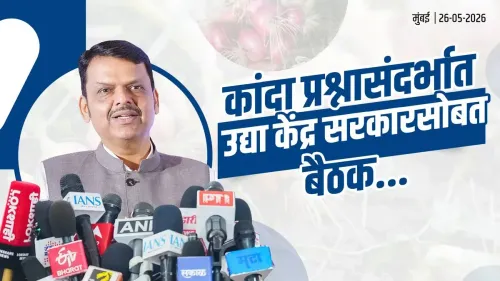
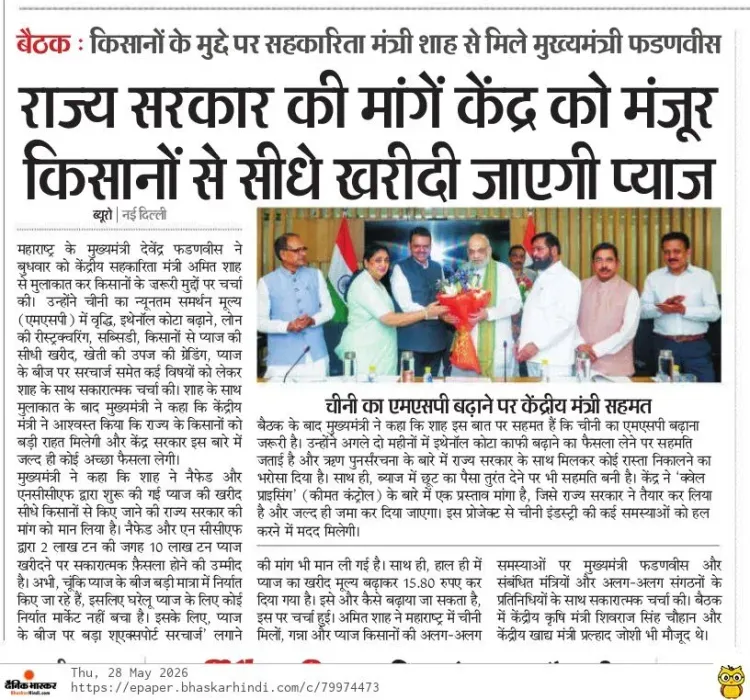
The Chief Minister's Office of Maharashtra announced on 28 May 2026 that the Centre has accepted the state's demands, with onions to be procured directly from farmers. The move, backed by CM Devendra Fadnavis and Union Home Minister Amit Shah, aims to shield growers from market price crashes.
Key Takeaways
The Chief Minister's Office of Maharashtra announced on 28 May 2026 that the Centre has accepted state government demands on onion procurement.
Onions will now be procured directly from farmers , bypassing intermediaries and providing a price floor during surplus seasons.
Maharashtra is India's largest onion-producing state, with growers in Nashik, Ahmednagar, and Pune districts most affected by price volatility.
The intervention is backed by the Centre's Price Stabilisation Fund (PSF) , established in 2014-15 for buffer stocking of perishables.
Union Home Minister Amit Shah and CM Devendra Fadnavis are directly associated with the centre-state coordination on this issue.
Specific procurement quantities, support prices, and designated agencies are yet to be officially notified.
The Chief Minister's Office of Maharashtra announced on Thursday, 28 May 2026 that the state government's demands have been accepted by the Centre, with onions to be procured directly from farmers — a significant relief measure for the state's growers facing market volatility.
Context
The CMO's post, addressed to Union Home Minister Amit Shah and Chief Minister Devendra Fadnavis, states in Hindi: 'Rajya sarkar ki maangein kendra ko manzoor — kisanon se seedhe kharidi jaayegi pyaaz' ('The state government's demands have been accepted by the Centre — onions will be purchased directly from farmers'). The announcement signals a breakthrough in centre-state negotiations over price support for Maharashtra's onion growers.
Maharashtra is India's largest onion-producing state, contributing a substantial share of national output. Periodic gluts in the local market — particularly after a bumper harvest — cause prices to crash, leaving farmers unable to recover even basic input costs. The state government had been pressing the Centre for direct procurement intervention ahead of the 2026 season.
Policy Backdrop
The Centre's Price Stabilisation Fund (PSF), established in 2014-15, was specifically designed to enable procurement and buffer stocking of onions and other perishables during surplus seasons. The fund allows central agencies to step in and purchase directly from farmers or farmer producer organisations, bypassing intermediaries and providing a price floor.
Direct procurement — as opposed to market-linked purchases — ensures that farmers receive a guaranteed off-take even when wholesale prices collapse. This mechanism also helps the government build a buffer stock that can be released into consumer markets when retail prices spike, addressing both ends of the price-volatility problem.
Stakeholders and Impact
The primary beneficiaries are Maharashtra's onion farmers, concentrated in districts such as Nashik, Ahmednagar, and Pune, who have repeatedly borne the brunt of price crashes in recent years. Direct procurement removes their dependence on commission agents and mandis during surplus seasons, providing more predictable income.
For the Fadnavis government, the Centre's acceptance of its demands is a political and administrative win, demonstrating effective federal coordination on a sensitive agrarian issue. Union Home Minister Amit Shah, who is tagged in the post, is frequently involved in brokering centre-state policy positions on agriculture and rural welfare, underscoring the political weight given to this announcement.
Consumers across India may also benefit indirectly: a well-managed procurement and buffer-stocking programme can moderate the sharp retail price spikes that typically follow periods of farm-level glut and distress selling.
What's Next
Attention will now turn to the operational details of the procurement programme — including the designated central or state agency responsible for purchases, the support price or minimum procurement price offered to farmers, and the total quantity targeted for the 2026 season. Official notifications from the Union Ministry of Agriculture and Farmers' Welfare or the state's cooperation department are expected to follow.
The rollout of direct procurement will be closely watched by farmer groups and market observers as a test of whether policy intent translates into timely, on-ground relief before the next harvest cycle peaks.
Point of View
Which has been a persistent demand from agrarian lobbies. For CM Fadnavis, securing this concession from New Delhi ahead of the harvest season is both a policy necessity and a political asset in a state where the onion belt is electorally sensitive. The tagging of Home Minister Amit Shah in the announcement underscores that this was a high-level political negotiation, not merely a bureaucratic exchange. How quickly the operational machinery is put in place will determine whether this announcement translates into tangible relief or remains a headline without delivery.
NationPress
20 Sept 2026
Frequently Asked Questions
What did the Centre agree to for Maharashtra onion farmers?
The Centre accepted Maharashtra's demand for direct procurement of onions from farmers, bypassing market intermediaries to provide a price floor during surplus seasons.
Who announced the Centre's acceptance of Maharashtra's onion demands?
The Chief Minister's Office of Maharashtra made the announcement on 28 May 2026, tagging CM Devendra Fadnavis and Union Home Minister Amit Shah.
What is the Price Stabilisation Fund and how does it help onion farmers?
The Price Stabilisation Fund, set up in 2014-15, allows the central government to procure and stock perishables like onions during surplus periods, protecting farmers from price crashes and consumers from price spikes.
Which districts in Maharashtra produce the most onions?
Nashik, Ahmednagar, and Pune are Maharashtra's major onion-producing districts and the farmers there are the primary beneficiaries of direct procurement schemes.
What details are still awaited on the onion procurement scheme?
Official notifications on procurement quantities, the minimum support or purchase price, and the agencies responsible for buying onions directly from farmers are yet to be released.