CM Fadnavis orders direct onion purchase from Maharashtra farmers
Synopsis
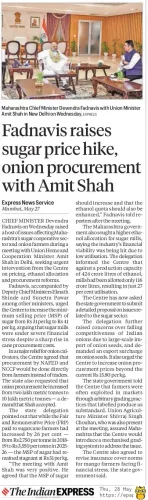
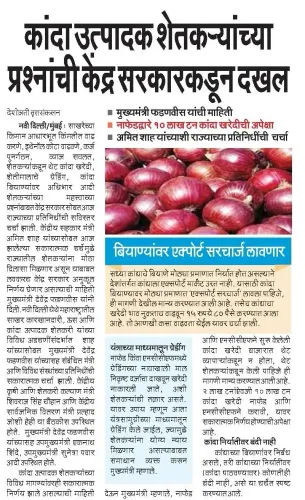
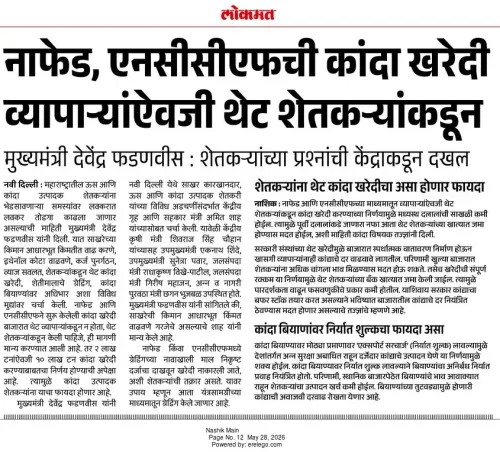
The Chief Minister's Office of Maharashtra announced on 28 May 2026 that the state will buy onions directly from farmers, cutting out intermediaries. Tagged to CM Devendra Fadnavis, the move revives a recurring state strategy to protect growers in Nashik and Ahmednagar from price crashes during surplus seasons.
Key Takeaways
The Chief Minister's Office of Maharashtra announced direct onion procurement from farmers on 28 May 2026 .
The announcement is tagged to Chief Minister Devendra Fadnavis and uses the Marathi phrase meaning 'Onion purchase directly from farmers!' Maharashtra is India's leading onion-producing state, with major growing districts including Nashik and Ahmednagar .
The intervention is designed to bypass intermediaries and provide a price floor to growers during surplus periods.
Key details — procurement volume, price per quintal, designated agencies — have not yet been officially disclosed.
Maharashtra has a documented history of deploying state procurement and minimum support price operations to counter recurring onion price crashes.
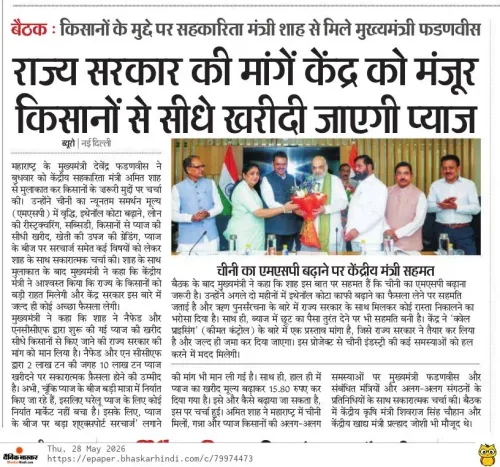
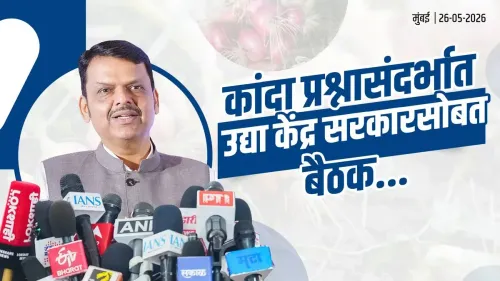
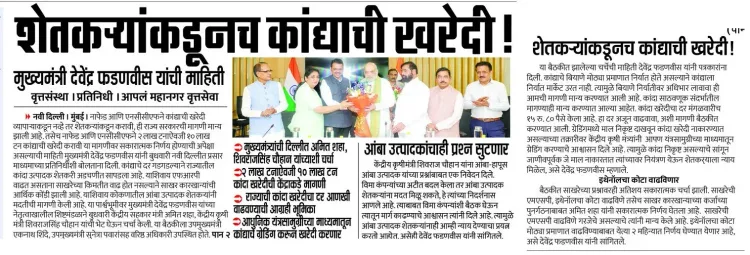
The Chief Minister's Office of Maharashtra announced on Thursday, 28 May 2026 that the state government will procure onions directly from farmers, signalling a fresh intervention to shield growers from price crashes in one of India's largest onion-producing states.
Context
The post, tagged to Chief Minister Devendra Fadnavis, carries the Marathi phrase 'शेतकऱ्यांकडूनच कांद्याची खरेदी!' — meaning 'Onion purchase directly from farmers!' — underlining that the procurement will bypass intermediaries and reach growers at the source. The announcement comes amid periodic price volatility that has long plagued Maharashtra's onion belt.
Onion farming is concentrated in districts such as Nashik and Ahmednagar, which together account for a significant share of India's total onion output. When wholesale prices collapse, farmers in these districts bear the sharpest losses, often unable to recover even basic input costs.
Policy Backdrop
Maharashtra governments have a recurring history of deploying state-agency procurement, minimum support price operations, and export management to counter onion gluts. The core logic of each such intervention is the same: reduce the margin captured by commission agents and traders so that a larger share of the consumer price flows back to the grower.
Direct procurement is considered more effective than market-linked support because it removes price discovery from wholesale mandis, where aggregated supply can drive rates sharply lower during harvest peaks. By stepping in as a buyer of last resort, the state aims to set a floor under farm-gate prices.
Stakeholders and Impact
The primary beneficiaries are onion farmers across Maharashtra, particularly smallholders in rain-fed districts who lack cold-storage access and are forced to sell immediately after harvest. For these growers, a government procurement window — even a limited one — can make the difference between a viable season and a distress sale.
Wholesale traders and commission agents in major mandis could see reduced throughput if the state agency absorbs a meaningful volume directly. Consumers, meanwhile, may see some near-term price steadiness if surplus stocks are channelled through public distribution rather than dumped on open markets.
What's Next
The key details that will determine the scheme's impact — procurement volumes, the price offered per quintal, the agencies designated to carry out purchases, and the duration of the window — are yet to be officially disclosed. Observers will also watch whether the intervention translates into measurable movement in benchmark wholesale onion prices at major Maharashtra mandis.
If procurement quantities are substantial and the floor price is set at a remunerative level, the move could provide meaningful relief to farmers ahead of the next major harvest cycle and reinforce the Fadnavis administration's positioning on agricultural welfare.
Point of View
' the Fadnavis administration is making a deliberate contrast with mandi-based mechanisms that have historically benefited middlemen more than growers. The move also signals that agricultural distress remains a live political pressure point in Maharashtra, where onion-belt constituencies carry considerable electoral weight. Whether the scheme delivers lasting relief will depend entirely on the operational details — volumes, prices, and speed of rollout — that are still awaited.
NationPress
22 Sept 2026
Frequently Asked Questions
What did the Maharashtra government announce about onion farmers on 28 May 2026?
The Chief Minister's Office of Maharashtra announced that the state government will procure onions directly from farmers, bypassing intermediaries, as a price-support measure.
Which districts in Maharashtra are the biggest onion producers?
Nashik and Ahmednagar are Maharashtra's largest onion-producing districts and are the primary focus of state procurement interventions during surplus seasons.
Why does Maharashtra frequently intervene in onion markets?
Onion prices in Maharashtra are highly volatile. During harvest surpluses, wholesale prices can crash sharply, leaving farmers unable to recover input costs, which prompts periodic state-level procurement and price-support operations.
How does direct procurement from farmers differ from mandi-based support?
Direct procurement bypasses commission agents and wholesale traders, allowing the government to set a floor price at the farm gate rather than letting mandi supply-demand dynamics determine what growers receive.
What details about the Maharashtra onion procurement scheme are still awaited?
The procurement volume, price offered per quintal, agencies designated to carry out purchases, and the duration of the procurement window have not yet been officially announced.