CM Fadnavis flags onion farmers' concerns, Centre takes note
Synopsis
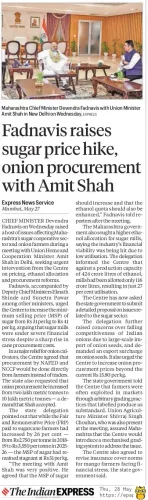
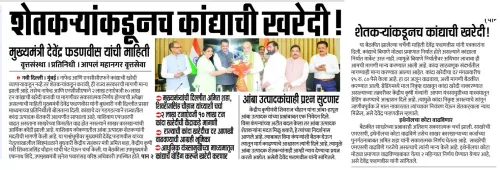
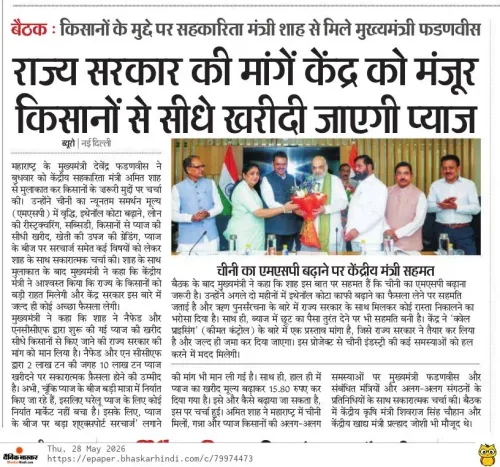
The Chief Minister's Office of Maharashtra announced on 28 May 2026 that the central government has taken note of issues raised by onion-producing farmers in the state, tagging CM Devendra Fadnavis in a Marathi-language post that signals active state-centre engagement on farm distress.
Key Takeaways
The Chief Minister's Office of Maharashtra posted on 28 May 2026 that the central government has acknowledged onion farmers' concerns.
Chief Minister Devendra Fadnavis was directly tagged, indicating senior political engagement on the issue.
Maharashtra is India's largest onion-producing state; price volatility in districts like Nashik and Ahmednagar directly affects rural incomes.
The central government's tools include adjusting the Minimum Export Price , export bans, and the Price Stabilisation Fund .
A formal response from the Ministry of Commerce on export quotas or procurement is the key development to watch.
The post follows a pattern of Maharashtra flagging perishable-crop distress to New Delhi ahead of possible trade or procurement interventions.
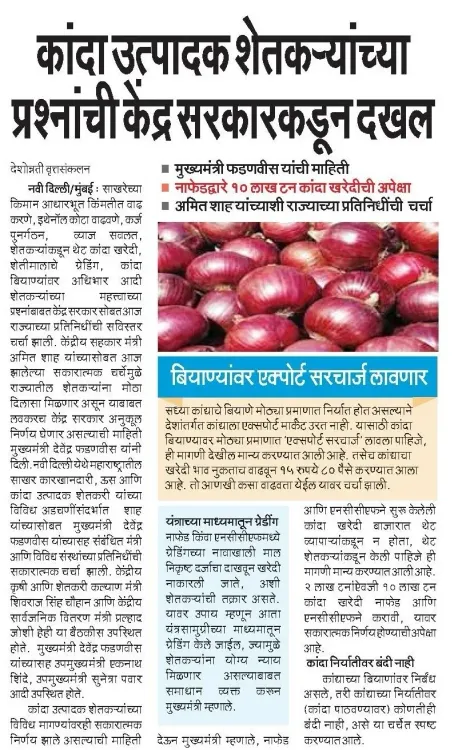
The Chief Minister's Office of Maharashtra posted on X on Thursday, 28 May 2026, signalling that the central government has acknowledged the concerns of onion-growing farmers in the state, with Chief Minister Devendra Fadnavis tagged directly in the communication.
The post, written in Marathi, reads: 'कांदा उत्पादक शेतकऱ्यांच्या प्रश्नांची केंद्र सरकारकडून दखल' — translated as 'The central government has taken note of the issues faced by onion-producing farmers.' The message was addressed as a reply to the official CMO account, with Fadnavis tagged, underscoring direct state-level engagement with New Delhi on the matter.
Context
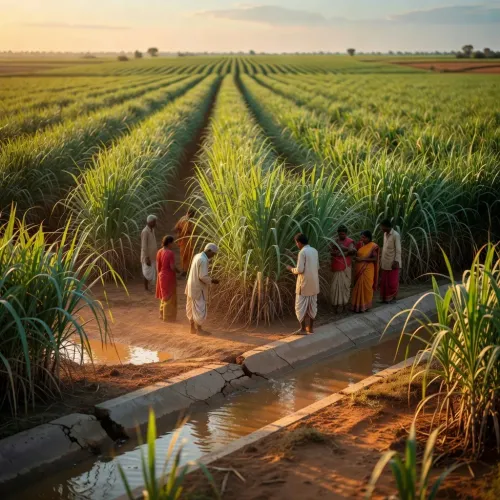
Maharashtra is India's largest onion-producing state, with farming communities in Nashik, Ahmednagar, and Pune districts particularly dependent on onion prices for their livelihoods. Sudden price crashes following bumper harvests, or abrupt export restrictions imposed to cool domestic retail prices, can devastate rural incomes in western Maharashtra within weeks. Onion distress has historically translated into acute political pressure on both state and central administrations.
The CMO's post signals that the state government has formally escalated farmer grievances to the central government and received at least an initial acknowledgment. Such communications are typically the first step in a negotiation process that can lead to trade-policy adjustments or procurement interventions.
Policy Backdrop
Onion trade policy has been a recurring flashpoint between farmer welfare and consumer price management. In 2019, the central government imposed a temporary ban on onion exports after domestic prices spiked sharply, a move that hurt farmers who had anticipated export-driven income. The following year, Maharashtra introduced an onion storage and procurement scheme in 2020 to provide a buffer against post-harvest price collapses.
The central government's primary tools in such situations include adjusting the Minimum Export Price (MEP), lifting or imposing export bans, and deploying the Price Stabilisation Fund (PSF) for direct procurement. Each mechanism carries trade-offs between protecting farmer incomes and keeping retail onion prices in check for urban consumers.
Stakeholders and Impact
Onion farmers and their cooperatives in Maharashtra stand to be the most directly affected by whatever follow-up action emerges from this central acknowledgment. A relaxation of export restrictions or an upward revision of the MEP would allow farmers to access better prices in international markets, particularly in South Asia and the Middle East, which are traditional destinations for Indian onions.
Maharashtra's agricultural cooperatives, including those in the Nashik belt, play a key role in aggregating produce and negotiating with government procurement agencies. Any central intervention — whether through the National Cooperative Exports Limited or direct PSF purchases — would flow partly through these bodies. Urban consumers, meanwhile, remain a counter-stakeholder, as easier exports tend to firm up domestic wholesale prices.
What's Next
The immediate signal to watch is any formal notification from the Ministry of Commerce and Industry regarding onion export quotas, MEP revisions, or an activation of central procurement under the Price Stabilisation Fund. A follow-up statement from Chief Minister Fadnavis or the state agriculture ministry detailing the nature of the central government's response is also likely.
If the acknowledgment translates into concrete policy action before the next harvest cycle, it could offer meaningful relief to onion growers who have long sought more predictable and remunerative pricing. The episode reinforces the broader pattern of Maharashtra using direct political communication to keep farmer distress on the central government's agenda.
Point of View
Who represents a BJP government aligned with the ruling dispensation at the Centre, this kind of coordinated messaging allows the state to claim credit for advocacy without antagonising its federal partner. The onion question sits at the heart of a structural tension in Indian agricultural policy: export-friendly measures help farmers but risk retail price spikes that hurt urban voters, making every intervention a delicate electoral calculation. If central action materialises before the next harvest, it will bolster the BJP's standing in western Maharashtra's politically influential farming belt.
NationPress
16 Oct 2026
Frequently Asked Questions
What has the central government done for Maharashtra onion farmers in 2026?
As of 28 May 2026, the Chief Minister's Office of Maharashtra stated that the central government has 'taken note' of onion farmers' concerns. Specific measures such as export relaxations or procurement drives had not been publicly announced at the time of the post.
Why are onion farmers in Maharashtra facing problems?
Onion farmers in Maharashtra face income instability due to volatile wholesale prices, which can crash after bumper harvests or when the central government restricts exports to control domestic retail prices. Districts like Nashik and Ahmednagar are most affected.
What is the Price Stabilisation Fund and how does it help farmers?
The Price Stabilisation Fund is a central government mechanism used to procure perishable commodities like onions directly from farmers or cooperatives when market prices fall sharply, providing a floor price and reducing distress sales.
What did CM Devendra Fadnavis say about onion farmers?
CM Devendra Fadnavis was tagged in the CMO Maharashtra post of 28 May 2026 that announced the central government's acknowledgment of onion farmers' issues. A separate direct statement from Fadnavis had not been published at that point.
What is Maharashtra's role in India's onion production?
Maharashtra is India's largest onion-producing state, with major cultivation in the Nashik, Ahmednagar, and Pune districts. The state's onion output significantly influences national wholesale prices and export volumes.