CM Fadnavis flags farmer issues, water mission, health push
Synopsis
The Chief Minister's Office of Maharashtra's daily summary for 27 May 2026 highlights CM Devendra Fadnavis on three fronts: central acknowledgement of sugarcane and onion farmers' demands, drought-proofing through Jal Jeevan Mission and river-linking, and the state's commitment to modern healthcare for all citizens.
Key Takeaways
The Chief Minister's Office of Maharashtra released its daily governance summary on Wednesday, 27 May 2026 .
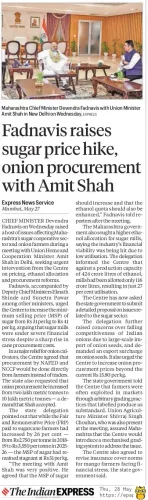
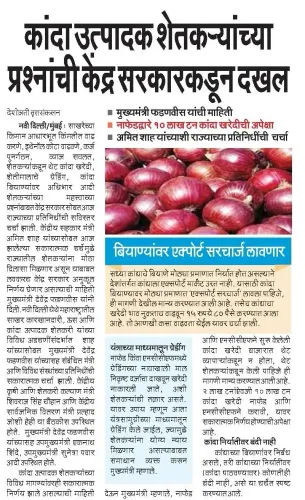
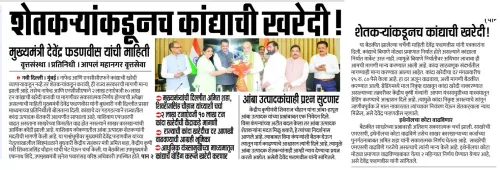
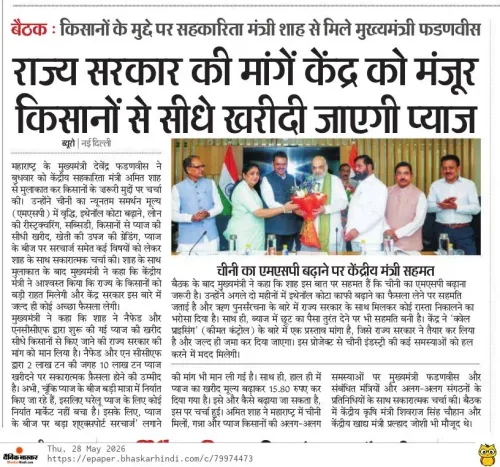
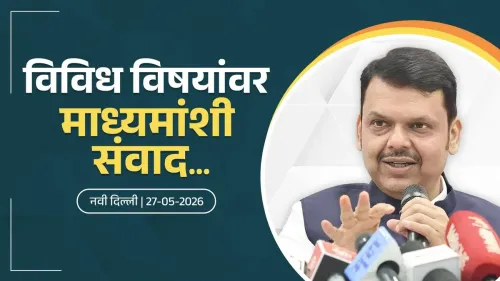
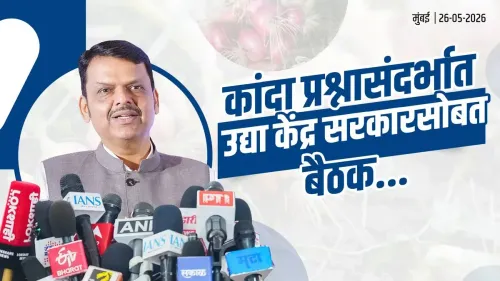
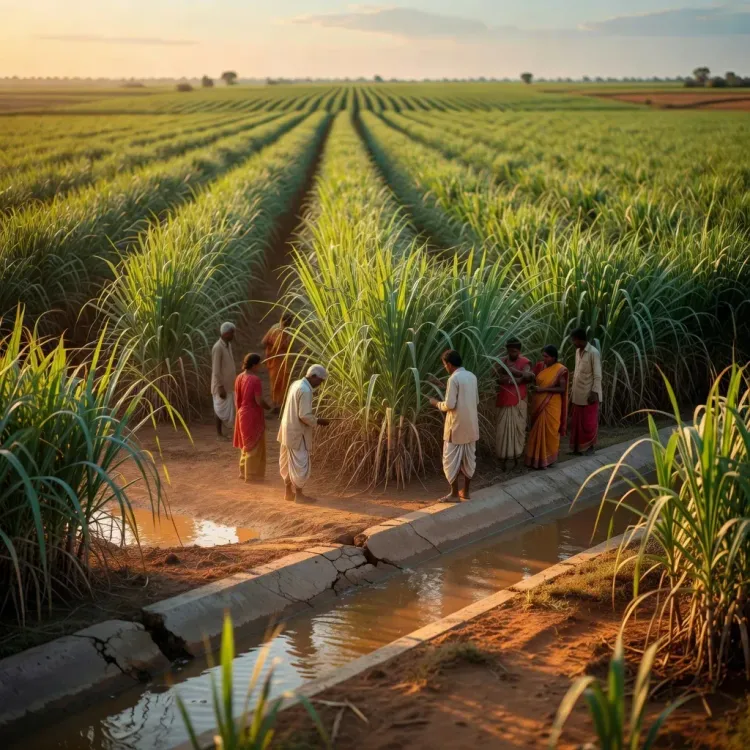
The central government has taken note of issues raised by sugarcane and onion farmers in Maharashtra, according to CM Devendra Fadnavis .
CM Fadnavis stated that Jal Jeevan Mission , water conservation, and river-linking projects are being pursued to make Maharashtra drought-free.
The state government has declared making modern and quality healthcare services available to ordinary citizens a top priority.
Maharashtra is a leading producer of both sugarcane and onions , making farmer welfare in these sectors a recurring centre-state policy issue.
The Chief Minister's Office of Maharashtra posted its daily governance summary on Wednesday, 27 May 2026, highlighting three key areas addressed by Chief Minister Devendra Fadnavis: central government attention to sugarcane and onion farmers' concerns, efforts to make Maharashtra drought-free through water missions, and the state's priority of delivering quality healthcare to ordinary citizens.
Context
The evening summary, a routine communication from the Chief Minister's Office, covered CM Fadnavis's statements across three distinct policy areas on the same day. On agriculture, the post noted: 'ऊस आणि कांदा उत्पादक शेतकऱ्यांच्या विविध प्रश्नांची केंद्र सरकारकडून दखल' — 'the central government has taken note of the various issues faced by sugarcane and onion-growing farmers.' This acknowledgement signals active centre-state engagement on two of Maharashtra's most politically sensitive farm constituencies.
Maharashtra is among India's largest producers of both sugarcane and onions. Recurring disputes over fair and remunerative prices, export restrictions on onions, and sugarcane arrears have long defined the relationship between the state's farming communities and both the state and central governments. Central attention to these demands, as flagged by CM Fadnavis, is a significant marker in that ongoing dialogue.
Policy Backdrop
On water security, the summary stated that efforts are underway — through the Jal Jeevan Mission, water conservation initiatives, and river-linking projects — to make Maharashtra drought-free. The Jal Jeevan Mission, a centrally sponsored scheme launched in 2019, aims to provide functional household tap water connections to every rural household across India. Maharashtra has combined this national programme with state-level watershed initiatives to address chronic drought vulnerability, particularly across the Deccan plateau region.
The state has a history of ambitious water conservation programming. The Jalyukt Shivar Abhiyan, launched in 2015 under an earlier Fadnavis-led government, sought to create permanent drought-proofing assets in villages. River-linking projects represent a further layer of long-term water infrastructure planning that the current administration is pursuing in parallel with the central mission.
Stakeholders and Impact
On healthcare, the summary quoted CM Fadnavis as saying the government's priority is to make modern, quality health services available to the common citizens of the state. This positions healthcare access as a third pillar of the administration's current governance agenda, alongside agriculture relief and water security.
The three themes together cover a broad cross-section of Maharashtra's population: sugarcane and onion farmers concentrated in districts such as Nashik, Pune, Ahmednagar, and Kolhapur; rural households dependent on reliable drinking water; and urban and peri-urban residents seeking improved public health infrastructure. Daily summaries of this kind serve both as a governance record and as a direct communication channel to citizens.
What's Next
Observers will watch for specifics on what the central government's 'taking note' of farmer issues translates into — whether in the form of procurement policy adjustments, export decisions on onions, or enhanced sugarcane support packages. On water, quarterly progress reports from the Maharashtra Water Resources Department on Jal Jeevan Mission coverage and river-linking milestones will indicate how far the drought-freedom goal is advancing. The health services commitment is likely to be tested against budget allocations and district-level delivery data in the months ahead. Together, these three signals from CM Fadnavis outline the state government's near-term governance priorities heading into the latter half of 2026.
Point of View
Water security, and healthcare in a single daily digest, the office signals breadth of policy engagement at a time when Maharashtra's agrarian communities remain under economic pressure. The framing of central government 'taking note' of farmer issues — rather than announcing concrete relief — is carefully calibrated language that claims credit for advocacy without over-promising outcomes. This pattern of centre-state signalling on onion and sugarcane policy has historically intensified ahead of procurement cycles and export-policy reviews, making the timing of such statements worth watching.
NationPress
23 Sept 2026
Frequently Asked Questions
What did CM Devendra Fadnavis say about sugarcane and onion farmers on 27 May 2026?
CM Devendra Fadnavis stated that the central government has taken note of the various issues faced by sugarcane and onion-producing farmers in Maharashtra, signalling active centre-state engagement on agricultural concerns.
What is the Jal Jeevan Mission and how does it relate to Maharashtra's drought problem?
Jal Jeevan Mission is a centrally sponsored scheme launched in 2019 to provide tap water connections to all rural households. Maharashtra is using it alongside state water conservation and river-linking projects to work towards making drought-prone regions, especially on the Deccan plateau, water-secure.
What are Maharashtra's river-linking projects?
Maharashtra's river-linking projects aim to transfer surplus water from water-rich river basins to drought-prone districts, complementing the Jal Jeevan Mission and watershed conservation efforts under the state's long-term drought-proofing strategy.
Why are onion and sugarcane farmers important in Maharashtra politics?
Maharashtra is one of India's top producers of both onions and sugarcane. Price volatility, export restrictions on onions, and delays in sugarcane payments have made farmer welfare in these sectors a recurring and politically sensitive issue in both state and central government policy.
What is the CMO Maharashtra daily summary?
The Chief Minister's Office of Maharashtra regularly posts a daily summary on social media recapping key statements, decisions, and policy positions of Chief Minister Devendra Fadnavis, serving as an official record of governance activity for that day.