CM Sawant thanks Modi, Sitharaman for ₹398 cr tax devolution to Goa
Synopsis
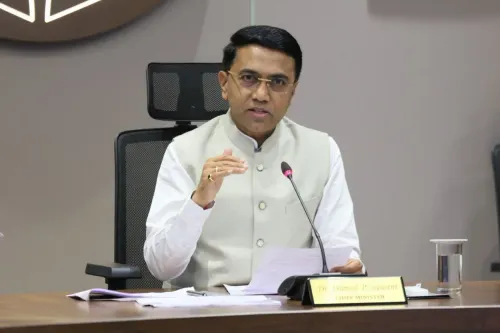
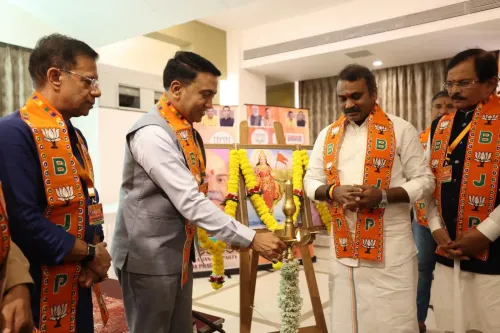
Goa Chief Minister Pramod Sawant publicly thanked PM Narendra Modi and Finance Minister Nirmala Sitharaman after the centre released ₹398 crore in constitutionally mandated tax devolution to Goa, earmarking it for welfare, infrastructure, and economic growth under the Viksit Bharat vision.
Key Takeaways
The central government released ₹398 crore in tax devolution funds to Goa , announced on 31 October 2026 .
CM Pramod Sawant publicly credited PM Narendra Modi and Finance Minister Nirmala Sitharaman for the transfer.
Tax devolution is a constitutional obligation under Articles 270 and 280 — not a discretionary grant.
The 15th Finance Commission fixed states' collective share at 41 per cent of the central divisible tax pool for 2021–2026.
Funds are untied, giving Goa full discretion to deploy them across welfare, infrastructure, and growth initiatives.
Sawant framed the release within the BJP's national Viksit Bharat development narrative ahead of the 2047 vision.
A fiscal injection of ₹398 crore is heading to Goa, and Chief Minister Pramod Sawant wasted no time crediting the centre for the transfer — framing it as fresh fuel for the state's ambitions on welfare, infrastructure, and economic growth.
Posting on Saturday, 31 October 2026, Sawant extended what he called his 'sincere gratitude' to Prime Minister Narendra Modi and Union Finance Minister Nirmala Sitharaman for releasing the funds. 'This timely support will further strengthen our Government's efforts towards social welfare, infrastructure development and sustainable economic growth,' he wrote, closing with the slogan: 'Empowering Goa. Accelerating Development. Building Viksit Bharat!'
What tax devolution actually means for Goa
This is not a grant or a scheme-specific handout — it is a constitutional entitlement. Under Articles 270 and 280 of the Indian Constitution, the central government is obligated to share a portion of its tax receipts with states through a mechanism called tax devolution. The 15th Finance Commission set the states' collective share at 41 per cent of the divisible pool of central taxes for the period 2021 to 2026.
Goa's individual share is determined by the Commission's formula, which factors in population, area, income distance, and fiscal performance. Releases are made periodically — calibrated to actual central tax collections — and land directly in state coffers with no strings attached, giving the state government full discretion over how to deploy the funds.
Sawant's development priorities in focus
For Sawant's administration, untied funds of this scale carry real weight. Goa's state budget is relatively compact compared to larger states, meaning a ₹398 crore release represents a meaningful addition to the fiscal calendar. The CM has consistently signalled priorities in coastal infrastructure, tourism-linked development, and social welfare schemes — areas that stand to benefit from discretionary central transfers.
The 'Viksit Bharat' framing Sawant deployed is deliberate: it aligns Goa's local development narrative with the BJP's national vision of a developed India by 2047, weaving a BJP-governed state's progress into the party's broader electoral and governance messaging.
Cooperative federalism — or routine politics?
Tax devolution is, constitutionally, automatic — not a favour the centre extends. But the political optics of publicly thanking the Prime Minister and Finance Minister for a transfer that is structurally mandated reflects a well-worn script in Indian politics: BJP-ruled states routinely amplify such releases as evidence of a cooperative and rewarding relationship with New Delhi. The practice underscores how fiscal federalism, however rule-bound, rarely travels far from political narrative.
The next data points to watch: how Goa's government formally allocates these funds in its budgetary statements, and whether the next quarterly devolution arrives on schedule as the 15th Finance Commission's mandate approaches its conclusion.
Point of View
Reinforcing the image of a cooperative and rewarding Centre-state relationship. The 'Viksit Bharat' sign-off anchors local governance optics to the party's 2047 national development brand — a messaging pattern that is now near-universal across BJP chief ministers. Analysts watching cooperative federalism will note that the 15th Finance Commission's mandate is nearing its end, making every release in this cycle a potential talking point ahead of the next Commission's recommendations. The episode is a small but clean example of how fiscal mechanics and political theatre are rarely separable in India's federal architecture.
NationPress
31 Oct 2026
Frequently Asked Questions
What is tax devolution and why did Goa receive ₹398 crore?
Tax devolution is the constitutionally mandated transfer of a share of central tax revenues to states. Goa received ₹398 crore as its periodic share of the central divisible pool, as determined by the 15th Finance Commission's formula covering the period 2021–2026.
Who decides how much tax devolution each state gets?
The Finance Commission, a constitutional body, determines each state's share using factors like population, area, income distance, and fiscal performance. The 15th Finance Commission fixed the states' collective share at 41 per cent of the central divisible pool for 2021–2026.
What will Goa use the ₹398 crore tax devolution for?
CM Pramod Sawant has indicated the funds will support social welfare, infrastructure development, and sustainable economic growth. Being untied transfers, the state government has full discretion over specific allocation.
Is the centre doing Goa a favour by releasing this money?
No — tax devolution is a constitutional obligation, not a discretionary favour. The central government is required to release states' shares of tax revenue based on actual collections and the Finance Commission's formula.
What is Viksit Bharat and why did CM Sawant mention it?
Viksit Bharat, meaning 'Developed India,' is the BJP-led central government's vision for India to become a fully developed nation by 2047. CM Sawant's reference aligns Goa's development spending with this national narrative, a common messaging tactic among BJP chief ministers.