PMMSY: Centre releases ₹2,208.74 crore to states for fisheries push in 3 years
Synopsis
India's fisheries sector has posted a near-40% jump in production and a 58% surge in exports since 2019-20, with the Centre channelling ₹2,208.74 crore to states over three years under PMMSY. The performance-linked disbursement model and a new digital MIS are the structural bets behind what the government is calling a blue revolution.
Key Takeaways
The Department of Fisheries released ₹2,208.74 crore to states under PMMSY across 2023-24 to 2025-26 .
Total approved allocation for the period stood at ₹3,159.83 crore .
India's fish production rose 39.61% from 141.64 lakh tonne in 2019-20 to 197.75 lakh tonne in 2024-25.
Fisheries exports surged 58.34% from ₹46,666 crore in 2019-20 to ₹73,890 crore in 2025-26.
Minister Rajiv Ranjan Singh told the Rajya Sabha there is no disparity in fund allocation among states and UTs.
A centralised PMMSY Management Information System tracks project progress at district and state level.
The Department of Fisheries has disbursed ₹2,208.74 crore to states across the last three financial years — from 2023-24 to 2025-26 — under the Pradhan Mantri Matsya Sampada Yojana (PMMSY), the flagship scheme for holistic development of the fisheries and aquaculture sector. The information was placed before Parliament on Wednesday, 22 July, underscoring the Centre's sustained push to scale up India's blue economy.
Scale of the Scheme
The Centre approved a total allocation of ₹3,159.83 crore for the three-year period, of which ₹2,208.74 crore has been released so far. State-wise allocation of central funds under PMMSY is determined annually based on overall budgetary provisions, the performance of individual states and Union Territories, fund-absorbing capacity, and physical and financial progress, including liabilities from projects sanctioned in earlier years.
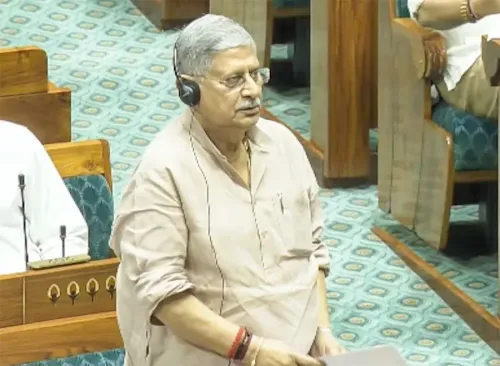
Fisheries, Animal Husbandry and Dairying Minister Rajiv Ranjan Singh stated in response to a question in the Rajya Sabha that there is no disparity in fund allocation among states and Union Territories under the scheme.
Fish Production and Export Surge
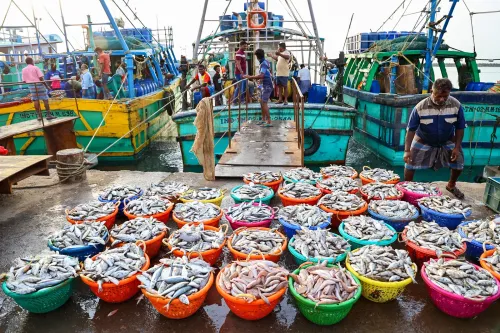
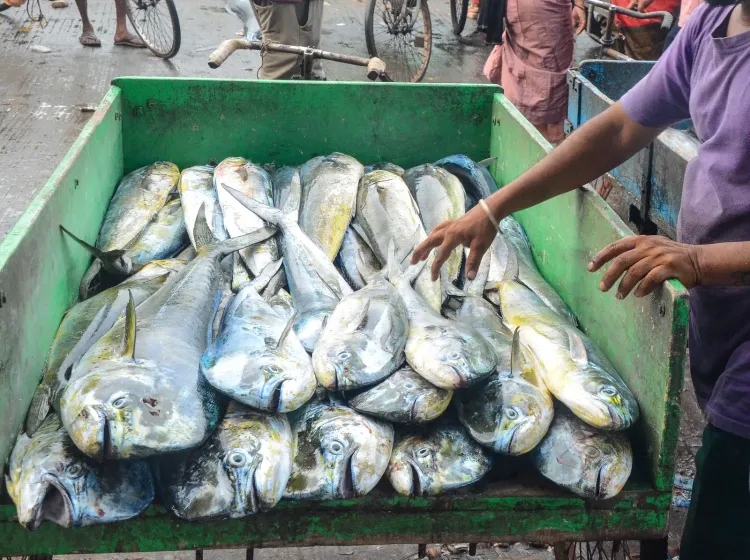
The numbers cited by the minister reflect a significant sectoral upturn. India's fish production has risen by 39.61 per cent — from 141.64 lakh tonne in 2019-20 to 197.75 lakh tonne in 2024-25. Fisheries exports have grown even faster, surging 58.34 per cent from ₹46,666 crore in 2019-20 to ₹73,890 crore in 2025-26.
Minister Singh attributed these gains to the success of what the government has described as the 'blue revolution', driven in large part by PMMSY investments in production infrastructure, productivity enhancement, and export facilitation.
Digital Monitoring Infrastructure
The Department of Fisheries has built a dedicated PMMSY Management Information System (MIS) — a centralised digital portal and dashboard — to track project progress across states. The platform aggregates district- and state-level data to enable real-time monitoring and evaluation.
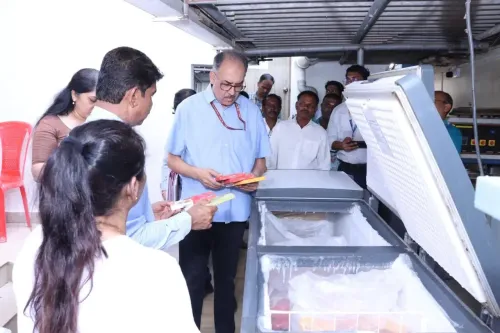
The minister noted that the department issues need-based advisories and conducts regular physical and virtual meetings with states and Union Territories, supplemented by field visits to review project progress and improve fund utilisation.
What This Means for States
The performance-linked disbursement model places a premium on states' ability to absorb and deploy funds efficiently. States that demonstrate stronger physical and financial progress are better positioned to attract higher annual allocations. This structure, according to the ministry, is designed to incentivise outcomes rather than merely channelling outlays.
With fisheries exports already crossing ₹73,890 crore and production nearing 200 lakh tonne, the sector's trajectory will depend on whether states can continue scaling infrastructure and cold-chain capacity in the years ahead.
Point of View
But the gap between the approved ₹3,159.83 crore and the ₹2,208.74 crore actually released — roughly 30% unspent — points to persistent fund-absorption constraints at the state level. The government's own performance-linked model implicitly acknowledges this, yet the MIS dashboard and advisory mechanism are only as effective as the institutional capacity of weaker states to respond. India's blue economy ambitions will stall if the same states that lag on absorption also lag on cold-chain and port infrastructure. The real test of PMMSY is not the headline disbursement number but whether the production and export gains are distributed across coastal and inland fishing communities — or concentrated in a handful of high-capacity states.
NationPress
22 Jul 2026
Frequently Asked Questions
What is the Pradhan Mantri Matsya Sampada Yojana (PMMSY)?
PMMSY is the Centre's flagship scheme for holistic development of India's fisheries and aquaculture sector. It funds production infrastructure, productivity enhancement, and export facilitation, with allocations made annually to states and Union Territories based on performance and fund-absorbing capacity.
How much has the Centre released to states under PMMSY?
The Department of Fisheries released ₹2,208.74 crore to states over three financial years from 2023-24 to 2025-26, out of a total approved allocation of ₹3,159.83 crore for the period.
How has India's fish production changed since 2019-20?
India's fish production grew 39.61 per cent from 141.64 lakh tonne in 2019-20 to 197.75 lakh tonne in 2024-25, according to figures presented by Minister Rajiv Ranjan Singh in the Rajya Sabha on 22 July.
How much have fisheries exports grown under PMMSY?
Fisheries exports surged 58.34 per cent from ₹46,666 crore in 2019-20 to ₹73,890 crore in 2025-26, reflecting what the government describes as the success of the blue revolution.
How does the Centre monitor PMMSY fund utilisation?
The Department of Fisheries operates a centralised PMMSY Management Information System — a digital portal that aggregates district and state-level data for real-time monitoring. It is supplemented by need-based advisories, regular virtual and physical meetings with states, and field visits to review project progress.