Dr. Jitendra Singh: CFTRI Upgrades J&K's Kaladi Cheese
Synopsis
CFTRI Mysuru, under CSIR, is using food technology to extend the shelf life of Kaladi, a GI-tagged cheese from Udhampur in Jammu and Kashmir, with the aim of making it commercially viable for national food chains, Union Minister Dr. Jitendra Singh announced.
Key Takeaways
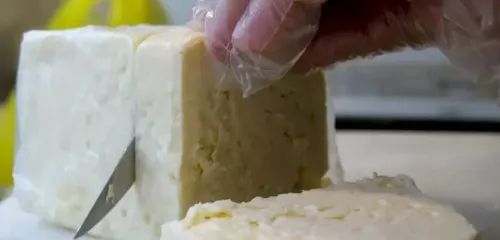
Kaladi cheese , a GI-tagged traditional dairy product from Udhampur, Jammu and Kashmir , is undergoing technological development at CFTRI Mysuru .
CFTRI is a CSIR laboratory based in Mysuru, Karnataka , specialising in food science and processing technologies.
The institute has already worked on extending Kaladi's refrigerated shelf life as an initial milestone.
The next phase targets converting Kaladi into a commercially scalable product for professional food chains and varied recipes.
CFTRI previously developed millet-based recipes that were adopted commercially by McDonald's India during the International Year of Millets in 2023 , cited as a model for this initiative.
The project is part of broader CSIR efforts to link artisanal J&K produce with national supply chains following the territory's reorganisation.
Union Science and Technology Minister Dr. Jitendra Singh announced on Monday, 15 June 2026 that Kaladi cheese, a Geographical Indication (GI)-tagged dairy product from Udhampur, Jammu and Kashmir, is undergoing a major technological intervention at the Central Food Technological Research Institute (CFTRI) in Mysuru, Karnataka, aimed at making it commercially viable for national food chains.
Context
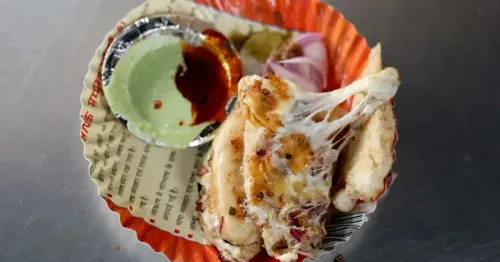
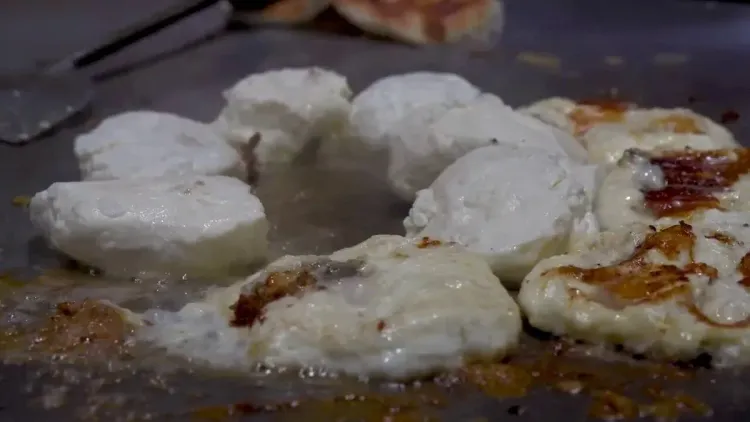
Kaladi is a traditional semi-hard, fried cheese produced by dairy farmers in the Udhampur district of Jammu and Kashmir. The product holds a GI tag, recognising its unique regional origin and artisanal character. Despite its cultural significance, Kaladi has historically remained confined to local markets due to limited shelf life and the absence of standardised processing methods.
Dr. Singh's post on X (formerly Twitter) outlined the progress made so far: scientists at CFTRI Mysuru have successfully extended Kaladi's refrigerated shelf life, with the next goal being conversion of the product into a commercially scalable format suitable for professional food chains and varied recipes.
Policy Backdrop
CFTRI is a laboratory under the Council of Scientific and Industrial Research (CSIR), India's premier publicly funded research network. The institute has a track record of bridging traditional foods and modern food-processing standards. Notably, during the International Year of Millets in 2023, CFTRI developed millet-based recipes that were subsequently adopted for commercial menus by McDonald's India — a precedent Dr. Singh explicitly cited in his post as a model for Kaladi's journey.
The Kaladi initiative fits within a broader pattern of CSIR institutes applying industrial food technology to GI-tagged regional products, particularly from Jammu and Kashmir and north-eastern states. Post-2019, the Union Territory has seen accelerated efforts to link its artisanal produce with national supply chains and organised retail. The One District One Product (ODOP) framework and various food-processing schemes have provided institutional scaffolding for such interventions.
Stakeholders and Impact
The primary beneficiaries of a successful scale-up would be Udhampur's dairy farming communities, whose livelihoods depend on traditional cheese production. A longer shelf life and entry into organised retail or quick-service restaurant (QSR) chains would substantially expand their market reach and income potential.
For the broader food industry, the Kaladi project signals that regional GI products can be integrated into mainstream supply chains without sacrificing their identity. If large food chains adopt Kaladi-based recipes — as they did with millet products — it could trigger significant demand and encourage similar technology-transfer efforts for other traditional Indian foods.
What's Next
The immediate next step, as stated by Dr. Singh, is to convert Kaladi into a commercially scalable product that can feature in different recipes served by professional food chains. Observers will watch for pilot-scale manufacturing trials at CFTRI Mysuru, potential memoranda of understanding with QSR or food-processing companies, and whether Kaladi is brought under existing food-processing or ODOP schemes in Jammu and Kashmir.
The Kaladi project, if it follows the millet trajectory, could serve as a replicable template for dozens of other GI-tagged foods from J&K and beyond — demonstrating how publicly funded science can convert cultural heritage into commercial opportunity.
Point of View
The Ministry is also weaving it into a political narrative of governance delivery in J&K. If the commercialisation succeeds, it could validate a replicable model for dozens of other GI products languishing in regional obscurity.
NationPress
15 Sept 2026
Frequently Asked Questions
What is Kaladi cheese and where does it come from?
Kaladi is a traditional semi-hard cheese made from cow or buffalo milk, originating from the Udhampur district of Jammu and Kashmir. It holds a Geographical Indication (GI) tag, which certifies its unique regional identity.
What is CFTRI Mysuru and what is its role in this project?
The Central Food Technological Research Institute (CFTRI) in Mysuru, Karnataka is a laboratory under the Council of Scientific and Industrial Research (CSIR). It specialises in food science and is working to extend Kaladi's shelf life and develop scalable processing methods.
What progress has been made on Kaladi cheese at CFTRI?
According to Union Minister Dr. Jitendra Singh, CFTRI has achieved an extension of Kaladi's refrigerated shelf life as an initial milestone, without compromising its quality, texture, or nutritional value.
Has CFTRI Mysuru done similar work for other traditional Indian foods?
Yes. During the International Year of Millets in 2023, CFTRI developed millet-based recipes that were subsequently adopted for commercial menus by McDonald's India, which the Ministry cited as a precedent for the Kaladi initiative.
What is the next step for Kaladi cheese commercialisation?
The next step is to convert Kaladi into a commercially scalable product that can be incorporated into different recipes and served by professional food chains, potentially including quick-service restaurant networks.