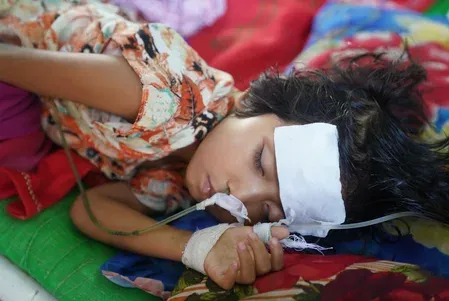
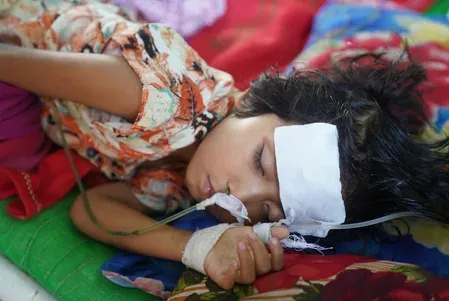
Chandipura Virus deaths in Rajasthan: Two children dead, three districts on alert
Synopsis
Two children from Rajasthan have died of confirmed Chandipura virus infection after being treated in Gujarat — with lab confirmation arriving eight days after the first death. The delayed diagnosis has prompted a multi-district alert covering Dungarpur, Sirohi, and Udaipur, raising urgent questions about cross-state disease surveillance during monsoon season.
Key Takeaways
Two children from Rajasthan — a 6-year-old from Dungarpur and a 2-year-old from Sirohi — have died of confirmed Chandipura virus (CHPV) infection.
Both were receiving treatment at hospitals in Gujarat ; lab confirmation came from the Gujarat Biotechnology Research Centre on 23 July .
Dungarpur , Sirohi , and Udaipur districts have been placed on heightened alert.
A door-to-door survey covering 75 households in Ratanpura village found no additional suspected cases, according to Dr.
Alankar Gupta , Dungarpur's Chief Medical and Health Officer.
Rapid Response Teams are screening children below 15 years for fever, seizures, vomiting, and altered consciousness.
Three suspected CHPV cases have been reported in Rajasthan so far, including the two confirmed fatalities.
The Rajasthan government has intensified surveillance across southern districts after two children from the state died of confirmed Chandipura virus (CHPV) infection, both while receiving treatment at hospitals in Gujarat. The deaths, reported on 24 July, have placed Dungarpur, Sirohi, and Udaipur districts on heightened alert, with Rapid Response Teams deployed and door-to-door surveys under way.
The Two Confirmed Fatalities
The victims are a 6-year-old girl from Ratanpura village in Dungarpur district and a 2-year-old girl from Sirohi district. According to health officials, the Dungarpur child developed fever on 12 July and was initially treated at private hospitals before being admitted to Himmatnagar Civil Hospital in Gujarat on 14 July. She died on 15 July, while laboratory confirmation of Chandipura virus infection arrived from the Gujarat Biotechnology Research Centre only on 23 July — a gap of eight days that delayed the activation of surveillance protocols in Rajasthan.
Ground Response: Surveys, Health Camps, and Spraying Drives
In Ratanpura village of Dungarpur's Simalwara block, officials organised a health camp at the local government school and conducted a door-to-door survey covering 75 households. Children were medically examined and residents were briefed on the disease's symptoms and transmission pathways.
Dungarpur Chief Medical and Health Officer Dr. Alankar Gupta confirmed that the survey did not identify any additional suspected Chandipura virus cases in the village. Rapid Response Teams are screening children — particularly those below the age of 15 — for warning signs including high fever, persistent vomiting, seizures or convulsions, and altered consciousness or unusual drowsiness.
The Animal Husbandry Department has also joined the response, conducting insecticide spraying and inspection drives in affected villages, including Ratanpura, to control the insect vectors associated with CHPV transmission.
What Is Chandipura Virus and Why It Is Dangerous
Chandipura virus is a rare but potentially fatal arboviral infection — spread through insect bites, particularly sandflies — that primarily affects children and can rapidly progress to acute encephalitis. Outbreaks have historically been concentrated in tribal and forested belts of central and western India. The virus was first identified in Chandipura village in Maharashtra in 1965 and has since been linked to sporadic but lethal clusters, particularly in Gujarat and Rajasthan. The current cases mark a renewed concern given the monsoon season, which typically amplifies insect vector activity.
State Advisory and What Comes Next
Health officials have urged parents to seek immediate medical attention if children develop any of the identified warning symptoms. The state government has appealed to residents to maintain hygiene, protect children from insect bites, and report suspected cases without delay.
According to health officials, three suspected Chandipura virus cases have been reported in Rajasthan so far, including the two confirmed fatalities. Surveillance will continue across vulnerable areas, with district administrations working closely with medical teams to detect cases early and prevent further transmission. The Health Department has expanded its response to include school-based health screenings and monitoring of children showing symptoms of acute encephalitis across all three alert districts.
Point of View
Where Rajasthan children are treated in Gujarat hospitals, creates a surveillance blind spot: the confirming lab is in one state while the source village is in another. This is not a new problem; the 2003 and 2004 Chandipura outbreaks in Gujarat and Andhra Pradesh exposed identical gaps. With monsoon season at its peak and sandfly activity elevated, the real risk is that delayed confirmation allows community-level transmission to go undetected for days. Rajasthan's response — health camps, spraying drives, Rapid Response Teams — is textbook. Whether it is fast enough depends on a cross-state data-sharing mechanism that has historically been the weakest link in India's outbreak response architecture.
NationPress
22 Oct 2026
Frequently Asked Questions
What is Chandipura virus and how does it spread?
Chandipura virus (CHPV) is a rare arboviral infection spread primarily through the bites of sandflies and other insect vectors. It can cause acute encephalitis and is particularly dangerous for children, with outbreaks historically recorded in tribal and forested belts of central and western India.
How many children have died of Chandipura virus in Rajasthan?
Two children from Rajasthan have died of confirmed Chandipura virus infection — a 6-year-old girl from Dungarpur district and a 2-year-old girl from Sirohi district. Both were undergoing treatment at hospitals in Gujarat when they died. A total of three suspected CHPV cases have been reported in the state so far.
Which districts in Rajasthan are on alert for Chandipura virus?
Dungarpur, Sirohi, and Udaipur districts have been placed on heightened alert following the confirmed deaths. Rapid Response Teams have been deployed and door-to-door surveys are under way across these areas.
What symptoms should parents watch for in children?
Health officials have advised parents to watch for high fever, persistent vomiting, seizures or convulsions, and altered consciousness or unusual drowsiness. Parents are urged to seek immediate medical attention if any of these symptoms appear, particularly in children below the age of 15.
Why was the Chandipura virus confirmation delayed?
The 6-year-old girl from Dungarpur died on 15 July, but laboratory confirmation of Chandipura virus infection was received from the Gujarat Biotechnology Research Centre only on 23 July — eight days later. The delay occurred because the child was being treated in Gujarat, and samples had to be processed there before results could be shared with Rajasthan health authorities.