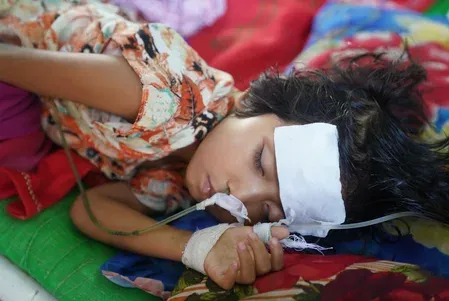
Gujarat Chandipura virus: 42 confirmed cases, 28 deaths since June 30

Synopsis
Gujarat's Chandipura virus toll has climbed to 28 deaths from 42 confirmed cases since 30 June — a case fatality rate of nearly 67%. With 10 lab results still pending and the monsoon season sustaining sandfly activity, the numbers are not final. This is the same state that faced a significant Chandipura outbreak in 2024, and the pattern of geographically dispersed cases makes containment harder to execute.
Key Takeaways
Gujarat has recorded 42 laboratory-confirmed Chandipura virus cases and 28 deaths since 30 June .
The case fatality proportion among confirmed patients is approximately 66.7% .
Of 324 suspected cases , results for 10 samples remain pending as of 27 August .
Chandipura virus is transmitted by sandflies and disproportionately affects children , causing rapidly progressing encephalitis.
Cases are spread across multiple districts rather than concentrated in one location, according to Health Minister Praful Pansheriya .
The NCDC previously deployed a multidisciplinary response team during the 2024 Gujarat outbreak.
Gujarat has recorded 42 laboratory-confirmed Chandipura virus cases and 28 deaths since the current surveillance period began on 30 June, according to state health department data updated to 5 pm on 27 August. The case fatality proportion stands at approximately 66.7% among confirmed patients — underscoring the virus's lethal profile, particularly in children.
Key Developments
Of 324 suspected cases reported during the period, laboratory results have been received for 314 samples, with 10 results still pending. Of those tested, 42 returned positive for Chandipura virus. The confirmed death toll of 28 and case count could shift further as the remaining samples are processed.
Compared with figures from 14 August — when Gujarat had logged 257 suspected cases, 41 confirmed infections, and 27 deaths — the latest data reflects a measurable, if incremental, rise in both suspected exposure and fatalities.
What Is Chandipura Virus
Chandipura virus is an arbovirus transmitted by sandflies and is known to cause acute encephalitis and encephalopathy with rapid progression. According to the National Centre for Disease Control (NCDC), the pathogen carries a particularly high case fatality rate in children, making paediatric populations the most vulnerable group in any outbreak.
The virus has previously triggered significant outbreaks in Gujarat. During the 2024 outbreak, the NCDC deployed a multidisciplinary team to the state to support epidemiological investigations and entomological surveillance aimed at identifying probable vectors.
State Government Response
Health authorities have said patients are being monitored and treated at hospitals across several districts. State Health Minister Praful Pansheriya had earlier indicated that cases were being reported from different areas rather than clustering in a single village — a pattern that complicates containment efforts.
The current surveillance period aligns with the onset of the monsoon season, which historically increases sandfly activity and, with it, the risk of transmission. The NCDC lists quantitative PCR (qPCR) as one of the laboratory methods used for confirming Chandipura virus infections.
What to Watch
With 10 laboratory results still awaited, the confirmed case and death figures remain subject to revision. Public health officials and the NCDC continue to monitor the spread, and any clustering of new cases in previously unaffected districts would signal a widening of the outbreak beyond its current footprint.
Point of View
Partly because it does not have a vaccine or antiviral and partly because its outbreaks tend to be geographically contained. The dispersed, multi-district pattern this time is precisely what makes the Gujarat situation harder to manage: there is no single cluster to cordon off. The NCDC's 2024 playbook — multidisciplinary teams, entomological surveillance — needs to be stress-tested against a monsoon-season spread that shows no sign of peaking while 10 samples remain unprocessed.
NationPress
12 Oct 2026
Frequently Asked Questions
What is Chandipura virus and why is it dangerous?
Chandipura virus is a sandfly-transmitted arbovirus that causes acute encephalitis and encephalopathy with rapid progression. It carries a very high case fatality rate, particularly in children, making early detection and treatment critical.
How many Chandipura virus cases and deaths has Gujarat reported?
As of 27 August, Gujarat has confirmed 42 Chandipura virus cases and 28 deaths since the surveillance period began on 30 June. The case fatality proportion among confirmed patients is approximately 66.7%, with 10 laboratory results still pending.
How does Chandipura virus spread?
The virus is transmitted through the bite of infected sandflies. The monsoon season increases sandfly activity, which is why outbreaks in Gujarat have historically coincided with the rainy months.
Who is most at risk from Chandipura virus?
Children are disproportionately affected by Chandipura virus, according to the National Centre for Disease Control (NCDC). The virus can cause rapidly progressing encephalitis, making paediatric populations the most vulnerable group.
What is the government doing to control the outbreak?
State health authorities are monitoring and treating patients at hospitals across several districts. Health Minister Praful Pansheriya has confirmed cases are spread across different areas. The NCDC deployed a multidisciplinary team during the 2024 Gujarat outbreak to support epidemiological and entomological surveillance, and similar mechanisms remain in place.