Chandra Shekhar Aazad demands CEC appointment transparency, ballot system return
Synopsis
Aazad Samaj Party MP Chandra Shekhar Aazad went beyond demanding CEC Gyanesh Kumar's removal — he called for overhauling the appointment process itself, reinstating Supreme Court oversight, and scrapping EVMs in favour of ballot papers. The remarks signal that electoral integrity is becoming a flashpoint across opposition parties in Uttar Pradesh.
Key Takeaways
Chandra Shekhar Aazad on 7 October called for transparent, Supreme Court-supervised appointment of Election Commissioners .
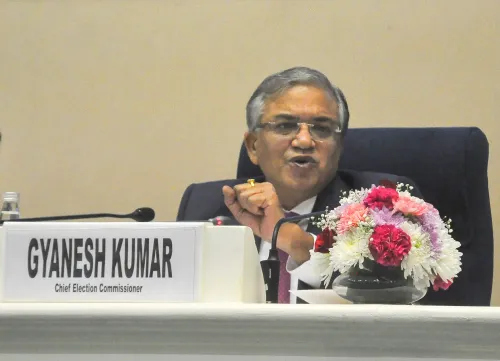
He warned that removing CEC Gyanesh Kumar alone will not resolve systemic concerns over electoral integrity.
Aazad flagged that protesters had been denied permission to gather at Jantar Mantar , calling it a threat to democratic rights.
He backed BSP chief Mayawati's demand for a return to the ballot paper system over EVMs.
He urged the government to provide relief to flood-affected residents in Faizullaganj due to the overflowing Gomti River .
He called for immediate payment of sugarcane farmers' dues at the High Court -mandated 15 per cent interest, after the Supreme Court dismissed the SP government's SLP against the ruling.
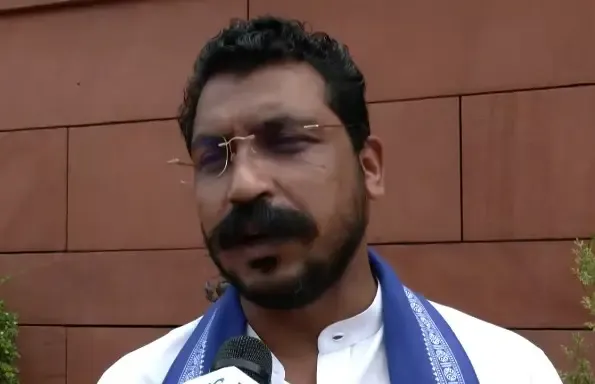
Aazad Samaj Party (Kanshi Ram) president and Member of Parliament Chandra Shekhar Aazad on Wednesday, 7 October called for greater transparency in the appointment process of the Chief Election Commissioner (CEC), even as protests mounted against incumbent CEC Gyanesh Kumar over alleged irregularities in the Special Intensive Revision (SIR) of electoral rolls. Speaking to reporters in Lucknow, Aazad also demanded a return to the ballot paper system for conducting elections, echoing a position previously voiced by Bahujan Samaj Party (BSP) chief Mayawati.
On the Protests and the Right to Dissent
Aazad flagged a procedural concern surrounding the ongoing demonstrations, noting that while authorities had designated Jantar Mantar as the approved venue for protests, permission had not actually been granted for gatherings there. 'Although there may be reasons for not granting permission, it is still concerning that in the world's largest democracy, people are being denied the right to protest — an agitation through which the British were driven out of the country,' he said.
Systemic Change Over Personnel Change
Aazad argued that removing Gyanesh Kumar alone would not resolve the deeper issue. 'Gyanesh Kumar may be removed, but unless there is a change in the process of selecting and appointing Election Commissioners, the issue will remain,' he said. He advocated for reinstating Supreme Court involvement in the selection process — a mechanism that existed previously — to ensure that appointees remain free from external influence. 'We trust the Supreme Court, but what would happen if people start mistrusting the election process itself?' he asked. Notably, the current appointment framework, amended by the Centre in 2023, removed the Chief Justice of India from the selection panel, a move that has drawn sustained criticism from opposition parties and civil society groups.
Demand for Ballot Paper System
Aligning himself with BSP chief Mayawati's long-standing demand, Aazad called for elections to be conducted using the earlier ballot paper system rather than Electronic Voting Machines (EVMs). Opposition concerns over EVM transparency have resurfaced periodically, and his remarks add to a growing chorus of voices seeking either a return to paper ballots or enhanced EVM audit mechanisms.
Gomti River Flooding and Sugarcane Farmers
Beyond electoral issues, Aazad raised two pressing concerns from Uttar Pradesh. He drew attention to flooding caused by rising water levels in the Gomti River, with areas including Faizullaganj reported to be submerged. He urged the government to provide relief, basic facilities, and compensation to flood-affected residents.
On the issue of sugarcane farmers' dues, Aazad recalled that the High Court had directed 15 per cent interest to be paid on outstanding payments, but that the previous Samajwadi Party (SP) government under Akhilesh Yadav had moved a Cabinet proposal siding with mill owners to stall the ruling. The High Court subsequently rejected that Cabinet decision, and when the SP government approached the Supreme Court via a Special Leave Petition (SLP), that too was dismissed. Aazad urged that farmers receive their dues at the court-mandated interest rate at the earliest.
The remarks underscore a broader political mobilisation ahead of electoral cycles in Uttar Pradesh, with opposition leaders using the controversy over the SIR process to press both institutional and policy demands simultaneously.
Point of View
He shifts the debate from one individual's removal to a fundamental question about how India's election machinery is constituted. The 2023 amendment that removed the Chief Justice of India from the selection panel remains a live political wound, and every fresh controversy around the Election Commission reopens it. His demand for ballot papers, meanwhile, is as much a trust signal to a specific voter base as it is a policy prescription. The more consequential question — whether any of these demands will translate into legislative or judicial action — remains unanswered, and the opposition's fragmented coordination on electoral reform has historically limited its ability to force change.
NationPress
7 Oct 2026
Frequently Asked Questions
Why is Chandra Shekhar Aazad demanding changes in the CEC appointment process?
Aazad argues that removing any individual CEC will not fix the underlying problem unless the appointment process itself is reformed to reinstate Supreme Court oversight. He made these remarks amid protests over alleged irregularities in the Special Intensive Revision of electoral rolls involving incumbent CEC Gyanesh Kumar.
What is the Special Intensive Revision (SIR) of electoral rolls and why is it controversial?
The Special Intensive Revision is an Election Commission exercise to update and verify voter lists. Critics, including several opposition parties, have alleged irregularities in the current round of SIR, triggering protests and calls for CEC Gyanesh Kumar's removal.
Why does Aazad want elections conducted through ballot papers instead of EVMs?
Aazad, echoing BSP chief Mayawati, contends that the ballot paper system was more transparent and publicly trusted. Opposition parties have periodically questioned the auditability of Electronic Voting Machines, and his demand reflects a broader lack of confidence in the current system among certain political groups.
What did the Supreme Court rule on sugarcane farmers' dues in Uttar Pradesh?
The High Court had directed that 15 per cent interest be paid on outstanding sugarcane dues to farmers. The previous Samajwadi Party government moved a Cabinet proposal favouring mill owners to pause this, which the High Court rejected. When the SP government challenged the High Court ruling in the Supreme Court via an SLP, that petition was also dismissed, leaving the 15 per cent interest directive in force.
What is the flooding situation Aazad raised in Uttar Pradesh?
Aazad flagged rising water levels in the Gomti River, with areas including Faizullaganj reported to be submerged. He appealed to the government to provide relief, basic facilities, and financial compensation to flood-affected residents at the earliest.