Priyanka Chaturvedi Proposes Rajya Sabha Name Change to 'Horse-Trading Chamber of India'
Synopsis
Shiv Sena-UBT MP Priyanka Chaturvedi has sparked debate by suggesting a new name for the Rajya Sabha, calling it the 'Horse-Trading Chamber of India.' Her remarks criticize the current political climate and the integrity of the Upper House.
Key Takeaways
Priyanka Chaturvedi criticizes the current state of the Rajya Sabha.
She suggests renaming it to the 'Horse-Trading Chamber of India.' The recent elections saw several candidates elected unopposed.
Financial influence is a major concern in the electoral process.
Restoring dignity to the Upper House is essential for its credibility.
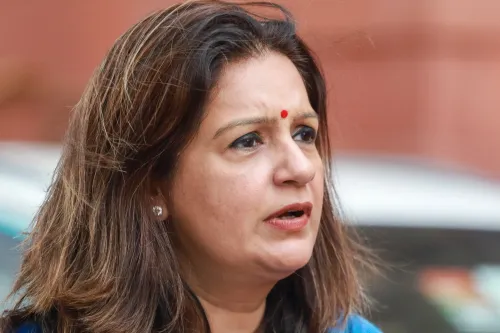
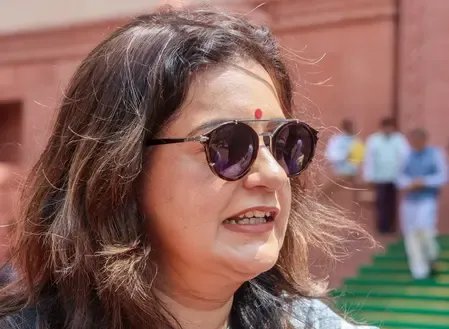
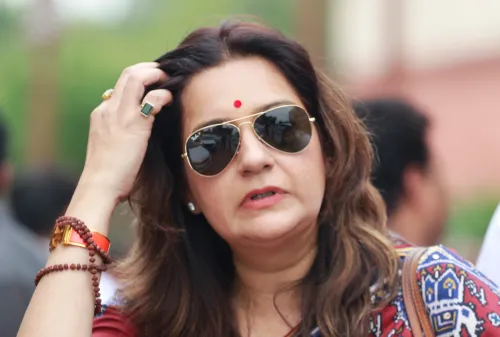
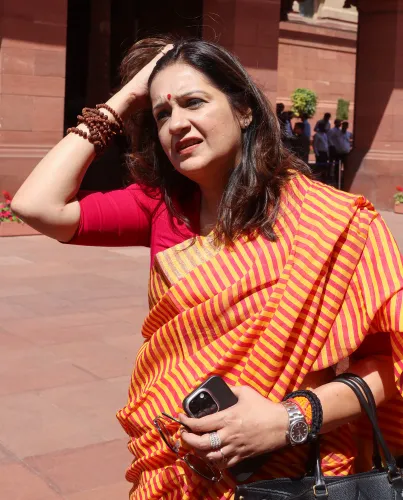
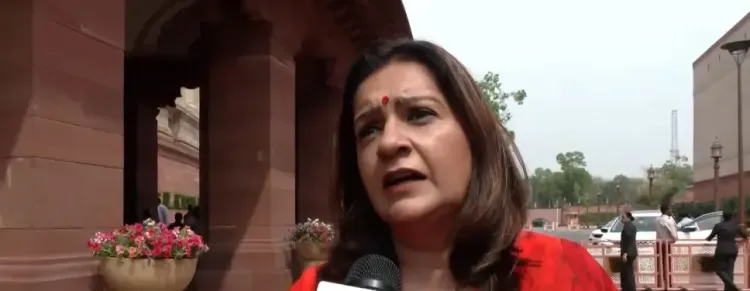
New Delhi, March 17 (NationPress) Shiv Sena-UBT MP Priyanka Chaturvedi has proposed that the Rajya Sabha be renamed to the 'Horse-Trading Chamber of India' during a statement made outside Parliament.
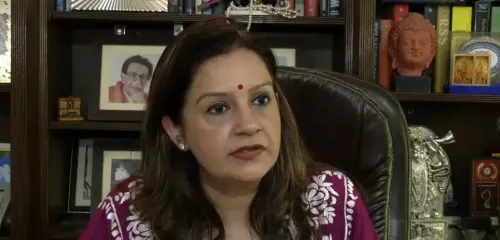
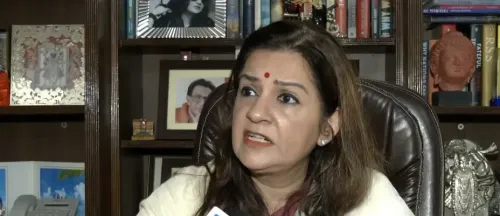
In her conversation with IANS, Chaturvedi expressed her disapproval of the Upper House's current operations, claiming it has diminished in respectability over the years. "I believe the Rajya Sabha's name should be altered. It ought to be referred to as the ‘Horse-Trading Chamber of India,’" she remarked.
She further commented that the Rajya Sabha, previously recognized for its notable members and their intellectual contributions, has devolved into a space dominated by political maneuvering.
"This Rajya Sabha, which once boasted of illustrious individuals, where members grasped the essence and obligations of our nation, made pivotal policy decisions, and where thinkers and intellectuals directed the country, has now sunk to a disgraceful level," she noted.
Chaturvedi accused the member election process of being heavily swayed by financial influences and pressures on legislators. "Today, it has turned into a House of horse-trading, where the greed and pressure on MLAs dictate the allocation of seats," she asserted.
Expressing her distress regarding the political landscape, she added: "It is disgraceful that individuals are being bought. MLAs view themselves as commodities; if offered money, they swiftly change their allegiance to another party."
She emphasized the urgency of restoring the Upper House's dignity and credibility.
Her comments were made in light of the recently held biennial Rajya Sabha elections, which took place on Monday to fill 37 seats across 10 states. Several candidates were elected without opposition, while votes were cast for 11 seats, including five in Bihar, four in Odisha, and two in Haryana.
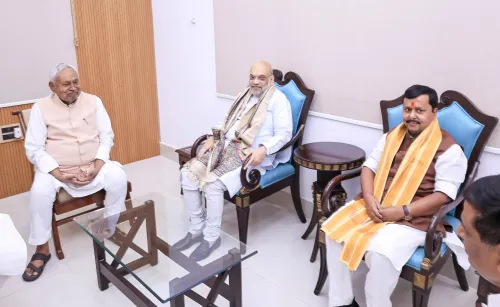
Among the notable winners was Bihar Chief Minister Nitish Kumar, who secured a seat in the Upper House. The elections also witnessed challenges for Opposition parties in states like Odisha and Bihar, where candidates supported by the National Democratic Alliance (NDA) benefited from cross-voting and the absence of certain legislators.
In various states, multiple leaders were elected unopposed. These included former Lok Sabha Deputy Speaker M. Thambidurai from the DMK and senior Congress leader and lawyer Abhishek Singhvi.
In West Bengal, four nominees from the Trinamool Congress -- Babul Supriyo, former state DGP Rajeev Kumar, senior Supreme Court lawyer Menaka Guruswamy, and actor Koel Mallick -- were elected without contest. Former BJP state President Rahul Sinha also secured a seat unopposed. Notably, Menaka Guruswamy is now recognized as India’s first openly queer Member of Parliament.
In Maharashtra, all seven candidates, including those from the ruling Mahayuti alliance and NCP-SP chief Sharad Pawar, were elected without opposition. Similar patterns were observed in Telangana and Tamil Nadu, where several candidates secured seats uncontested.
In Himachal Pradesh, Congress candidate Anurag Sharma, a close associate of Chief Minister Sukhwinder Singh Sukhu, won the election.
Point of View
Priyanka Chaturvedi's comments highlight significant concerns regarding the integrity and functionality of the Rajya Sabha. Her call for a name change encapsulates a broader critique of political practices in India, emphasizing the need for reform and restoration of dignity in legislative bodies.
NationPress
27 Sept 2026
Frequently Asked Questions
What prompted Priyanka Chaturvedi's remarks about the Rajya Sabha?
Priyanka Chaturvedi proposed renaming the Rajya Sabha as the 'Horse-Trading Chamber of India' due to her criticism of the House's current operations and declining dignity.
What are the recent developments in the Rajya Sabha elections?
The recent biennial Rajya Sabha elections filled 37 seats across 10 states, with several candidates elected unopposed and notable figures like Nitish Kumar winning seats.
Who are some notable winners in the Rajya Sabha elections?
Notable winners include Bihar Chief Minister Nitish Kumar and several unopposed candidates such as M. Thambidurai and Menaka Guruswamy.
What concerns did Chaturvedi express regarding MLAs?
Chaturvedi expressed concern that MLAs view themselves as commodities, influenced by financial incentives to switch parties.
What does Chaturvedi suggest for the future of the Rajya Sabha?
Chaturvedi emphasizes the need to restore the dignity and credibility of the Rajya Sabha to combat the negative influences affecting its functions.