Shiv Sena (UBT) Alleges BJP is Diminishing Voter Authority by Manipulating Constitutional Roles
Synopsis
Shiv Sena (UBT) MP Priyanka Chaturvedi condemns BJP's alleged manipulation of constitutional roles, claiming it undermines voter rights and democratic integrity. As Bihar prepares for Rajya Sabha elections, the political landscape is shifting.
Key Takeaways
Priyanka Chaturvedi criticizes BJP's manipulation of constitutional roles.
Concerns raised over the impact on democracy and voter rights.
Nitish Kumar transitioning to the Rajya Sabha raises questions about future governance.
Focus on Nishant Kumar as a potential political successor.
Upcoming Rajya Sabha elections are pivotal for party dynamics.
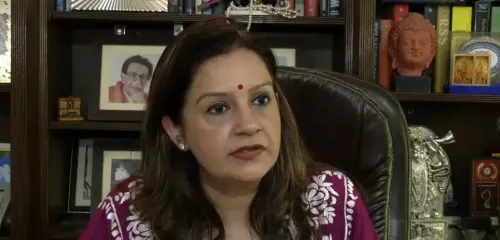
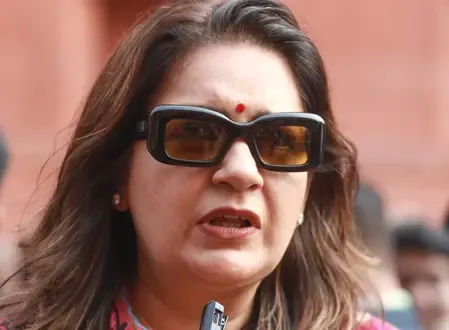
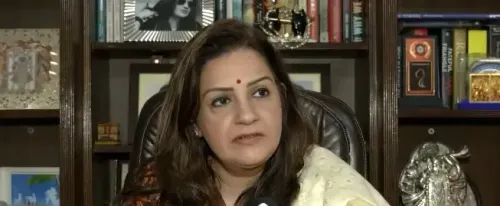
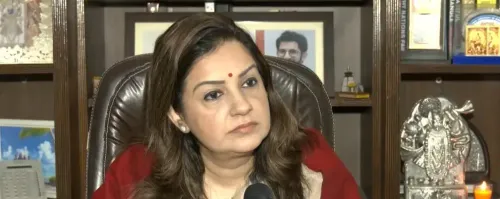
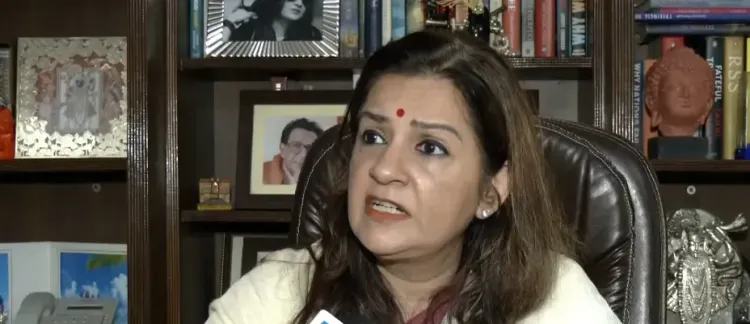
New Delhi, March 6 (NationPress) Shiv Sena (UBT) MP Priyanka Chaturvedi has sharply criticized the operations of constitutional bodies, claiming that significant roles such as Chief Ministers and Governors are being altered abruptly, thereby jeopardizing the foundations of democracy.
Her comments surfaced during ongoing political dialogues regarding Bihar Chief Minister Nitish Kumar’s upcoming nomination to the Rajya Sabha and the recent reshuffling of several governors.
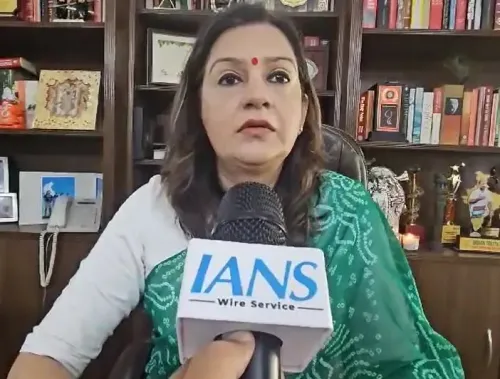
In an interview with IANS, Chaturvedi expressed that constitutional positions are increasingly being manipulated for political gain.
“Changes to Chief Ministers and appointments of Governors are happening overnight. It pains me to say this, but these constitutional roles are being reduced to mere puppet positions. Individuals can be dismissed or reassigned at any moment. A Governor’s role is constitutional, and within a federal framework, decisions ought to be made in collaboration with the Chief Minister,” she stated.
She elaborated that opposition leaders frequently question decisions when excluded from the process. Citing West Bengal Chief Minister Mamata Banerjee’s recent objections in similar scenarios, Chaturvedi noted that discord arises when state governments are not consulted.
“In regions they govern, the opposition is expected to remain silent, yet when we hold power, the opposition raises concerns. Mamata Banerjee has voiced her disagreement due to her exclusion from decision-making. If these practices persist, they will negatively influence other states as well,” she warned.
Commenting on Nitish Kumar’s transition to the Rajya Sabha, Chaturvedi accused the Bharatiya Janata Party (BJP) of becoming adept at forming governments irrespective of electoral results.
"It's becoming abundantly clear that the BJP has earned a PhD in ensuring that votes may belong to any party, yet the government is invariably led by the BJP,” she asserted.
Using Maharashtra as a case in point, Chaturvedi claimed that political factions were divided, and constitutional norms were disregarded to establish a government. “In Maharashtra, when they struggled to form a government, parties were fractured, and constitutional provisions were misappropriated to ultimately create their government,” she alleged.
She emphasized that voters had chosen Nitish Kumar, but now political maneuvers are reshaping that mandate. “The public elected Nitish Kumar, yet suddenly it has been determined that he will move to the Rajya Sabha. Such decisions undermine voter rights. Citizens must remain vigilant regarding these ongoing developments,” she added.
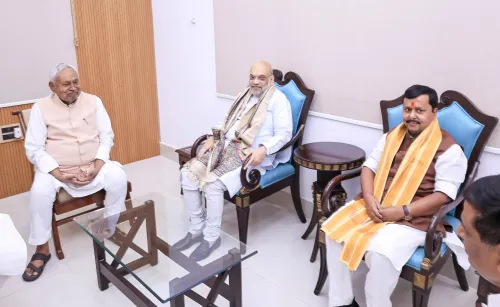
As Bihar gears up for the Rajya Sabha elections, a new political chapter may soon unfold, following nearly two decades under Chief Minister Nitish Kumar. The seasoned leader is set to enter the Rajya Sabha, stepping back from his Chief Ministerial role, igniting speculation about the future trajectory of the Janata Dal-United and the potential ascendancy of his son within party politics.
Nitish Kumar, who swore in for a record 10th term as Chief Minister in November 2025 after the decisive victory of the National Democratic Alliance in the Bihar Assembly elections, is now transitioning to national politics. The forthcoming Rajya Sabha elections, slated for March 16, will witness members of state Legislative Assemblies electing MPs to the Upper House.
In total, 37 Rajya Sabha seats across 10 states are up for grabs this year. In Bihar, five seats will become vacant. Given the NDA's numerical strength in the 243-member Bihar Assembly, the alliance is poised to secure multiple seats with relative ease.
For Nitish Kumar, this move to the Rajya Sabha signifies a strategic pivot after years of state governance. Yet, it raises a crucial question: what is next for the JD(U) once its longest-serving leader vacates the Chief Minister’s seat?
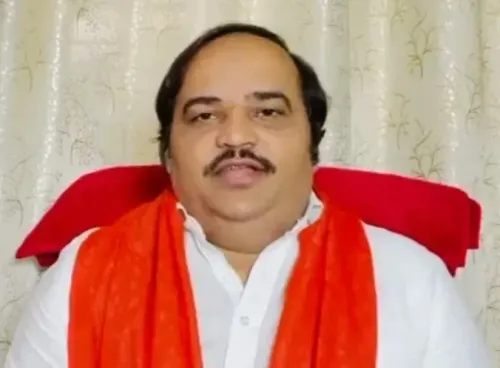
Increasingly, focus within political circles is turning to Kumar’s son, Nishant Kumar. Although he has largely refrained from political engagement for years, recent months have witnessed subtle shifts. Insiders within the party suggest that Nishant is beginning to engage more with JD(U) workers and leaders, sparking speculation that he could gradually assume a more prominent political role.
Point of View
The impact on voter sentiment and democratic processes remains a critical consideration for all parties involved.
NationPress
2 Oct 2026
Frequently Asked Questions
What did Priyanka Chaturvedi criticize?
Priyanka Chaturvedi criticized the BJP for changing key constitutional roles, which she argues undermines democratic principles.
What is the significance of the Rajya Sabha elections?
The Rajya Sabha elections are crucial as they will determine representation in the Upper House, impacting national politics and party dynamics.
Who is Nishant Kumar?
Nishant Kumar is the son of Nitish Kumar and is being speculated to take a more active role in politics.
What are the implications of changing Chief Ministers and Governors?
Changing these leaders abruptly can lead to instability, undermine democratic processes, and affect voter trust.
How many Rajya Sabha seats are up for election?
This year, 37 Rajya Sabha seats across 10 states are up for election, with five in Bihar.