CM Mohan Yadav: Botswana Cheetah Cubs Born at Kuno
Synopsis
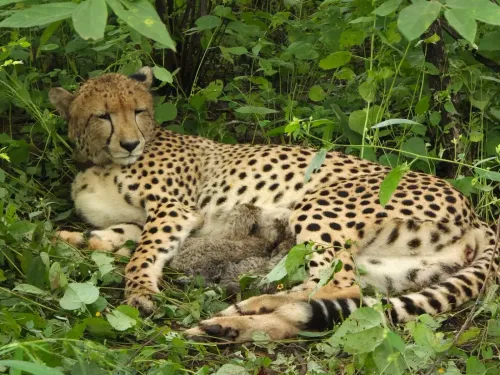
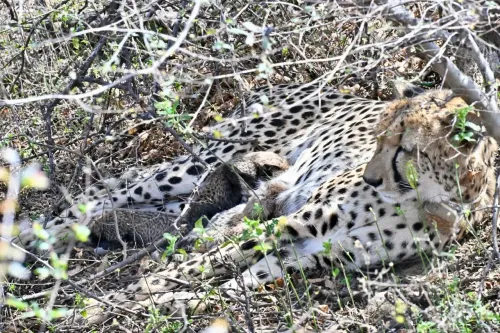
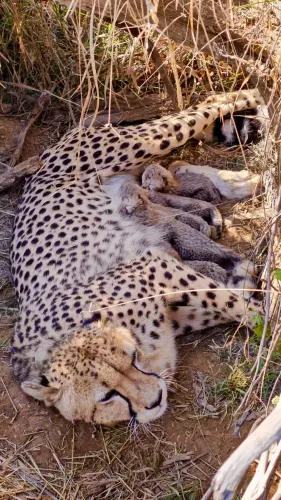
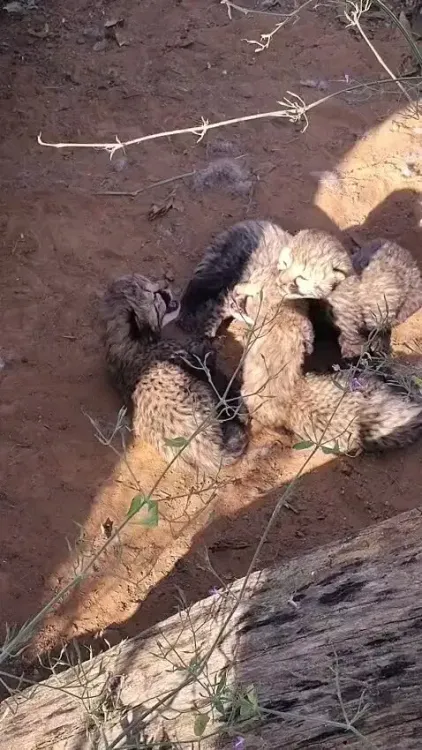
Four healthy cheetah cubs were born at Kuno National Park to a Botswana-sourced female, KOMG 3, pushing India's cheetah population to 62 — with 43 now India-born. CM Dr. Mohan Yadav hailed the birth as a landmark for Project Cheetah, launched in September 2022.
Key Takeaways
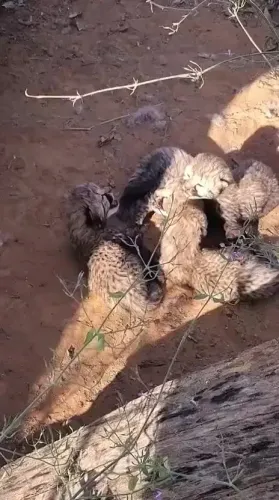
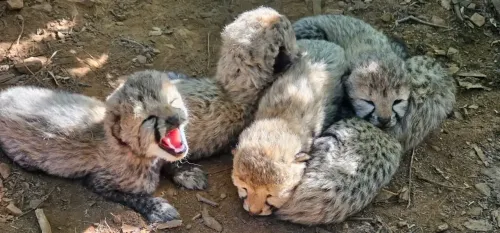
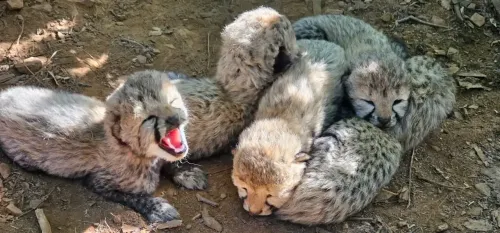
Four healthy cheetah cubs were born at Kuno National Park, Madhya Pradesh on 20 November 2026 .
The mother, KOMG 3 , is a two-and-a-half-year-old female sourced from Botswana .
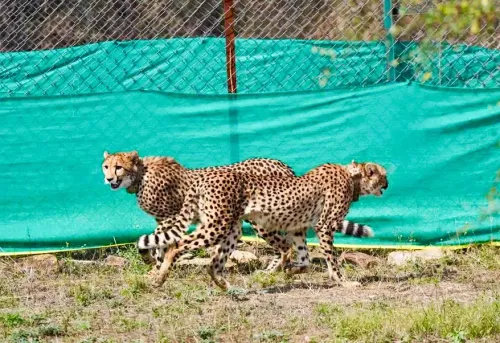
India's total cheetah population has risen to 62 , of which 43 were born in India .
Project Cheetah was launched in September 2022 with the first batch of eight cheetahs from Namibia ; subsequent batches came from South Africa and Botswana .
The cheetah had been locally extinct in India since the mid-20th century before the reintroduction programme began.
Mohan Yadav congratulated wildlife experts, veterinarians, and forest workers involved in the project.
Four healthy cheetah cubs entered the world inside Kuno National Park on Friday, 20 November 2026 — born to a two-and-a-half-year-old female cheetah named KOMG 3, sourced from Botswana, in what Madhya Pradesh Chief Minister Dr. Mohan Yadav is calling a historic milestone for Project Cheetah and for India's wildlife recovery story.
Sharing the news on X, Dr. Yadav wrote: 'Bharat mein cheetoN ki kul sankhya badhkar 62 ho gayi hai' — 'India's total cheetah count has now risen to 62, of which 43 have been born on Indian soil.' That second number is the one that matters most: wild-born cubs are the truest measure of a reintroduction programme's health.
From Namibia to Botswana — how the founder population was built
Project Cheetah began in September 2022 when Prime Minister Narendra Modi personally received the first batch of eight cheetahs flown in from Namibia to Kuno — a moment that marked the first intercontinental large-carnivore reintroduction in history. A second tranche arrived from South Africa in 2023, and further animals followed from Botswana in subsequent years to widen the genetic base of the founder population.
Kuno National Park, nestled in the Chambal region of Madhya Pradesh, was chosen for its open grassland-woodland mosaic that mirrors the savannah terrain cheetahs favour. Forest staff, wildlife veterinarians, and carnivore specialists have monitored each animal intensively — and it is this ground-level infrastructure that made today's wild birth possible.
KOMG 3's cubs and what 43 India-born cheetahs signal
The birth of KOMG 3's four cubs pushes the India-born tally to 43 out of a total population of 62. That means more than two-thirds of India's cheetahs today were conceived and delivered on Indian soil — a statistical shift that transforms the project from a translocation exercise into a self-sustaining breeding programme. Dr. Yadav described it as 'an example worthy of note' for wildlife conservation globally.
The Chief Minister was effusive in crediting Prime Minister Modi's 'visionary leadership' as the driving force behind India's renewed commitment to large carnivore conservation, calling the achievement 'a matter of special pride for Madhya Pradesh.' He extended congratulations to the full ecosystem of expertise behind the project — wildlife scientists, veterinarians, and forest workers on the ground at Kuno.
The road the cheetah travelled back to India
The cheetah had been locally extinct in India since the mid-20th century, when the last confirmed wild individuals were shot in 1947 in what is now Chhattisgarh. For roughly 70 years, the animal existed in India only in Mughal-era paintings and conservation wish-lists. The four cubs born today are, in a very real sense, the conclusion of that long absence — a proof-of-concept that careful science, international diplomacy with African range states, and sustained political will can reverse even a decades-old extinction.
The survival and dispersal rates of this new litter — and whether the cubs grow to breed independently — will be the next critical data points that wildlife managers and international partners will watch through 2027.
India's cheetahs are back. And now, they are multiplying.
Point of View
Lending the initiative a scientific credibility it needed to silence early sceptics. For the BJP government, the optics are powerful — a flagship conservation brand tied directly to PM Modi now has compounding biological momentum that is hard to dispute. Madhya Pradesh, as the host state, consolidates its identity as the epicentre of large-carnivore conservation in South Asia, potentially unlocking eco-tourism and green-economy dividends. The next policy question — whether to establish a second reintroduction site, as experts have long recommended — now carries more urgency given growing population numbers at a single location.
NationPress
20 Nov 2026
Frequently Asked Questions
How many cheetahs are there in India now in 2026?
According to CM Dr. Mohan Yadav's announcement on 20 November 2026 , India's total cheetah population has reached 62 , with 43 of them having been born in India.
Where was KOMG 3 cheetah from and where did she give birth?
KOMG 3 is a two-and-a-half-year-old female cheetah sourced from Botswana . She gave birth to four cubs inside Kuno National Park in Madhya Pradesh on 20 November 2026 .
When did Project Cheetah start in India?
Project Cheetah was launched in September 2022 when the first batch of eight cheetahs was translocated from Namibia to Kuno National Park , Madhya Pradesh.
Which countries supplied cheetahs to India under Project Cheetah?
India received cheetahs from Namibia (first batch, 2022), South Africa (2023), and Botswana in subsequent years to build a genetically diverse founder population.
Why was the cheetah extinct in India before Project Cheetah?
The cheetah was locally extinct in India since the mid-20th century , with the last confirmed wild individuals believed to have been shot around 1947 . Habitat loss and hunting drove the species to local extinction over decades.