CM Majhi Activates Cyclone 'Akwan' Response Across Odisha
Synopsis
Odisha Chief Minister Mohan Charan Majhi announced sweeping pre-cyclone measures against Cyclone Akwan on 20 November 2026, with mass evacuations and rescue teams deployed at field level across vulnerable coastal districts.
Key Takeaways
Cyclone Akwan is approaching Odisha's Bay of Bengal coast as of 20 November 2026 .
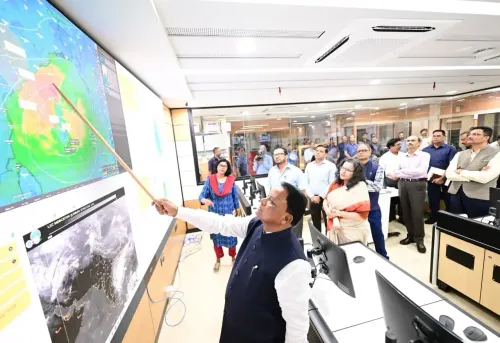
CM Mohan Charan Majhi confirmed the state government has activated comprehensive safety measures.
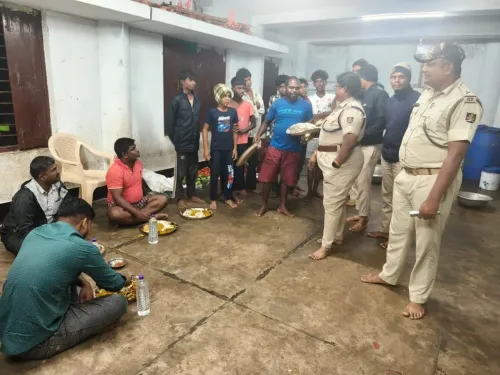
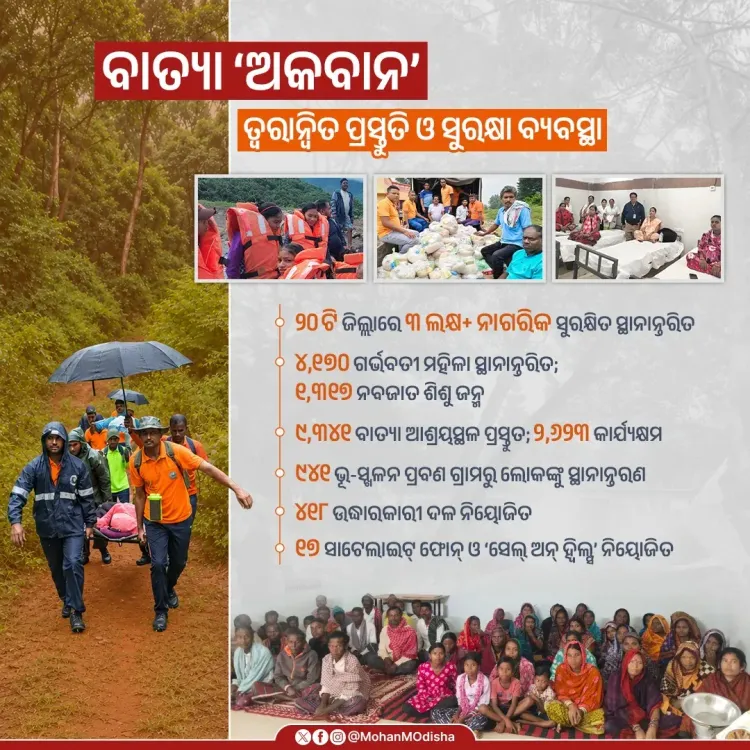
Citizens from vulnerable areas are being evacuated to safe cyclone shelters .
Rescue teams and emergency services have been deployed at field level ahead of the storm.
Odisha's preparedness framework was built after the devastating 1999 super cyclone and is considered a national model.
Key coastal districts such as Puri, Kendrapara, Bhadrak, and Jagatsinghpur are typically in the first ring of cyclone impact.
With Cyclone Akwan bearing down on the coast, Odisha Chief Minister Mohan Charan Majhi announced on Friday, 20 November 2026 that the state government has activated sweeping protective measures — evacuations underway, rescue teams deployed, emergency services on the ground. The machine is already moving.
Posting in Odia, CM Majhi said the government has 'undertaken comprehensive safety measures in view of the impact of Cyclone Akwan,' with citizens being shifted to safe shelters and 'rescue teams and emergency services deployed at the field level.' Short sentences, serious intent — this is a government signalling it is ahead of the storm, not chasing it.
A Preparedness Machine Built After 1999
Odisha's cyclone response did not arrive fully formed. The catastrophic 1999 super cyclone — one of the deadliest in Bay of Bengal history — killed roughly 10,000 people and devastated the coastline. What emerged from that ruin was a methodical investment in early warning systems, a dense network of cyclone shelters, and protocols that have since become a national model for disaster risk reduction. Every subsequent storm has tested and sharpened that system.
The result is visible now: pre-emptive evacuations and field-level deployment are the standard opening moves, not emergency reactions. Odisha's Bay of Bengal coastline — stretching roughly 480 kilometres — sits squarely on the cyclone track that breeds storms during both the pre-monsoon and post-monsoon windows, making this readiness posture a permanent feature of state governance.
Rescue Teams at Field Level — What That Means on the Ground
When Odisha says 'field-level deployment,' it means ODRAF (Odisha Disaster Rapid Action Force) units, NDRF (National Disaster Response Force) teams, and district-level emergency personnel positioned at coastal and low-lying areas before landfall — not scrambled after. Coastal communities in Puri, Kendrapara, Bhadrak, Jagatsinghpur, and adjoining districts are typically in the first ring of vulnerability during Bay of Bengal cyclones.
The parallel movement of citizens to cyclone shelters is equally significant. Odisha has constructed hundreds of multipurpose cyclone shelters along its coast, designed to house thousands of evacuees above storm-surge levels. Getting people into those shelters before a storm makes landfall is the single variable that most determines casualty outcomes.
What to Watch as Akwan Approaches
The government's immediate messaging is squarely on preparedness. The numbers that will tell the full story — total evacuees moved, districts placed on red alert, actual landfall coordinates and wind speed at impact — will follow in official updates. Relief package announcements typically come in the storm's aftermath.
For now, the signal from CM Majhi is unambiguous: the state is not waiting for the cyclone to announce its damage. Odisha has learned — the hard way — that every hour of head-start is lives saved.
The next 24 to 48 hours will determine whether the system Odisha built over a quarter-century holds the line again.
Point of View
Public communication on cyclone preparedness follows the well-established Odisha playbook of projecting institutional confidence before a storm makes landfall — a posture successive state governments have used to both manage actual risk and demonstrate administrative capability. For a BJP government that took office in June 2024, maintaining Odisha's hard-won reputation as India's cyclone-resilience leader carries clear political stakes alongside the humanitarian imperative. The post's focus on action — evacuations already underway, teams already deployed — signals the government is benchmarking itself against the state's own high standard. How closely the response matches the messaging will be the real test.
NationPress
20 Nov 2026
Frequently Asked Questions
What is Cyclone Akwan and where is it headed?
Cyclone Akwan is a Bay of Bengal storm approaching the Odisha coastline as of November 2026. The state government has activated emergency measures in anticipation of its impact on coastal districts.
What steps has the Odisha government taken for Cyclone Akwan?
Chief Minister Mohan Charan Majhi confirmed that the state has begun evacuating citizens to cyclone shelters and deployed rescue teams and emergency services at the field level across vulnerable coastal areas.
Which districts in Odisha are most at risk from Bay of Bengal cyclones?
Coastal districts including Puri, Kendrapara, Bhadrak, and Jagatsinghpur are typically in the first ring of vulnerability when a cyclone approaches Odisha's roughly 480-kilometre coastline.
How did Odisha develop its cyclone preparedness system?
Odisha built its cyclone preparedness framework after the catastrophic 1999 super cyclone, investing in early warning systems, a dense network of multipurpose cyclone shelters, and rapid-deployment protocols that are now considered a national model.
What is ODRAF and what role does it play during cyclones?
ODRAF stands for Odisha Disaster Rapid Action Force. It is one of the specialised units deployed at field level in coastal and low-lying areas before cyclone landfall, working alongside NDRF teams and district emergency personnel to conduct rescues and evacuations.