CM Majhi: Odisha govt committed to citizen safety in every crisis

Synopsis
Odisha Chief Minister Mohan Charan Majhi on November 3, 2026 reaffirmed that citizen safety is the government's top priority, pledging prompt rescue and relief in every crisis — a message framed against the state's decades-long investment in disaster management.
Key Takeaways
CM Mohan Charan Majhi publicly reaffirmed on November 3, 2026 that citizen safety is Odisha's top governance priority.
The statement was issued in both Odia and English , signalling broad outreach to local and national audiences.
Odisha built its disaster management framework after the 1999 super cyclone , which killed an estimated 10,000 people , and the OSDMA now anchors the state's response system.
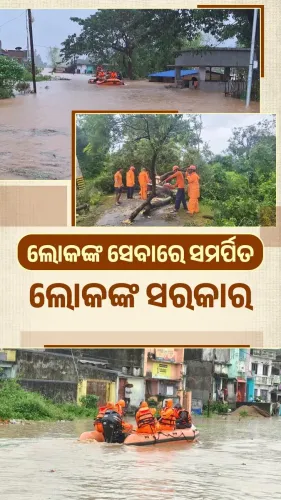
The post was accompanied by a video , indicating an operational rather than purely ceremonial intent.
November falls in the tail end of the Bay of Bengal cyclone season, making the timing of the reassurance significant for coastal districts.
Majhi's BJP government , in office since 2024 , is continuing Odisha's established tradition of prioritising disaster preparedness.
When a crisis strikes Odisha, the government's response is non-negotiable — Odisha Chief Minister Mohan Charan Majhi reaffirmed on Tuesday, November 3, 2026, that protecting every citizen remains the administration's single highest priority, pledging prompt rescue and relief at every moment of danger.
Writing in both Odia and English, CM Majhi stated: 'ଲୋକଙ୍କ ସୁରକ୍ଷା ଓ କଲ୍ୟାଣ ସର୍ବଦା ଆମ ପାଇଁ ସର୍ବୋଚ୍ଚ ପ୍ରାଥମିକତା' — 'The safety and well-being of every citizen remain our top priority.' He added that the government is 'committed to ensuring people's safety through prompt rescue and relief measures in every crisis.'
Odisha's hard-won disaster-readiness legacy
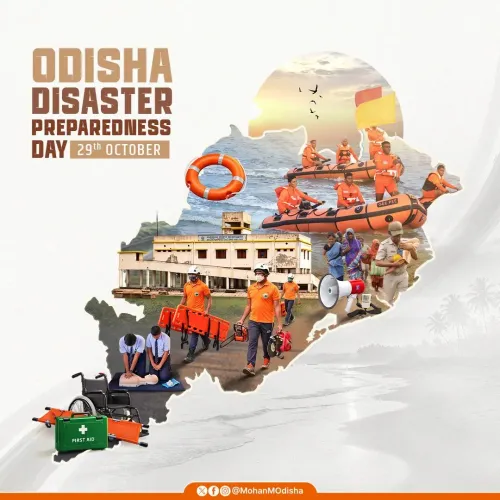
The pledge is not just political rhetoric — it is institutional DNA. Odisha rebuilt its entire disaster management architecture after the devastating 1999 super cyclone, one of the deadliest storms in modern Indian history, which killed an estimated 10,000 people. The state created the Odisha State Disaster Management Authority (OSDMA), invested in multi-hazard early-warning systems, and established a network of cyclone shelters along its 480-kilometre coastline. The result: subsequent storms of equal or greater intensity recorded dramatically lower casualties.
That legacy now sits with Majhi's BJP government, which took office in 2024 after ending the Biju Janata Dal's two-decade grip on the state. Continuing — and being seen to continue — Odisha's famous disaster-response tradition is both a governance imperative and a political one.
Why the timing of the message matters
November sits in the tail of the Bay of Bengal cyclone season, a period when coastal Odisha remains on alert. The state's districts — from Balasore in the north to Ganjam in the south — are among India's most cyclone-exposed geographies. Flood risk from river systems including the Mahanadi and Brahmani persists well into the post-monsoon months. A public reassurance from the chief minister at this juncture signals that the administration is in active watch mode, even if no specific named crisis was cited in the post.
The accompanying video — released without additional caption detail — underscores the message's operational intent rather than a purely ceremonial tone. Whether it documents an ongoing relief effort or preparedness drill, its presence suggests the words are backed by ground-level activity.
What Odisha citizens and responders will be watching
Majhi's government will be measured against the very standard it has set. Odisha's disaster-management model is studied across South Asia; any gap between a chief minister's promise of 'prompt rescue and relief' and the reality on the ground draws swift scrutiny. The coming weeks — as the Bay of Bengal transitions out of cyclone season and river levels slowly recede — will test whether the administration's readiness rhetoric translates into visible infrastructure, stocked relief camps, and mobilised NDRF teams.
For a state that turned catastrophe into competence after 1999, the bar is extraordinarily high — and CM Majhi has just publicly raised it again.
Point of View
A legacy built largely under its predecessor. Reinforcing that continuity is strategically important: Odisha's disaster-response reputation is a source of genuine civic pride, and any administration that appears to dilute it pays a steep political cost. The bilingual framing — Odia for local emotional resonance, English for national visibility — suggests the message is as much about projecting governance credibility at the national level as it is about reassuring local citizens. Watch for whether specific operational announcements or relief deployments follow, which would convert this pledge into a measurable governance commitment.
NationPress
3 Nov 2026
Frequently Asked Questions
What did Odisha CM Mohan Charan Majhi say about citizen safety?
CM Majhi stated that 'the safety and well-being of every citizen remain our top priority' and that the government is committed to ensuring prompt rescue and relief in every crisis, posting the message in both Odia and English on November 3, 2026.
What is the Odisha State Disaster Management Authority?
The Odisha State Disaster Management Authority (OSDMA) was established after the devastating 1999 super cyclone to coordinate early warning, evacuation, and relief operations across the cyclone- and flood-prone state.
Why is disaster management so important to Odisha?
Odisha has a roughly 480-kilometre coastline exposed to Bay of Bengal cyclones and major river systems prone to flooding; the 1999 super cyclone killed an estimated 10,000 people, making robust disaster preparedness a core state priority ever since.
When did Mohan Charan Majhi become Chief Minister of Odisha?
Mohan Charan Majhi became Chief Minister of Odisha in 2024 after the BJP won the state assembly elections, ending the Biju Janata Dal's approximately two-decade rule.
Is there an active cyclone or flood crisis in Odisha in November 2026?
CM Majhi's post did not reference a specific named crisis; however, November falls in the tail of the Bay of Bengal cyclone season, a period when coastal Odisha remains on heightened alert.