Helicopter Transport of Botswana Cheetahs to Kuno National Park
Synopsis
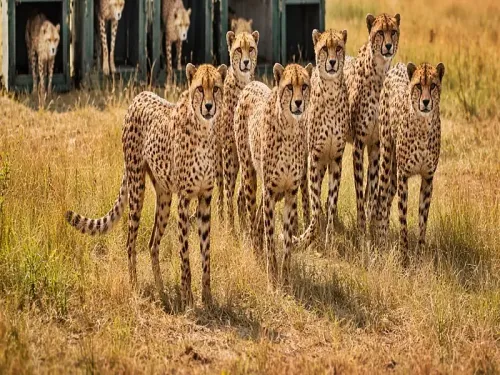
Eight cheetahs from Botswana have arrived in Gwalior, transported by IAF helicopters to Kuno National Park. This marks a significant step in India's cheetah reintroduction program, aiming for a sustainable population of these big cats.
Key Takeaways
Eight cheetahs from Botswana have arrived in India.
They will be released at Kuno National Park .
Monitoring will occur during a quarantine period of 15 to 30 days.
This is part of a larger reintroduction initiative for cheetahs in India.
A total of 47 cheetahs are now present in the country.
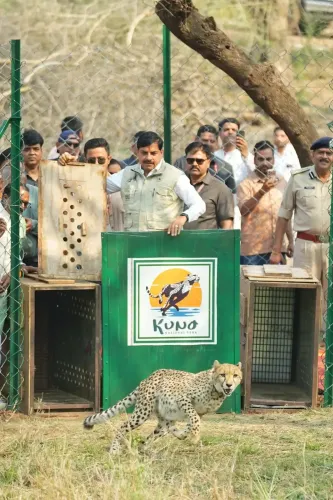
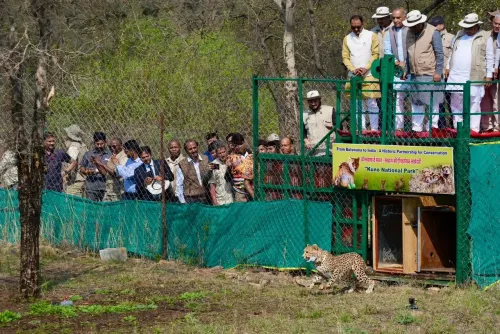
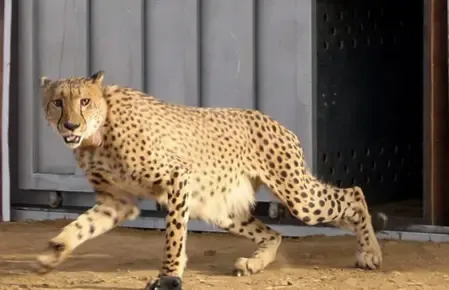
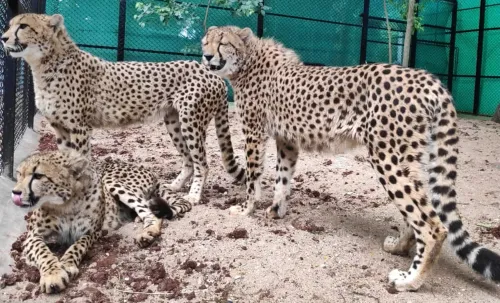
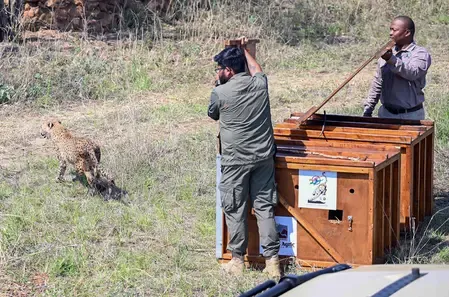
Gwalior, February 28 (NationPress) – A specialized aircraft from the Indian Air Force (IAF) carrying eight cheetahs from Botswana landed at Gwalior airport early Saturday. After a thorough check-up of the cheetahs, who had journeyed for over ten hours, officials transferred the animals, contained in their cages, into two helicopters. These cheetahs were then transported from Gwalior’s airport to Kuno National Park, situated in the Sheopur district of the Gwalior-Chambal region in Madhya Pradesh.
The release of these majestic creatures at Kuno National Park will be officiated by Union Environment Minister Bhupendra Yadav.
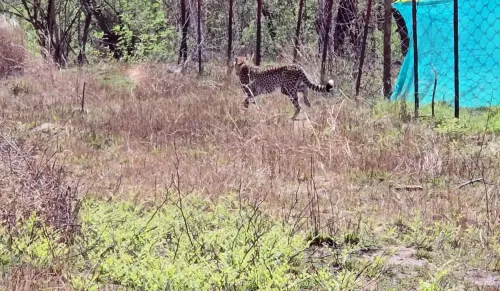
Upon arrival, the cheetahs will be placed in quarantine enclosures at Kuno National Park, where their health and behavior will be closely observed before they are gradually acclimatized to their natural habitat.
A team of wildlife experts and forest veterinarians from Botswana has also joined the efforts, assisting local officials in ensuring the success of 'Project Cheetah' at Kuno National Park, as stated by a senior official in Madhya Pradesh.
The inclusion of these eight cheetahs marks a significant milestone in the Centre’s ambitious reintroduction initiative, bringing the total population of big cats in India to 47, which now includes 28 cubs born at the park since the first group of cheetahs was released on September 17, 2022.
According to officials speaking to IANS, multiple quarantine enclosures have been arranged at the park to facilitate a stress-free transition for the animals. As per protocol, the cheetahs will remain in spacious, fenced areas for approximately one month.
This represents the third batch of African cheetahs introduced to India under the translocation initiative, following earlier groups brought from Namibia in September 2022 and South Africa in February 2023.
The recent transfer from Botswana is part of a bilateral agreement aimed at creating a genetically diverse, free-ranging population of cheetahs in India within the next decade.
During their quarantine, which is expected to last between 15 to 30 days, wildlife veterinarians and forest officials will assess their feeding habits, movement, adaptation to the local climate, and any signs of stress or illness.
Regular evaluations of blood samples and health indicators will be conducted. The cheetahs will soon be equipped with GPS satellite collars to enable real-time tracking when they are eventually released into larger soft-release zones.
Remarkably, since the beginning of 2023, Kuno has welcomed the birth of 30 cubs, with 28 surviving to date (one cub was located on Friday). This year alone, nine cubs were born in two litters between February 7 and February 18, all of whom have survived thus far.
According to official sources, certain cheetahs, including those born in India, will be relocated to the Nauradehi Wildlife Sanctuary, located within the Vindhya Forest range covering Sagar, Damoh, and Narsinghpur districts.
Point of View
I emphasize the importance of this initiative for wildlife conservation. The arrival of these cheetahs reflects a broader commitment to restoring India's ecological balance and highlights the collaborative efforts between nations in preserving endangered species.
NationPress
30 Sept 2026
Frequently Asked Questions
How many cheetahs arrived from Botswana?
Eight cheetahs were transported from Botswana to Gwalior.
Where will the cheetahs be released?
The cheetahs will be released at Kuno National Park in Madhya Pradesh.
What is the purpose of the quarantine period?
The quarantine period is to monitor the cheetahs' health and behavior before their release into the wild.
Who is overseeing the 'Project Cheetah' initiative?
A team of wildlife experts and veterinarians from Botswana, along with local officials, are overseeing the project.
How many cheetahs are currently in India?
With the arrival of this batch, there are now a total of 47 cheetahs in India.