Chengannur: High-Stakes Political Showdown with Familiar Faces
Synopsis
In the heart of Kerala, Chengannur's assembly race heats up as incumbents clash with seasoned challengers, amidst shifting voter sentiments and external influences. Will the electorate endorse continuity or usher in change?
Key Takeaways
Intense competition: The race features incumbents and seasoned challengers.
Community engagement: Grassroots connections play a crucial role in voter sentiment.
External factors: The West Asian crisis could impact expatriate voter turnout.
Electoral dynamics: G.
Sudhakaran's candidacy adds unpredictability.
Significant vote bank: The Christian community's influence is critical.
Chengannur, April 6 (NationPress) As Kerala enters the crucial final phase of polling, the Chengannur Assembly constituency in the Alappuzha district is emerging as a focal point of intense electoral competition, characterized by a potent blend of incumbency, local engagement, and evolving political dynamics.
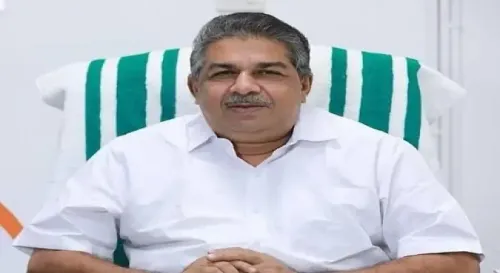
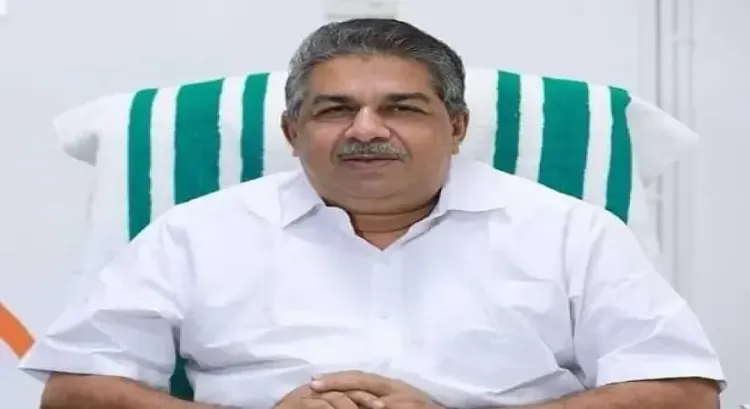
At the heart of this contest is the incumbent legislator and State Fisheries Minister, Saji Cherian, representing the CPI(M)-led LDF, who is vying for his third consecutive term.
Challenging him is Congress candidate Abey Kuriakose, a well-known figure in the constituency with nearly thirty years of community involvement.
Also in the race is BJP’s M.V. Gopakumar, who garnered a notable 23.5% of the vote share in the 2021 elections.
Cherian, who previously won by an impressive margin of over 32,000 votes, is confident about enhancing his performance.
He cites his record of visible development and ongoing welfare initiatives as key achievements.
Recognized for his approachability and connection with the underprivileged, Cherian’s campaign emphasizes continuity and effective governance.
Conversely, Kuriakose is mounting a vigorous campaign, capitalizing on his deep-seated relationships with voters.
His ability to engage with individuals, often recalling their names, is a significant advantage in his campaign.
Kuriakose is also banking on a growing anti-incumbency sentiment against the state administration, highlighting past controversies involving Cherian as potential tipping points.
Both leading candidates hail from the Christian community, which wields considerable influence in Chengannur, intensifying the battle for this crucial vote bank.
Meanwhile, the ongoing West Asian crisis looms large, as a significant diaspora population in the constituency may affect voter turnout.
Further complicating the electoral landscape is the candidacy of seasoned politician G. Sudhakaran, a four-time former CPI(M) MLA now running as an Independent, reportedly with support from Congress sympathizers.
In a district regarded as a CPI(M) bastion after Kannur, Sudhakaran’s participation introduces an element of unpredictability.
While Cherian’s supporters consider him a non-threat, the Opposition views his candidacy as a possible disruptor, particularly given his history of mentoring Cherian.
The triangular contest, along with local dynamics and broader state-level narratives, positions Chengannur as a microcosm of Kerala’s larger political skirmish.
As the campaign nears its conclusion, both factions remain hopeful, interpreting the ground realities in varying ways.
The ultimate decision, however, rests with the voters, and only on counting day will it be revealed whether Chengannur chooses to maintain continuity or opts for a surprising shift.
Point of View
The Chengannur constituency encapsulates the intricate interplay of local politics, voter sentiment, and community ties. Both major parties are keenly aware of the implications of this contest, reflecting broader trends within Kerala's political landscape. The outcome here could signal significant shifts in voter priorities.
NationPress
20 Sept 2026
Frequently Asked Questions
Who are the main candidates in Chengannur?
The primary candidates in Chengannur are Saji Cherian from the CPI(M)-led LDF, Abey Kuriakose from the Congress, and M.V. Gopakumar from the BJP.
What is the significance of the Christian vote in Chengannur?
The Christian community holds significant influence in Chengannur, making the consolidation of their votes crucial for the main candidates.
How has the West Asian crisis impacted the elections?
The ongoing West Asian crisis may affect voter turnout, particularly among the expatriate population, which is substantial in the constituency.
What role does G. Sudhakaran play in this election?
G. Sudhakaran, a former CPI(M) MLA, is contesting as an Independent and is seen as a potential disruptor in the election dynamics.
When will the election results be announced?
The results for the Chengannur assembly election will be revealed on counting day, which will determine the future political landscape of the region.