Chennai beaches to get 107 Wi-Fi smart poles, 45 min free Internet daily
Synopsis
Chennai's GCC is adding 107 Wi-Fi smart poles across Marina, Besant Nagar, and Tiruvanmiyur beaches — tripling down on a 2021 rollout that quietly fell apart. With 45 minutes of free daily Internet on offer from September, the real question is whether this expansion can avoid repeating the connectivity failures that left thousands of users connected but offline.
Key Takeaways
The Greater Chennai Corporation (GCC) will install 107 new Wi-Fi smart poles along Chennai's coastline, expected operational by September .
Marina Beach gets 75 poles , Besant Nagar gets 20 , and Tiruvanmiyur gets 10 — all through Airtel .
Users will receive up to 45 minutes of free Internet per day, up from the 30 minutes offered in the 2021 rollout.
Infrastructure costs are covered by service providers under CSR obligations.
The GCC is also overhauling nearly 2,600 existing smart poles across 900 locations citywide.
Cybersecurity on open public networks remains a key concern flagged by users and officials.
The Greater Chennai Corporation (GCC) is set to install 107 new Wi-Fi-enabled smart poles along Chennai's coastline, offering visitors up to 45 minutes of free Internet access every day. The expanded public Wi-Fi facility is expected to go live in September, bringing reliable connectivity to three of the city's most visited beaches.
Where the poles will be installed
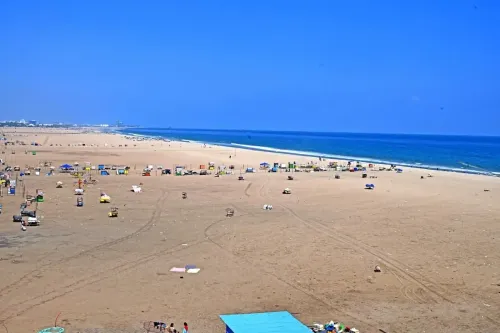
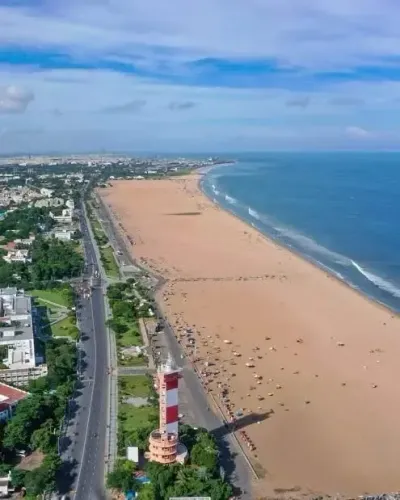
Marina Beach will receive the largest share, with 75 new Wi-Fi poles to be set up along its stretch. Besant Nagar beach will get 20 poles, while Tiruvanmiyur will see 10 poles installed — all through telecom operator Airtel. The infrastructure will be funded by service providers under their Corporate Social Responsibility (CSR) obligations, with no direct cost to the civic body.
Why this matters for beachgoers
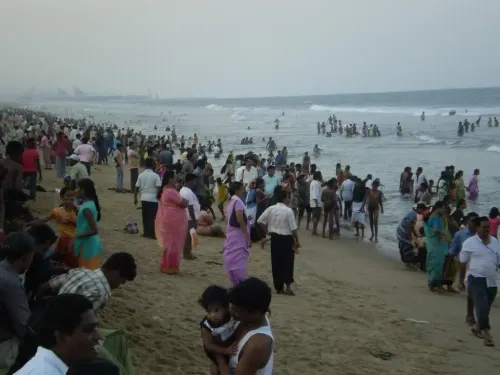
Reliable beach connectivity is considered especially useful for visitors who need to make Internet-based calls, book cabs, use digital payment services, or reach family members in crowded areas. The expansion addresses a gap that has grown more acute as footfall at Marina Beach — one of the longest urban beaches in the world — has surged in recent years.
Currently, 38 Wi-Fi poles at Marina and Besant Nagar beaches are maintained by ACT Fibernet and Reliance Jio, according to GCC Commissioner G.S. Sameeran. The Commissioner added that the concerned private service providers have been asked to expand public Wi-Fi coverage, and the Corporation has also sought usage data from ACT Fibernet to assess Internet consumption patterns and monitor public usage.
The problem with existing infrastructure
The GCC first introduced Wi-Fi smart poles at 49 locations in 2021, offering users 30 minutes of free Internet after OTP verification. Connectivity reportedly deteriorated over time, drawing persistent complaints from users whose devices would connect to the network but fail to load pages or access services.
As part of a broader overhaul, the civic body is also planning to revamp nearly 2,600 existing smart poles across approximately 900 locations, including public parks, hospitals, and government offices. Internet service providers have been directed to repair damaged infrastructure and restore consistent connectivity.
Cybersecurity concerns
The network expansion raises cybersecurity questions that officials acknowledge will need to be addressed. Users have called for strong safeguards against hacking, data theft, and other breaches on open public networks. The success of the initiative, critics argue, will ultimately depend on whether the expanded infrastructure can deliver stable speeds while protecting users' personal data — something the 2021 rollout failed to sustain.
Point of View
But the 2021 precedent is hard to ignore — 49 smart pole locations were rolled out with fanfare and then quietly degraded to the point of uselessness. Adding 107 more poles without first demonstrating that the existing 2,600 can be kept operational is a sequencing problem, not a solution. The CSR funding model also carries risk: when a network is no one's core business, maintenance tends to be no one's priority. Chennai's beaches draw millions; what they need is not more poles but accountable uptime commitments from the providers who put them there.
NationPress
23 Sept 2026
Frequently Asked Questions
How many new Wi-Fi poles is the GCC installing at Chennai beaches?
The Greater Chennai Corporation is installing 107 new Wi-Fi-enabled smart poles across three beaches — 75 at Marina Beach, 20 at Besant Nagar, and 10 at Tiruvanmiyur. The rollout is being carried out through Airtel and is expected to be operational by September.
How much free Internet will users get at Chennai beaches?
Users will receive up to 45 minutes of free Internet access per day at the new Wi-Fi poles. This is an increase from the 30 minutes offered when the GCC first introduced smart poles at 49 city locations in 2021.
Who is funding the Chennai beach Wi-Fi expansion?
The infrastructure is being funded by telecom service providers as part of their Corporate Social Responsibility (CSR) initiatives, with no direct expenditure from the GCC.
Why did the earlier Chennai public Wi-Fi rollout fail?
The GCC introduced Wi-Fi smart poles at 49 locations in 2021, but connectivity reportedly deteriorated over time. Users complained that their devices would connect to the network but fail to access the Internet. The civic body is now planning an overhaul of nearly 2,600 existing smart poles across 900 locations.
What cybersecurity measures are planned for the public Wi-Fi network?
Cybersecurity remains a key challenge, with users calling for safeguards against hacking, data theft, and breaches on open networks. Officials have acknowledged the concern, though specific technical measures have not yet been publicly detailed.