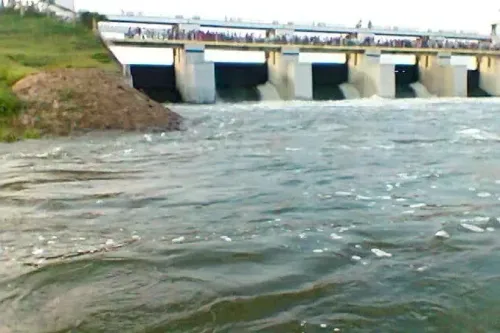
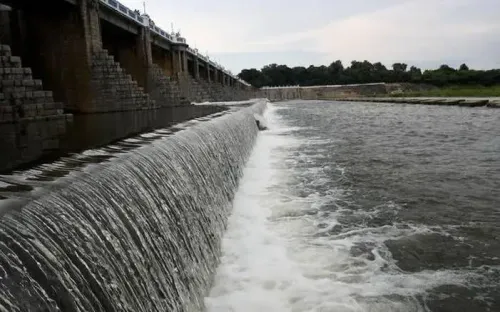
Chennai reservoirs at 39% capacity, down 47% from last year; northeast monsoon key
Synopsis
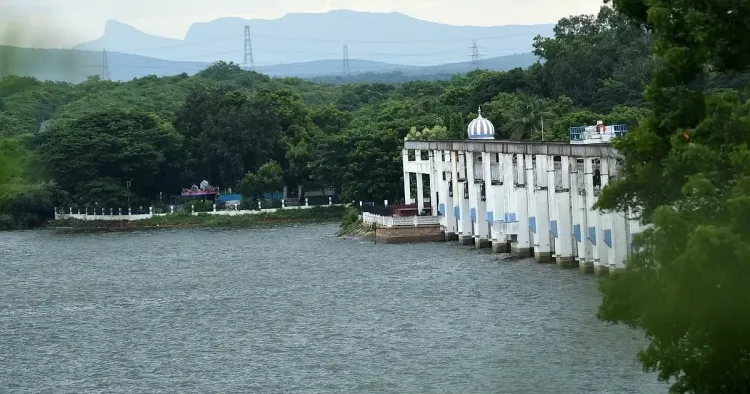
Chennai's six major reservoirs are nearly half-empty compared to a year ago, holding just 39% of capacity as of 22 October. The city now depends almost entirely on the northeast monsoon — which has just begun strengthening — to avert a deeper water crisis before summer 2027. Poondi and Veeranam are the most critically low.
Key Takeaways
Chennai's six reservoirs held 5.139 tmc as of 22 October 2026 , against 9.738 tmc a year earlier — a decline of 47 per cent .
Combined storage stands at just under 39 per cent of total capacity of 13.222 tmc .
Puzhal is the best-stocked reservoir at 68.12 per cent of capacity; Poondi and Veeranam are critically low.
The northeast monsoon has strengthened over Tamil Nadu since last week, raising inflows across catchment areas.
The CMWSSB has reduced daily water distribution but says supplies remain adequate for consumers.
Chennai's six principal drinking water reservoirs held a combined 5.139 thousand million cubic feet (tmc) as of Wednesday, 22 October 2026 — roughly 47 per cent lower than the 9.738 tmc recorded during the same period last year. With the reservoirs sitting at just under 39 per cent of their total combined capacity of 13.222 tmc, the city's water security is under strain even as a strengthening northeast monsoon raises cautious hopes of recovery.
Current Storage Across Key Reservoirs
The six reservoirs serving Chennai — Poondi, Puzhal, Chembarambakkam, Cholavaram, Kannankottai-Thervoy Kandigai, and Veeranam in Cuddalore district — show wide variation in fill levels. Puzhal is the best-placed, recording an inflow of 1,126 cusecs on Wednesday morning and holding 2.248 tmc against its capacity of 3.3 tmc, putting it at 68.12 per cent of capacity.
Chembarambakkam received 555 cusecs and held 1.435 tmc against a full capacity of 3.645 tmc. Poondi recorded an inflow of 520 cusecs, but its storage stood at just 468 million cubic feet against a capacity of 3.231 tmc — one of the more concerning shortfalls. Veeranam, another critical source for the city, received 340 cusecs and also held 468 million cubic feet against a total capacity of 1.463 tmc.
Northeast Monsoon Boosts Inflows, But Gap Remains Wide
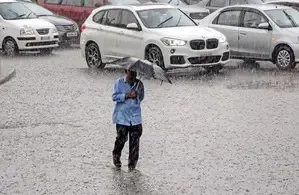
The northeast monsoon has gathered strength over Tamil Nadu since last week, bringing heavy showers to Chennai and its suburban catchment zones over the past three days. Rain across catchment areas has lifted inflows into several reservoirs, but the improvement has yet to make a meaningful dent in the year-on-year shortfall.
This comes amid a pattern that has recurred across several recent years: Chennai enters the northeast monsoon window with depleted reserves, making the October-to-December rainfall season the decisive one for the city's water calendar. The city receives the bulk of its annual rainfall during this period, unlike most of India which depends primarily on the southwest monsoon.
Water Board Reduces Daily Distribution
The Chennai Metropolitan Water Supply and Sewerage Board (CMWSSB) has reduced daily water distribution in response to the lower storage levels. Officials maintained that adequate supplies were being provided to consumers and stated that the reduction was not expected to cause significant inconvenience, given the onset of the monsoon and expected improvement in inflows.
Notably, such supply-side adjustments by the CMWSSB typically signal that buffer stocks are insufficient to sustain peak distribution, even if authorities prefer measured language in public communications.
What Comes Next
Forecasts point to continued rainfall over reservoir catchment areas as the northeast monsoon strengthens. Sustained and well-distributed precipitation will be critical to rebuilding storage across all six reservoirs before the dry summer months of 2027. Poondi and Veeranam, which are furthest from their full levels, will require the most significant inflow to restore meaningful buffers. Water managers and civic authorities will be closely monitoring daily inflow data over the coming weeks.
Point of View
Not just seasonal. The city consistently enters the northeast monsoon window with depleted reserves, making a single rainfall season the make-or-break moment for water security — a precarious position for a metro of its size. The CMWSSB's supply cuts, however understated officially, are an early warning that buffers are thin. The deeper question mainstream coverage tends to skip is why, after years of reservoir expansion proposals and desalination investments, Chennai's storage-to-population ratio remains so exposed to annual weather variability. If the northeast monsoon underdelivers — as it has in some recent years — the city will face a difficult summer with very little room to manoeuvre.
NationPress
22 Oct 2026
Frequently Asked Questions
How much water do Chennai's reservoirs currently hold?
As of 22 October 2026, Chennai's six principal reservoirs together held 5.139 tmc — just under 39 per cent of their combined capacity of 13.222 tmc. This is approximately 47 per cent lower than the 9.738 tmc recorded at the same time last year.
Which reservoirs supply drinking water to Chennai?
The six main reservoirs are Poondi, Puzhal, Chembarambakkam, Cholavaram, Kannankottai-Thervoy Kandigai, and Veeranam in Cuddalore district. Puzhal is currently the best-stocked at 68.12 per cent of capacity, while Poondi and Veeranam are among the most critically depleted.
Why is the northeast monsoon important for Chennai's water supply?
Chennai receives the bulk of its annual rainfall during the northeast monsoon, which runs roughly from October to December — unlike most of India which depends on the southwest monsoon. This makes the northeast monsoon the city's primary opportunity each year to replenish its drinking water reservoirs before the dry summer months.
Has the Chennai water board reduced water supply?
Yes, the Chennai Metropolitan Water Supply and Sewerage Board (CMWSSB) has reduced daily water distribution in response to lower storage levels. Officials said adequate supplies are still being provided and that the reduction was not expected to significantly inconvenience consumers given the onset of the monsoon.
When could reservoir levels improve significantly?
Levels are expected to improve gradually as the northeast monsoon strengthens over Tamil Nadu. Sustained and well-distributed rainfall over the catchment areas of all six reservoirs in the coming weeks will be essential to rebuilding meaningful storage before summer 2027.