Chennai reservoirs gain 985 mcft in nine days as northeast monsoon intensifies
Synopsis
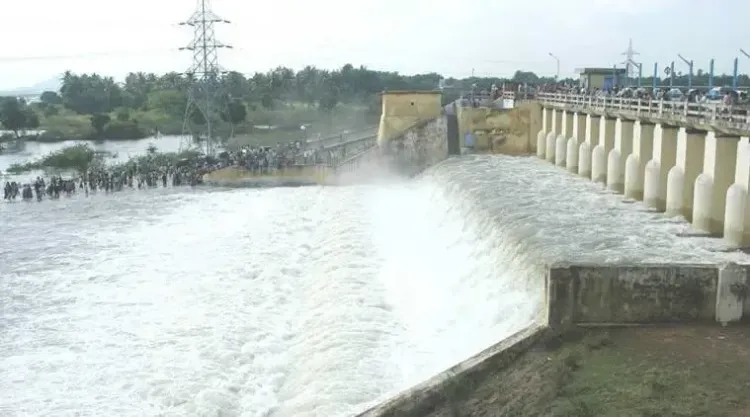
Nine days of northeast monsoon rain have added nearly 985 mcft to Chennai's six reservoirs — the equivalent of 29 days' worth of withdrawals — yet combined storage still sits below 42 per cent of capacity. Red Hills alone contributed more than half the gain, and the city's water managers are watching closely as the peak monsoon weeks approach.
Key Takeaways
Chennai's six reservoirs gained 984.98 mcft between 15 October and 24 October 2026 , driven by nine days of sustained northeast monsoon rainfall.
Combined storage reached 5,470.66 mcft , or 41.38 per cent of the total 13,222 mcft capacity.
Red Hills recorded the biggest single-reservoir gain of 539 mcft , reaching 73.18 per cent of its capacity.
The additional water equals approximately 27.89 billion litres , or roughly 29 days of current reservoir withdrawals.
CMWSSB supplies 1,237.71 MLD daily; reservoirs account for 78 per cent of that total.
Storage remains below half of total capacity, leaving significant room for further replenishment during the peak monsoon weeks ahead.
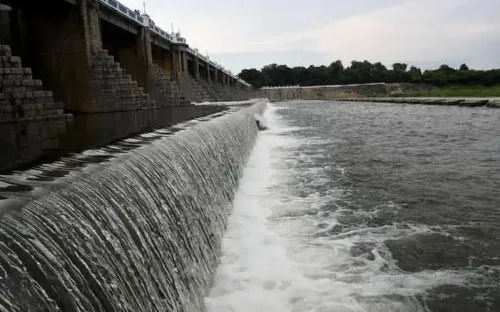
Chennai's six drinking water reservoirs have collectively gained 984.98 million cubic feet (mcft) of storage over nine days, as sustained rainfall from the northeast monsoon replenishes the city's water supply network. Combined storage climbed from 4,485.68 mcft on 15 October to 5,470.66 mcft on 24 October, bringing the network to 41.38 per cent of its total capacity of 13,222 mcft.
Scale of the Replenishment
The additional water amounts to approximately 27.89 billion litres — equivalent to nearly 29 days of current reservoir withdrawals, or about 23 days of Chennai's total daily supply when all sources are factored in. The Chennai Metropolitan Water Supply and Sewerage Board (CMWSSB) supplies 1,237.71 million litres a day (MLD), of which 968.41 MLD — roughly 78 per cent — originates from reservoirs. Industrial, bulk-consumer, and municipal allocations account for 61.29 MLD of the total supply figure.
Red Hills Leads the Gains
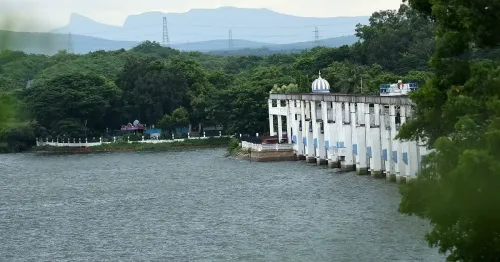
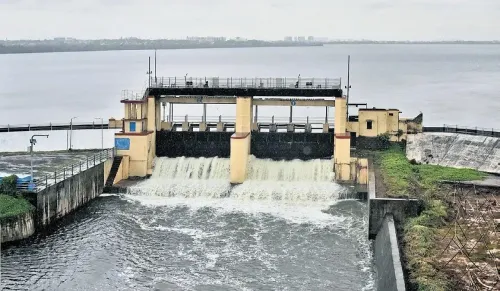
Red Hills registered the largest individual increase among the six reservoirs, with storage rising by 539 mcft — from 1,876 mcft to 2,415 mcft. This single reservoir's gain accounts for more than half the combined improvement across all six waterbodies. Red Hills now stands at 73.18 per cent of its 3,300 mcft capacity, reinforcing its role as Chennai's primary drinking water source.
Reservoir-by-Reservoir Breakdown
Chembarambakkam recorded storage rising from 1,319 mcft to 1,497 mcft, while Veeranam increased from 526.68 mcft to 677.56 mcft. Poondi moved from 412 mcft to 490 mcft, and Cholavaram rose from 120 mcft to 144 mcft. Kannankottai-Thervoy Kandigai posted a smaller gain, edging from 232 mcft to 247 mcft.
Other Sources Supplementing Supply
Beyond reservoirs, Chennai's water grid draws on two desalination plants at Nemmeli that together contribute 200 MLD. Quarries supply 28 MLD, wells and borewells add 16 MLD, sources in added areas provide 14 MLD, and Porur contributes 5 MLD. This diversified supply architecture has reduced Chennai's vulnerability to dry-spell shocks compared with earlier decades, when the city was almost entirely dependent on reservoir levels.
Outlook for the Monsoon Season
Despite the significant recovery, combined storage remains below the halfway mark of total capacity, leaving considerable headroom for further replenishment as the northeast monsoon progresses. Historically, the northeast monsoon — which typically runs from October to December — accounts for the majority of annual inflows into Chennai's reservoir system, making the coming weeks critical for securing water availability through the summer of 2027. Authorities and water managers will closely watch inflows at Red Hills and Chembarambakkam, which together dominate the city's supply.
Point of View
But 41 per cent capacity is not water security — it is a progress report. Chennai has restructured its supply grid since the 2019 Day Zero crisis, adding desalination and diversified sources, yet reservoirs still underwrite 78 per cent of daily supply. The northeast monsoon's next few weeks will determine whether the city heads into 2027's summer with a genuine buffer or another anxious deficit. The structural lesson from past cycles — that Chennai's reservoir recovery tends to peak in November and then stall — means authorities should resist treating a good October as a guarantee of an easy April.
NationPress
25 Oct 2026
Frequently Asked Questions
How much water have Chennai's reservoirs gained in the recent monsoon spell?
Chennai's six drinking water reservoirs gained 984.98 mcft over nine days, from 15 October to 24 October 2026 , as the northeast monsoon intensified. Combined storage rose to 5,470.66 mcft , equivalent to roughly 27.89 billion litres .
What percentage of capacity are Chennai's reservoirs currently at?
As of 24 October 2026 , the six reservoirs collectively hold 41.38 per cent of their combined capacity of 13,222 mcft . This means more than half the total storage capacity remains available for further monsoon inflows.
Which reservoir recorded the largest gain?
Red Hills recorded the largest individual gain of 539 mcft , rising from 1,876 mcft to 2,415 mcft . It now stands at 73.18 per cent of its 3,300 mcft capacity and accounted for more than half the total increase across all six waterbodies.
How much water does Chennai use daily and where does it come from?
The CMWSSB supplies 1,237.71 MLD of water daily, of which reservoirs contribute 968.41 MLD — about 78 per cent . Other sources include two desalination plants at Nemmeli ( 200 MLD ), quarries ( 28 MLD ), wells and borewells ( 16 MLD ), and smaller local sources.
Is Chennai's water situation now secure for the year ahead?
Not yet fully. While the 985 mcft gain over nine days is significant, combined storage at 41.38 per cent remains well below capacity. The northeast monsoon, which typically runs through December , will need to continue delivering strong inflows to build a comfortable buffer before Chennai's dry summer months arrive.