Chhattisgarh CMO: 5 New Medical Colleges, 250 MBBS Seats Added
Synopsis
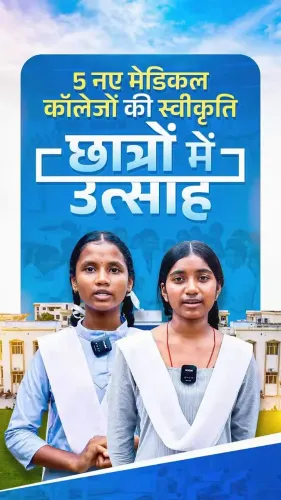
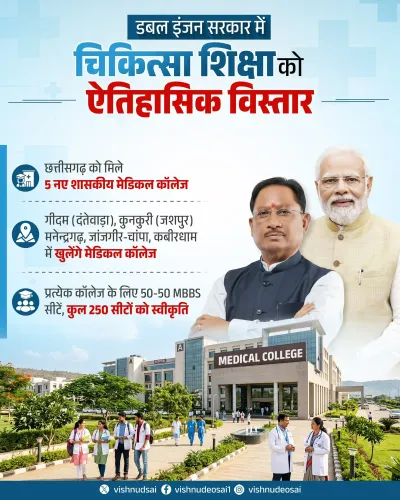
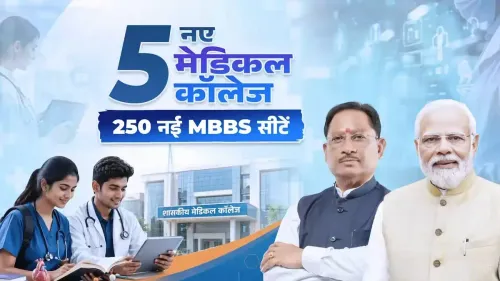
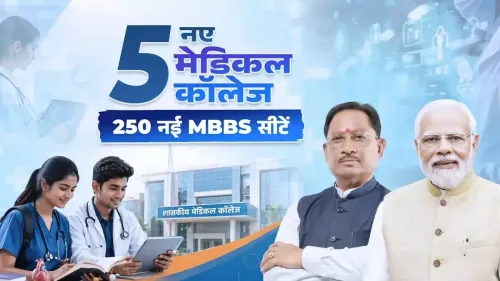
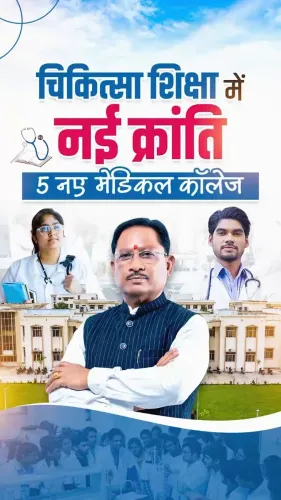
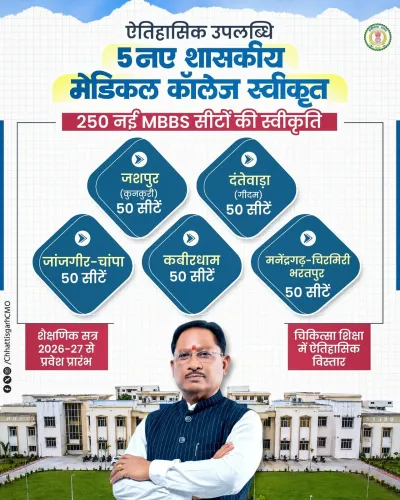
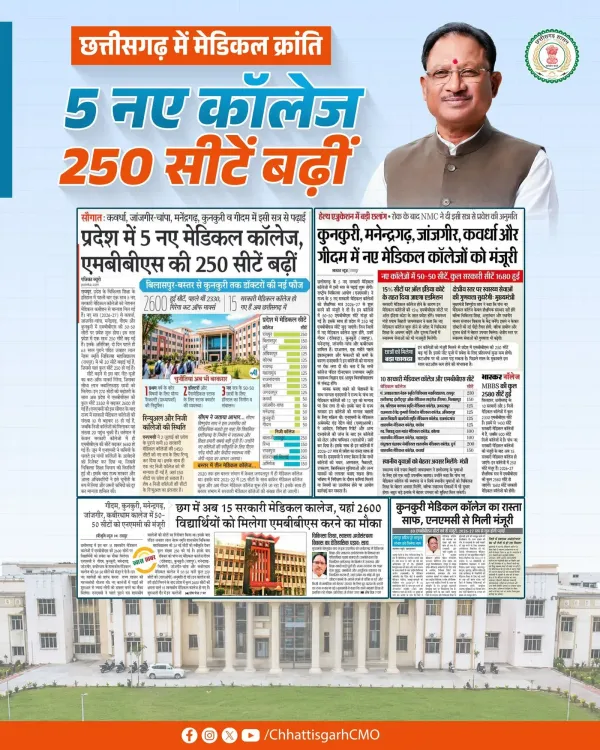
The Chief Minister's Office of Chhattisgarh announced 250 new MBBS seats across five new medical colleges on 14 July 2026, calling it a new chapter in the state's medical education and expanding opportunities for youth in a state historically underserved by healthcare infrastructure.
Key Takeaways
250 new MBBS seats have been added across five new medical colleges in Chhattisgarh, as announced by the Chief Minister's Office on 14 July 2026 .
The expansion is described as a 'new chapter in medical education' in the state, with the government framing it as widening opportunity for young aspirants.
Chhattisgarh has historically had a low doctor-to-patient ratio, driven by its large tribal population and limited medical training infrastructure.
New seats require clearance from the National Medical Commission (NMC) , which inspects infrastructure, faculty, and clinical capacity before ratifying additions.
The move aligns with the centrally sponsored scheme for upgrading district hospitals into medical colleges , active since 2013, and with the National Health Policy 2017 .
Newly added seats will be allocated through NEET-UG counselling cycles; formal seat matrices and NMC inspection reports are the next milestones to watch.
The Chief Minister's Office of Chhattisgarh announced on Tuesday, 14 July 2026 that the state has added 250 MBBS seats across five new medical colleges, marking what the office described as a new chapter in medical education for the state's youth.
Posting on X, the official account declared: 'छत्तीसगढ़ में चिकित्सा शिक्षा का नया अध्याय' — 'A new chapter in medical education in Chhattisgarh' — stating that the addition of 250 MBBS seats across five new colleges is giving 'new wings to the dreams of the youth.' The post was tagged under the hashtag #Sushasansarkar, the ruling dispensation's governance branding.
Context
Chhattisgarh, carved out as a separate state in 2000, has historically struggled with a low doctor-to-patient ratio, a challenge compounded by its large tribal population spread across forested and semi-urban districts. Expanding medical education infrastructure has been a recurring policy priority, with successive governments seeking central approvals to upgrade district hospitals into functional medical colleges. The National Medical Commission (NMC), the statutory body that replaced the Medical Council of India in 2020, is responsible for approving new medical colleges and ratifying annual MBBS seat increases. Any addition of seats of this scale would require NMC clearance following inspection of infrastructure, faculty, and clinical facilities at each of the five institutions.Policy Backdrop
The expansion aligns with a centrally sponsored scheme launched in 2013 for establishing new government medical colleges by upgrading existing district hospitals. Chhattisgarh has received multiple rounds of central approval under this scheme over the years. The initiative also fits within the framework of the National Health Policy 2017, which emphasised scaling undergraduate medical education in underserved and tribal regions. India has pursued a sustained increase in MBBS seats since the early 2010s to close the gap with WHO-recommended doctor-population norms. Locating new colleges outside state capitals — at district headquarters closer to tribal and rural communities — has been a defining feature of this national push, and Chhattisgarh's latest expansion continues that pattern.Stakeholders and Impact
The most immediate beneficiaries are MBBS aspirants from Chhattisgarh, particularly those from tribal, semi-urban, and economically weaker backgrounds who face stiff competition for limited government seats. An addition of 250 seats in government medical colleges represents meaningful relief in a state where private medical education remains financially out of reach for a large share of families. Over the longer term, graduates from these colleges are expected to strengthen the state's rural and primary healthcare workforce. District-level medical colleges typically produce doctors with greater familiarity with local disease burdens and languages, improving retention in underserved postings — a persistent challenge for Chhattisgarh's public health system.What's Next
The newly added seats will enter the allocation pipeline through NEET-UG counselling cycles conducted by state and central authorities. Prospective students, counselling bodies, and the NMC will be watching for the formal notification of seat matrices and college-wise allocations. State budget releases and any follow-up NMC inspection reports for the five colleges will serve as the next key milestones in confirming the rollout of this expansion.Point of View
Signalling a shift from curative urban healthcare toward building local medical capacity. The branding under #Sushasansarkar ('good governance government') indicates the ruling dispensation intends to claim political credit ahead of future electoral cycles. The real test, however, will be whether NMC inspections confirm that the five colleges meet faculty and infrastructure standards, and whether graduates eventually choose to serve in the rural postings where the need is greatest.
NationPress
12 Oct 2026
Frequently Asked Questions
How many MBBS seats has Chhattisgarh added in 2026?
The Chief Minister's Office of Chhattisgarh announced the addition of 250 MBBS seats across five new medical colleges in the state, as posted on 14 July 2026 .
Who approves new medical colleges and MBBS seats in India?
The National Medical Commission (NMC) , which replaced the Medical Council of India in 2020, is the statutory body responsible for approving new medical colleges and ratifying increases in MBBS seats across all states.
Will the new Chhattisgarh MBBS seats be available in NEET UG counselling?
Yes. Seats added to government medical colleges enter the allocation pipeline through NEET-UG counselling cycles conducted by state and central authorities. Formal seat matrices will be notified before counselling begins.
Why does Chhattisgarh need more medical colleges?
Chhattisgarh has historically had a low doctor-to-patient ratio due to its large tribal population and limited medical infrastructure. Expanding medical colleges, especially at the district level, is aimed at producing more doctors familiar with local needs and improving rural healthcare access.
What is the centrally sponsored scheme for medical colleges in India?
A centrally sponsored scheme launched in 2013 supports the establishment of new government medical colleges by upgrading existing district hospitals. Chhattisgarh has received multiple approvals under this scheme, and the latest expansion is consistent with its objectives.