CM Sai's Chhattisgarh Marks Janjatiya Gaurav Diwas in Dharamjaigarh
Synopsis
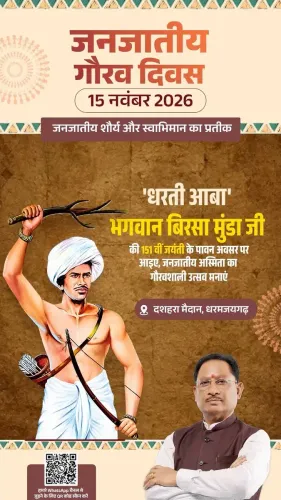
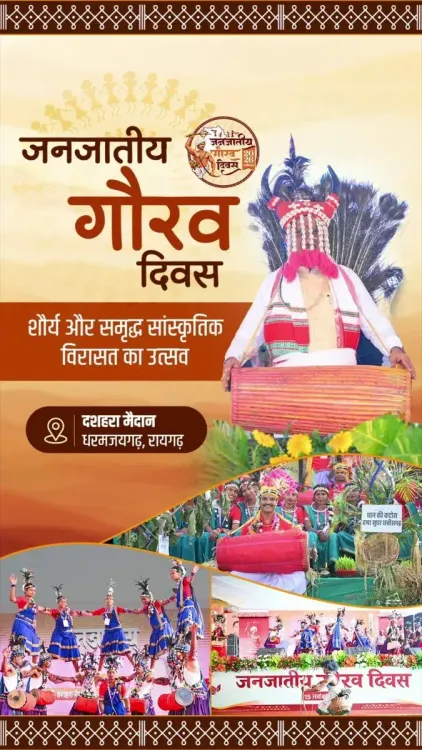
On Janjatiya Gaurav Diwas, 15 November 2026, Chhattisgarh's CMO showcased grand tribal cultural celebrations in Dharamjaigarh honouring Bhagwan Birsa Munda — 'Dharti Aaba' — with folk dances and traditional arts marking the national observance instituted in 2021.
Key Takeaways
Janjatiya Gaurav Diwas is observed on 15 November every year — the birth anniversary of Bhagwan Birsa Munda — following a Government of India declaration in 2021 .
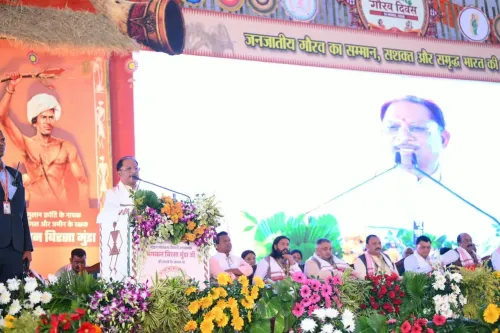
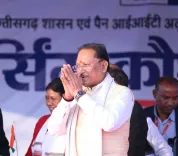
The Chief Minister's Office of Chhattisgarh shared video of the state-level celebration held in Dharamjaigarh, Raigarh district on 15 November 2026 .
Birsa Munda, revered as Dharti Aaba , led the Ulgulan uprising against British rule and died in custody in 1900 at age 25.
Performances of folk dances and traditional arts highlighted the indigenous cultural heritage of Chhattisgarh's tribal communities, including the Gond and Oraon.
CM Vishnu Deo Sai , himself from a tribal community, has led the BJP government in Chhattisgarh since December 2023 .
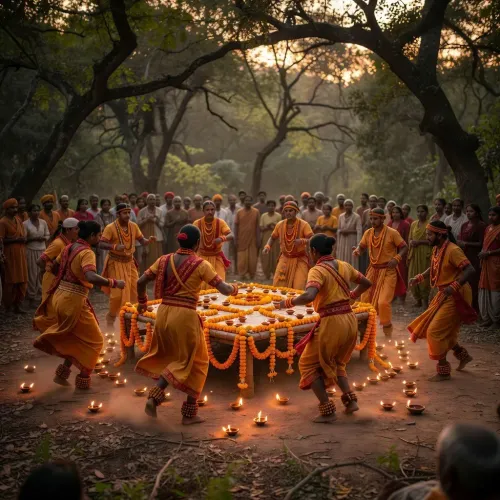
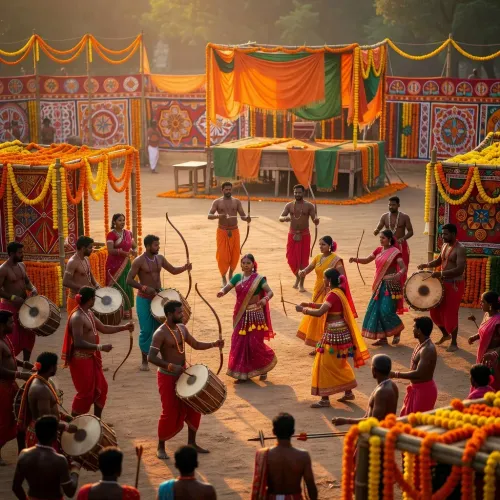
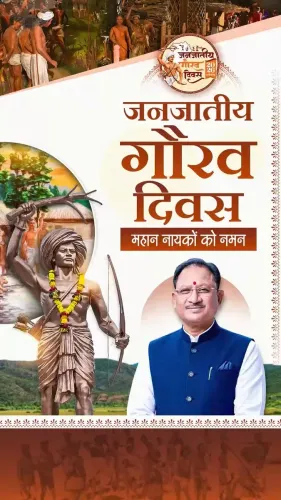
Tribal warriors danced, drummers thundered, and the air in Dharamjaigarh filled with centuries-old folk songs — all in honour of Bhagwan Birsa Munda, the 19th-century Munda leader whose birth anniversary, 15 November, the nation now marks as Janjatiya Gaurav Diwas. The Chief Minister's Office of Chhattisgarh documented the state-level celebrations, sharing a video of the grand cultural showcase held in Dharamjaigarh on Sunday, 15 November 2026.
The post described 'जनजातीय शौर्य, लोक परंपराओं और समृद्ध सांस्कृतिक विरासत की भव्य झलक' — 'a magnificent glimpse of tribal valour, folk traditions and rich cultural heritage' — through mesmerising performances of folk dances and traditional arts that brought out the unique colours of indigenous culture.
Who was 'Dharti Aaba' — and why Birsa Munda commands a national day
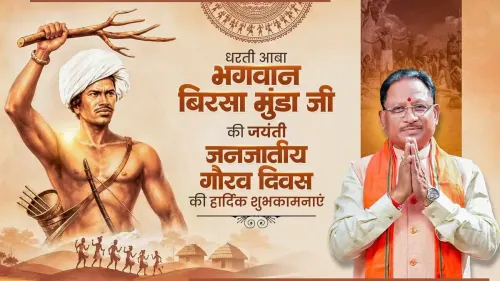
Birsa Munda, born on 15 November 1875 in present-day Jharkhand, led the Ulgulan ('the great tumult') — a fierce uprising of the Munda tribal community against British colonial rule and exploitative zamindars in the late 19th century. Revered as Dharti Aaba ('Father of the Earth'), he died in British custody in 1900, aged just 25, and passed into legend as one of India's earliest and most defiant freedom fighters.
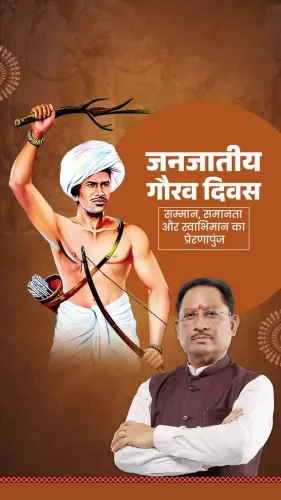
The Government of India declared 15 November as Janjatiya Gaurav Diwas in 2021, recognising Birsa Munda's legacy and the broader contributions of tribal communities to the independence movement. The day is now observed nationwide, with state governments organising cultural programmes in tribal heartlands.
Dharamjaigarh: a tribal district at the centre of the celebrations
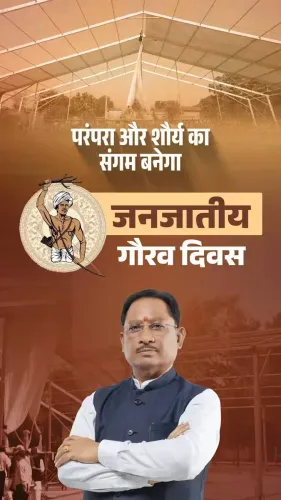
Dharamjaigarh, located in Raigarh district of Chhattisgarh, sits in a region with a significant Scheduled Tribe population. Choosing this town as the venue signals a deliberate effort to bring the commemoration directly into the communities it honours, rather than confining it to state capitals.
Chhattisgarh is among India's states with the highest proportion of tribal population, home to communities including the Gond, Oraon, and several others with distinct performing-arts traditions. The folk dances and traditional art forms on display in Dharamjaigarh on Sunday offered a living demonstration of that diversity.
CM Vishnu Deo Sai and the BJP's tribal-identity push in Chhattisgarh
Chief Minister Vishnu Deo Sai, who has led the BJP government in Chhattisgarh since December 2023, is himself from a tribal community — a symbolically significant appointment in a state where tribal welfare is both a governance priority and an electoral battleground. Events like Janjatiya Gaurav Diwas allow the state administration to visibly align governance with indigenous cultural pride.
Chhattisgarh regularly stages cultural programmes in tribal-dominated districts as part of a wider national pattern — state and central governments increasingly framing public commemorations of tribal leaders alongside tangible policy commitments on tribal languages, land rights, and heritage preservation.
What the drums of Dharamjaigarh are really saying is simple: the story of India's freedom struggle is incomplete without its tribal chapters — and those chapters are still being read aloud.
Point of View
Where tribal communities form a large and electorally decisive share of the population, staging the event in Dharamjaigarh rather than Raipur amplifies the grassroots signal. CM Vishnu Deo Sai's own tribal background adds an extra layer of symbolism, reinforcing the party's positioning as the custodian of indigenous heritage. The broader trend of competitive state-level commemoration suggests tribal welfare and identity politics will remain intertwined in central India's electoral landscape.
NationPress
15 Nov 2026
Frequently Asked Questions
What is Janjatiya Gaurav Diwas and when is it celebrated?
Janjatiya Gaurav Diwas is a national observance held every year on 15 November , the birth anniversary of tribal freedom fighter Bhagwan Birsa Munda . The Government of India instituted it in 2021 to honour tribal contributions to India's independence struggle.
Who was Bhagwan Birsa Munda and why is he called Dharti Aaba?
Bhagwan Birsa Munda was a 19th-century Munda tribal leader born on 15 November 1875 in present-day Jharkhand. He led the Ulgulan uprising against British rule and was revered as Dharti Aaba — meaning 'Father of the Earth' — by his community. He died in British custody in 1900 , aged 25.
Where was Janjatiya Gaurav Diwas 2026 celebrated in Chhattisgarh?
The state-level Janjatiya Gaurav Diwas celebration in Chhattisgarh in 2026 was held in Dharamjaigarh , a town in Raigarh district , featuring folk dances and traditional cultural performances by tribal artists.
Who is the Chief Minister of Chhattisgarh and what is his background?
Vishnu Deo Sai has been the Chief Minister of Chhattisgarh since December 2023 , leading a BJP government. He is himself from a tribal community, making him a symbolically significant figure in a state with one of India's highest proportions of Scheduled Tribe population.
Which tribal communities live in Chhattisgarh?
Chhattisgarh is home to several major tribal communities, including the Gond , Oraon , and many others with distinct languages, folk arts, and cultural traditions. The state has one of the highest Scheduled Tribe population proportions in India.