Chhattisgarh CMO: 95-km Bastar Rail Trial Complete
Synopsis
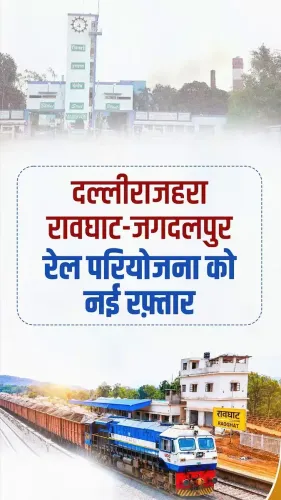
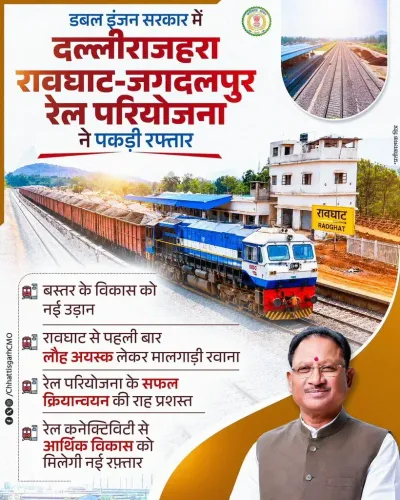
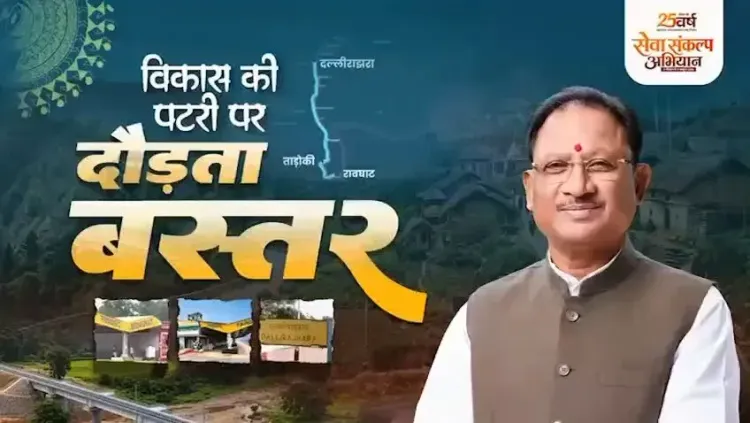
The Chief Minister's Office of Chhattisgarh announced on 27 September 2026 that the 95-km trial run from Tadoki Railway Station to Rawghat under the Dalli Rajhara–Rawghat Rail Project is complete, marking a major step toward connecting Bastar's tribal hinterland with the state capital Raipur.
Key Takeaways
The Chhattisgarh CMO announced on 27 September 2026 that the 95-km Tadoki–Rawghat rail trial run has been completed.
The section is part of the long-pending Dalli Rajhara–Rawghat Rail Project , which has been in successive railway budgets since the early 2000s.
The line is intended to improve both passenger connectivity to Raipur and freight movement for Bastar's mineral-rich belt.
Indian Railways is executing the project in coordination with the Chhattisgarh state government.
Bastar spans seven districts with large tribal populations and a history of left-wing extremism that slowed earlier infrastructure work.
Full commercial operations and progress on remaining stretches toward Jagdalpur and Dalli Rajhara are the key milestones to watch next.
A 95-kilometre rail line threading through one of India's most remote and historically insurgency-affected regions has completed its trial run — and for Bastar's tribal communities, that milestone could mean something far larger than a timetable change. The Chief Minister's Office of Chhattisgarh announced on Sunday, 27 September 2026 that the trial run from Tadoki Railway Station to Rawghat, under the long-pending Dalli Rajhara–Rawghat Rail Project, has been successfully completed.
Posting on X, the CMO declared: 'Development is now racing on the tracks in Bastar under the good-governance government... the trial of the 95-kilometre rail line from Tadoki Railway Station to Rawghat is complete. Now connectivity with Raipur and other parts of the state will become easier for the people of Bastar.'Decades in the making: why the Rawghat line kept stalling
The Dalli Rajhara–Rawghat Railway Project has featured in successive railway budgets since the early 2000s, repeatedly flagged as a priority for opening Chhattisgarh's mineral-rich but deeply isolated southern districts. Progress crawled for two decades — rough terrain, dense forest cover, and the persistent shadow of left-wing extremism across Bastar division's seven districts made laying track a logistical and security challenge unlike almost anywhere else in India.
The project is being executed by Indian Railways in coordination with the state government. Its strategic logic has always been twofold: move iron ore out of the region's rich mineral belt efficiently, and move people — especially the large tribal populations of southern Chhattisgarh — closer to opportunity, healthcare, and markets.
What the Tadoki–Rawghat trial actually unlocks
Completing a trial run is a critical precursor to commercial operation. It confirms that the track, signalling, and rolling stock are ready for regular passenger and freight movement. For Bastar's residents, the immediate prize is a faster, cheaper route to Raipur — the state capital and a major rail hub — reducing a journey that currently demands long road trips through difficult terrain.
The broader economic signal matters too. Better connectivity historically accelerates local commerce, reduces the cost of bringing in goods, and — in regions like Bastar — chips away at the isolation that extremist groups have long exploited. State governments across successive administrations in Chhattisgarh have framed rail and road investments in the south as instruments of both economic integration and peace-building.
Next stop: full commercial service and the road to Jagdalpur
The trial completion shifts attention immediately to when commercial operations begin on the Tadoki–Rawghat section. Beyond that, the outstanding question is how quickly work progresses on the remaining stretches — toward Jagdalpur or onward to Dalli Rajhara — that would complete the original vision of a continuous southern Chhattisgarh rail corridor.
For a region that has waited a generation for this moment, the trains are finally on the tracks. Whether the timetable — commercial, not just trial — follows promptly will be the real measure of the government's delivery on its 'Sushasan Sarkar' ('good-governance government') promise.
Frequently Asked Questions
What is the Dalli Rajhara–Rawghat Rail Project?
The Dalli Rajhara–Rawghat Rail Project is a railway initiative in southern Chhattisgarh designed to link iron-ore mining areas and remote tribal districts with the national rail network, improving both freight and passenger movement.
How long is the Tadoki to Rawghat rail section?
The Tadoki Railway Station to Rawghat section covers 95 kilometres , and its trial run was announced as complete by the Chhattisgarh CMO on 27 September 2026.
How will the Rawghat rail line help Bastar residents?
Once operational, the line will give Bastar's residents faster and more affordable rail access to Raipur, the state capital, reducing dependence on long and difficult road journeys through forested terrain.
Why has the Bastar rail project been delayed for so long?
The project faced decades of delay due to challenging forest terrain, the scale of engineering required, and persistent security concerns stemming from left-wing extremism across Bastar's seven districts.
When will commercial train services start on the Tadoki–Rawghat section?
As of the CMO's announcement, only the trial run has been declared complete. The commencement of full commercial operations has not yet been officially announced.