CM Sai Hails Tadoki-Raoghat Rail Link as South Chhattisgarh Milestone
Synopsis
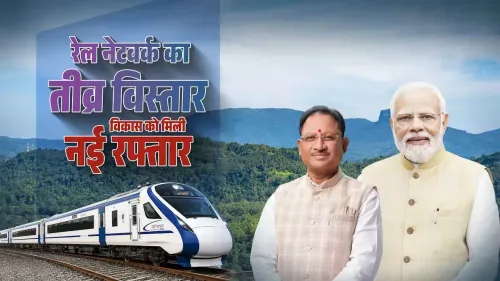
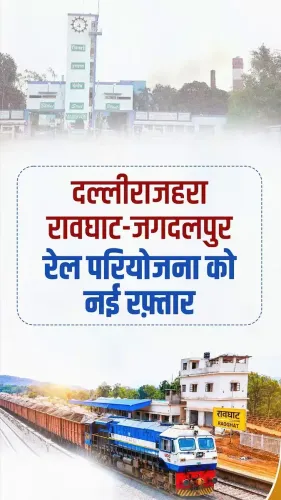
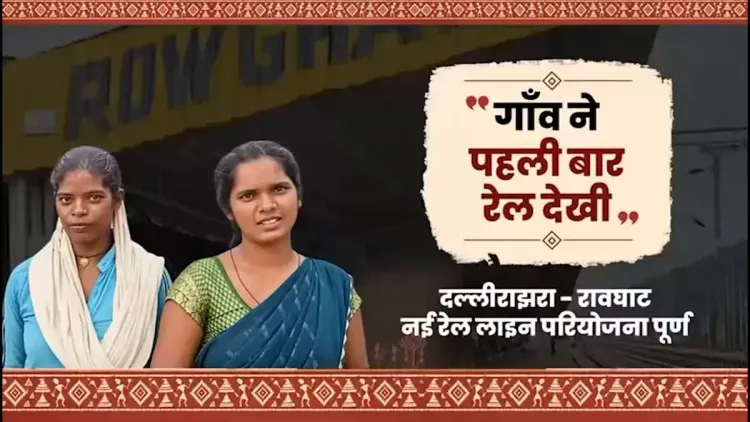
Chhattisgarh CM Vishnu Deo Sai announced the completion of the Tadoki-Raoghat section of the Dallirajhara-Raoghat rail project on 26 September 2026, hailing it as a transformative step for Bastar's tribal communities and southern Chhattisgarh's economic integration.
Key Takeaways
Tadoki-Raoghat section of the Dallirajhara-Raoghat rail project has been completed, per CM Vishnu Deo Sai's announcement on 26 September 2026 .
The project aims to connect Dalli Rajhara with Raoghat , deep in Chhattisgarh's mineral-rich southern forest belt.
CM Sai cited gains in education, healthcare, employment, and trade for the region's tribal and forest communities.
The Bastar division — home to districts like Dantewada and Bijapur — is among the primary beneficiaries of expanded rail access.
The Dallirajhara-Raoghat line has been in planning and construction since the early 2000s , making this completion a decades-long milestone.
Questions remain over the full operationalisation timeline and completion of any remaining sections of the corridor.
A railway section that cuts through some of India's most remote forested terrain has reached a critical milestone — and Chhattisgarh Chief Minister Vishnu Deo Sai says it marks a turning point for the tribal heartland of the state's south. On Saturday, 26 September 2026, the Chief Minister announced that the Tadoki-Raoghat section of the long-running Dallirajhara-Raoghat rail project has been completed, calling it a significant achievement for Bastar and all of southern Chhattisgarh.
Posting in Hindi on X, CM Sai described the development as opening 'samridhi ki nai rahon' — 'new pathways of prosperity' — for the region's distant forest villages. He underlined that the expanded rail connectivity would ease movement for communities that have long been cut off from mainstream economic circuits, and would generate fresh opportunities in education, healthcare, employment, and trade.
Decades in the Making: The Dallirajhara-Raoghat Line
The Dallirajhara-Raoghat rail project has been a fixture of Indian Railways' plans for Chhattisgarh's mineral-rich and tribal interior since the early 2000s. The corridor was conceived to pierce deep into the forested districts of the south, connecting the iron-ore belt around Dalli Rajhara to Raoghat — an area sitting atop substantial iron deposits. Progress was painfully slow for years, hampered by difficult terrain, dense forest cover, and, critically, the security challenges associated with Left-Wing Extremism in the Bastar division.
The completion of the Tadoki-Raoghat section now closes a key gap in that corridor. Bastar — a division encompassing tribal-dominated districts such as Dantewada and Bijapur — has historically ranked among the country's most underserved regions on virtually every human-development indicator. Rail access is not a luxury here; it is the foundational layer on which clinics, schools, and markets can actually function at scale.
What Rail Means for Bastar's Tribal Communities
For the tribal communities of southern Chhattisgarh, the implications stretch well beyond a faster commute. Better connectivity directly reduces the cost and time of accessing district hospitals, lowers the barrier for young people to reach colleges in larger towns, and opens corridors for local produce — forest goods, agricultural output — to reach wider markets at competitive rates.
State and central governments have repeatedly framed rail extensions into Chhattisgarh's forest belts as instruments of both development and stability: the logic being that economic integration reduces the alienation that armed extremist groups have exploited for decades. A completed rail link does not erase those deep structural challenges overnight — but it changes the geometry of access in a region where geography has long been destiny.
Remaining Stretch and What Comes Next
The Tadoki-Raoghat section's completion is a significant milestone, but the broader Dallirajhara-Raoghat corridor is part of an ongoing project. Attention now turns to the operationalisation timeline — when trains actually start running, how freight and passenger services will be structured, and what complementary road and digital infrastructure the state intends to layer on top. CM Sai's announcement is a political signal as much as an administrative one: that the BJP-led state government intends to hold this project up as tangible proof of its development agenda for tribal Chhattisgarh.
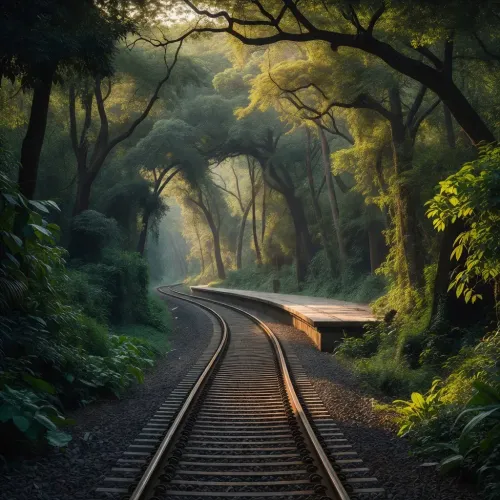
For the villages of the Bastar forest belt, the steel tracks now laid through their landscape carry a simple, concrete promise. Whether that promise converts into jobs, hospital beds, and school enrollments is the question southern Chhattisgarh will be watching — and measuring — in the months ahead.
Point of View
And it offers a visible counter-narrative to criticism that governance has bypassed the state's forest communities. For the broader Union government, progress on this corridor reinforces its push to use rail as a development lever in aspirational districts. The real test, however, will be whether freight and passenger services are operationalised swiftly enough to translate steel and sleepers into measurable human-development gains before the next electoral cycle.
NationPress
26 Sept 2026
Frequently Asked Questions
What is the Dallirajhara-Raoghat rail project?
The Dallirajhara-Raoghat rail project is a railway corridor planned since the early 2000s to connect Dalli Rajhara with Raoghat in southern Chhattisgarh, linking the iron-ore belt to the mineral-rich tribal interior of the Bastar region.
Which section of the Dallirajhara-Raoghat line has been completed?
The Tadoki-Raoghat section has been completed, as announced by Chhattisgarh Chief Minister Vishnu Deo Sai on 26 September 2026.
How will the Tadoki-Raoghat rail link benefit Bastar?
The rail link is expected to ease movement for tribal and forest communities in Bastar, and open new opportunities in education, healthcare, employment, and trade by connecting previously isolated villages to larger towns and markets.
Why did the Dallirajhara-Raoghat project take so long to complete?
The project faced delays due to difficult forested terrain, dense forest cover requiring complex engineering, and longstanding security challenges related to Left-Wing Extremism in the Bastar division.
Is the entire Dallirajhara-Raoghat rail line now complete?
The Tadoki-Raoghat section has been completed, but the broader corridor's full operationalisation — including when trains will begin regular services — is still to be confirmed by railway authorities.