Chhattisgarh CMO marks 12 years of youth empowerment
Synopsis
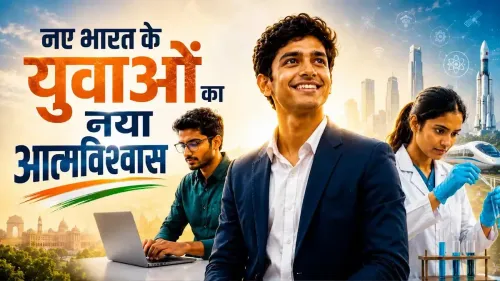
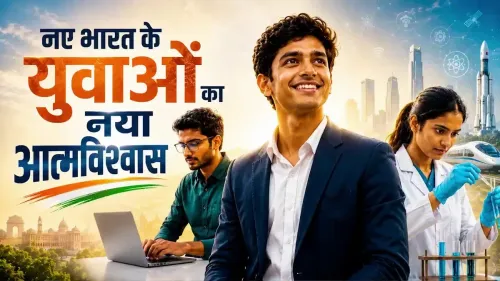
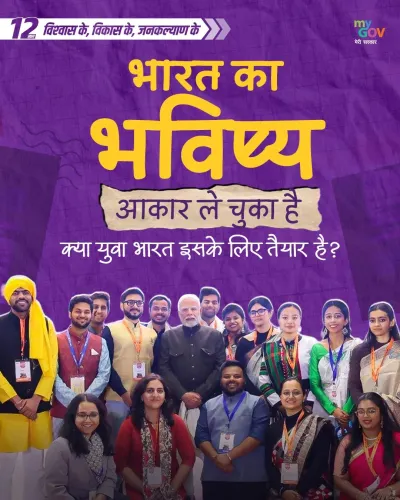
The Chief Minister's Office of Chhattisgarh marked 12 years of central governance on 13 June 2026 by celebrating a transformed youth ecosystem — spanning education reform, sports development, and skill-building — and honouring the Amrit Peedhi as India's future-defining generation.
Key Takeaways
The Chhattisgarh CMO posted on 13 June 2026 under #12YearsOfYuvaShakti , marking 12 years of youth-focused central governance since 2014 .
The post invokes the Amrit Peedhi — the generation expected to drive national development during the 2022–2047 Amrit Kaal window.
Key policy pillars cited include the Skill India Mission (2015) , the Khelo India programme (2017) , and the National Education Policy 2020 .
NEP 2020 replaced the 1986 education framework, introducing four-year undergraduate degrees and research-focused institutions.
The 2028 Los Angeles Olympics cycle is the next major benchmark for the Khelo India sports talent pipeline.
The Chhattisgarh post signals state alignment with the broader national narrative of treating youth development as a strategic governance priority.
The Chief Minister's Office of Chhattisgarh on Saturday, 13 June 2026 marked 12 years of governance under the current central dispensation by highlighting a sweeping transformation in India's youth ecosystem — from world-class institutions to a new culture of sporting excellence — and saluting the Amrit Peedhi, the generation expected to lead the nation through to 2047.
Context
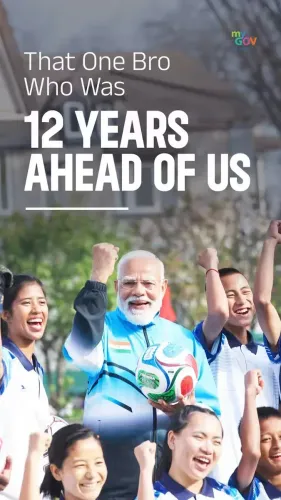
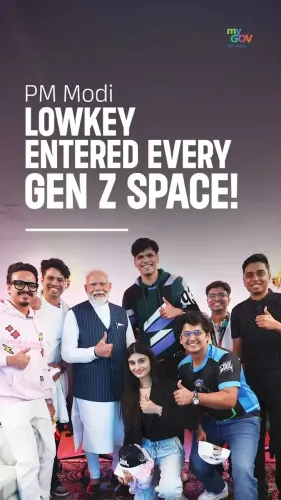
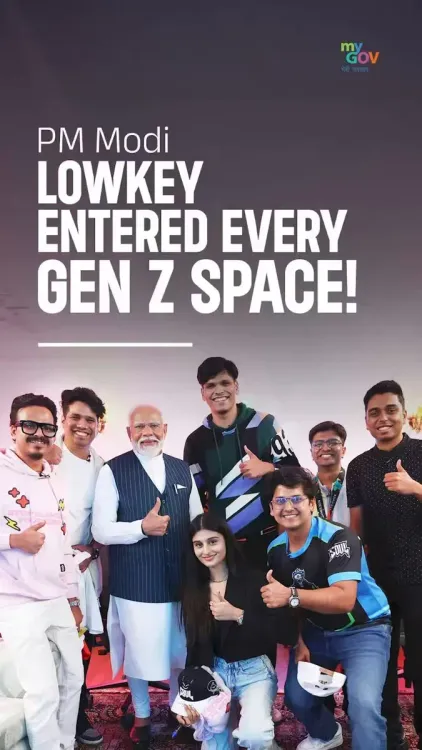
The post, shared under the hashtag #12YearsOfYuvaShakti, declares that India's youth 'have always had the ambition, but now, the ecosystem finally matches the energy.' It frames the past 12 years — spanning 2014 to 2026 — as a period of deliberate institution-building designed to convert large aspirations into tangible outcomes. A video accompanying the post visualises this arc of transformation.
The reference to Amrit Peedhi — literally 'the generation of nectar' — draws on the broader Amrit Kaal framework that positions the 2022–2047 period as India's defining developmental window, culminating in the centenary of Independence.
Policy Backdrop
The claim of a transformed ecosystem rests on a cluster of central policy interventions. The Skill India Mission, launched in 2015, set out to provide vocational training to hundreds of millions of young Indians, linking employability to the demographic dividend. Three years later, the Khelo India programme created a national sports infrastructure with dedicated funding, district-level academies, and a talent-identification pipeline aimed at producing elite athletes.
The most sweeping structural change came with the National Education Policy 2020, which replaced the 1986 education framework. NEP 2020 introduced four-year undergraduate degrees, multidisciplinary learning, and a push for research-focused institutions aligned with global standards — changes that directly address the 'world-class institutions' cited in the post.
Together, these initiatives reflect a governing philosophy that treats India's youth bulge not as a welfare challenge but as a strategic asset requiring coordinated, sustained investment across education, skills, and sports.
Stakeholders and Impact
The primary beneficiaries of this policy arc are India's student population, aspirational youth in tier-2 and tier-3 cities, and student athletes who have gained access to structured competitive pathways through Khelo India. For states like Chhattisgarh, which has a young demographic profile and significant tribal youth population, the convergence of central schemes with state-level implementation carries particular weight.
Sports development has a visible benchmark approaching: the 2028 Los Angeles Olympics cycle will serve as an early test of whether the Khelo India pipeline has produced internationally competitive athletes. On the education front, the rollout of new central universities and multidisciplinary colleges under NEP 2020 is still in progress, and outcomes at scale remain to be assessed.
What's Next
The Chhattisgarh CMO's post signals that the state intends to position itself as an active participant in the national youth-empowerment narrative rather than a passive recipient of central schemes. Upcoming implementation milestones — including new institutional affiliations under NEP 2020 and state-level Khelo India competitions — will indicate how deeply the policy shift has taken root at the grassroots.
As India moves deeper into the Amrit Kaal decade, the pressure on governments at every level to demonstrate measurable outcomes for the Amrit Peedhi will only intensify, making youth-focused governance a central electoral and policy battleground through 2047.
Point of View
Tethering the state's brand to the central government's 12-year governance anniversary at a moment when the Amrit Kaal narrative is being consolidated ahead of future electoral cycles. By foregrounding the Amrit Peedhi concept, the messaging shifts youth policy from a welfare register to an aspirational one — a subtle but significant reframing that resonates with first-time voters and urban youth. The invocation of sports and world-class institutions, rather than subsidy-based programmes, signals a maturing of the political vocabulary around youth governance. Whether this rhetorical upgrade is matched by measurable state-level outcomes in education and sport will determine its long-term credibility.
NationPress
27 Oct 2026
Frequently Asked Questions
What is the Amrit Peedhi and why is it significant?
Amrit Peedhi refers to the generation of Indians who will be in their prime during the Amrit Kaal period from 2022 to 2047, when India aims to become a developed nation by the centenary of its Independence. The government has framed education, skill, and sports investments as tools to equip this generation for global competition.
What is the Khelo India programme?
Khelo India is a central government scheme launched in 2017 to build sports infrastructure, fund district-level academies, and identify athletic talent across India. It is designed to create a sustained pipeline of elite athletes and has been linked to India's ambitions at international sporting events including the Olympics.
What did the National Education Policy 2020 change?
NEP 2020 replaced the 1986 national education framework and introduced four-year undergraduate degree programmes, multidisciplinary learning, and a focus on research-oriented institutions. It is considered the most comprehensive overhaul of India's education system in over three decades.
What did the Chhattisgarh CMO post on 13 June 2026?
The Chief Minister's Office of Chhattisgarh posted a video message marking 12 years of youth-focused governance under the hashtag #12YearsOfYuvaShakti, celebrating advances in education, sports, and skill development and honouring the Amrit Peedhi as the generation that will realise India's 2047 vision.
What is the Skill India Mission?
The Skill India Mission was launched in 2015 with the goal of providing vocational and technical training to hundreds of millions of young Indians, improving their employability and linking human capital development to broader economic growth targets.