Chhattisgarh CMO highlights farmer confidence via welfare schemes
Synopsis
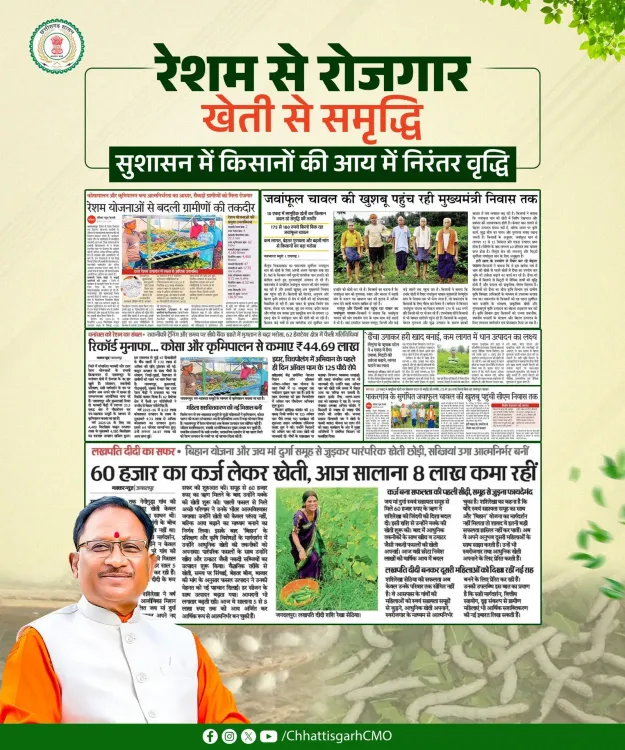
The Chief Minister's Office of Chhattisgarh on 22 July 2026 credited welfare schemes, new technology, and growing farm profits — including sericulture — with boosting farmer confidence, framing empowered cultivators as the foundation of a prosperous state.
Key Takeaways
The Chief Minister's Office of Chhattisgarh posted on 22 July 2026 citing improved farmer confidence under the state's governance framework.
The post highlighted welfare schemes, new agricultural technology, and rising profits — including from the silk industry — as key drivers.
The Rajiv Gandhi Kisan Nyay Yojana , launched in 2019 , has been a central instrument for direct income support to farmers in the state.
Sericulture has been promoted under Chhattisgarh's rural livelihood missions to diversify incomes beyond paddy cultivation.
The state's approach mirrors a broader central-Indian pattern of combining cash transfers with value-chain development to address rural distress.
Upcoming state economic survey data on silk cluster outputs and farmer income will be the key measure of progress.
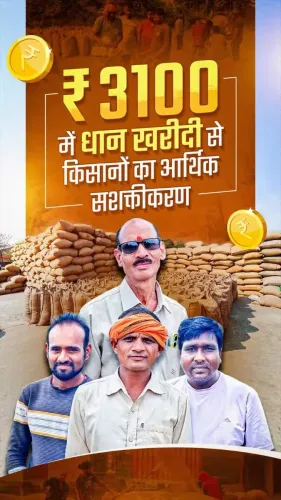
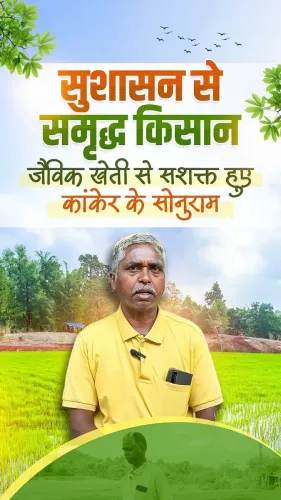
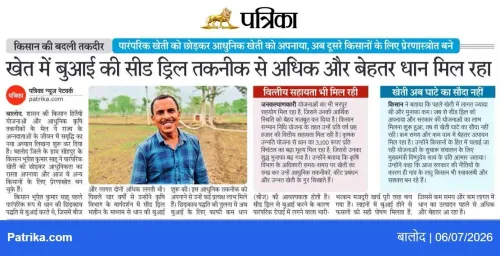
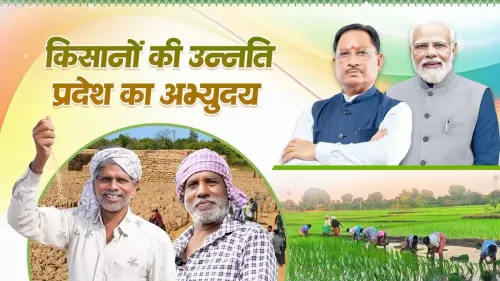
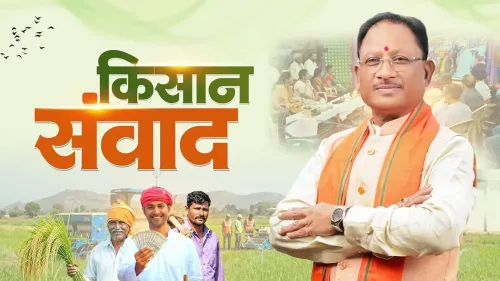
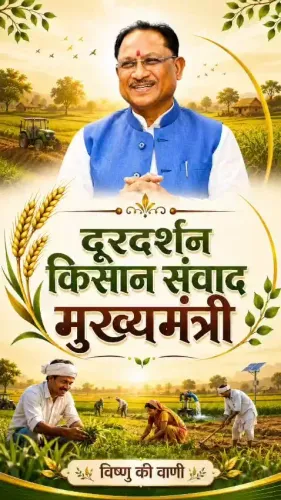
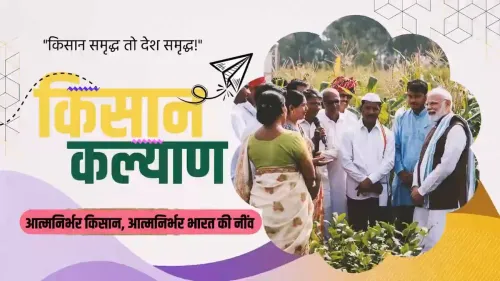
The Chief Minister's Office of Chhattisgarh on Wednesday, 22 July 2026 posted a message on X underscoring that welfare schemes, new technology, and rising agricultural profits under the Sushasan Sarkar (Good Governance Government) have brought visible confidence to the faces of farmers across the state.
The post, shared under the hashtags #KisanSamman, #AgriGrowth, #RuralEmpowerment, and #SilkIndustry, declared: 'Every farmer's face glows with self-confidence, driven by the welfare schemes of the good governance government, new technology, and growing profits in agriculture. Empowered farmers, prosperous state.'
Context
Chhattisgarh is a central Indian state where a large share of the population depends on agriculture and allied sectors for their livelihoods. Paddy cultivation has historically been the dominant crop, but rural households also rely on forest produce and, increasingly, sericulture as supplementary income sources. The CMO's post reflects an ongoing state narrative linking administrative performance with measurable improvements in farmer welfare and rural prosperity. The inclusion of the #SilkIndustry hashtag signals continued official emphasis on sericulture as a vehicle for rural income diversification, a focus that has featured in the state's rural livelihood programmes across successive plan periods.Policy Backdrop
Chhattisgarh has pursued a layered approach to farmer support that combines direct benefit transfers with technology dissemination and value-chain development. The Rajiv Gandhi Kisan Nyay Yojana, launched in 2019, became a flagship instrument for providing direct income support to cultivators through structured cash transfers tied to crop cultivation. Alongside income transfers, the state has promoted sericulture development under its rural livelihood missions, positioning silk production as a means to supplement paddy-based incomes for tribal and rural households. These dual tracks — financial support and livelihood diversification — form the backbone of the agricultural strategy the CMO's post references. State governments across central India have broadly mirrored this combination of cash transfers, technology outreach, and value-chain investments to address rural distress, making Chhattisgarh's approach part of a wider regional pattern rather than an isolated initiative.Stakeholders and Impact
The primary beneficiaries of these programmes are Chhattisgarh's farming households, particularly smallholder cultivators and tribal communities in districts where paddy and forest-based livelihoods intersect. Sericulture clusters have offered women and marginal farmers an entry point into non-farm income streams, widening the economic base beyond seasonal crop cycles. The state's emphasis on 'new technology' in the post points to ongoing efforts to extend digital agricultural advisory services, precision input management, and market-linkage platforms to rural producers — areas where adoption remains uneven but directionally positive according to state government accounts.What's Next
The immediate marker to watch will be the next state economic survey or agriculture budget chapter, which is expected to carry data on silk cluster outputs and farmer income trends. Such figures would either substantiate or qualify the confidence narrative projected by the CMO's messaging. Sustained growth in sericulture exports and continued disbursement under farmer income support schemes will be the clearest indicators of whether the stated prosperity is translating into verifiable economic outcomes for rural Chhattisgarh.Point of View
Positioning the ruling dispensation's agricultural programmes as visibly transformative at the grassroots level. The pairing of traditional income-support schemes with the emerging sericulture narrative suggests an effort to demonstrate economic diversification beyond paddy, a politically significant crop in Chhattisgarh. The 'empowered farmers, prosperous state' formulation is a standard electoral-cycle framing, signalling that farm welfare will remain central to the government's public identity. Whether the confidence narrative is borne out by independent income data will determine its durability as a political asset.
NationPress
22 Jul 2026
Frequently Asked Questions
What is the Sushasan Sarkar scheme in Chhattisgarh?
'Sushasan Sarkar' translates to 'Good Governance Government' and is the administrative identity the Chhattisgarh government has used to brand its welfare and development programmes, including those targeting farmers and rural households.
What is the Rajiv Gandhi Kisan Nyay Yojana?
The Rajiv Gandhi Kisan Nyay Yojana is a Chhattisgarh state scheme launched in 2019 that provides direct benefit transfers to farmers based on their crop cultivation, aimed at supplementing agricultural income.
How is Chhattisgarh promoting sericulture for farmers?
Chhattisgarh has included sericulture — silk production — under its rural livelihood missions to give tribal and marginal farmers an income source beyond paddy, with state support for cluster development and value-chain linkages.
Why did the Chhattisgarh CMO post about farmer confidence in July 2026?
The post is part of the state government's ongoing governance communication, highlighting the impact of welfare schemes, agricultural technology, and rural livelihood programmes on farmer wellbeing ahead of potential budget or policy announcements.
What crops and sectors does Chhattisgarh focus on for rural empowerment?
Chhattisgarh focuses primarily on paddy cultivation supported by direct income transfers, and has diversified into sericulture and technology-driven agriculture to broaden rural income sources and reduce dependence on a single crop.