Jaishankar Discusses India-Canada Ties With FM Anand
Synopsis
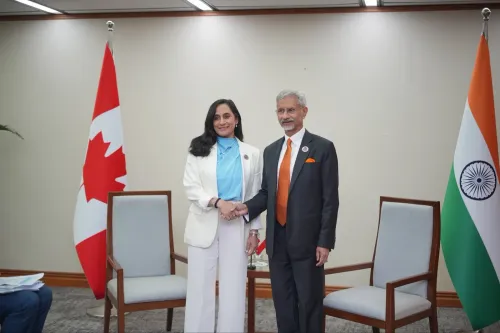
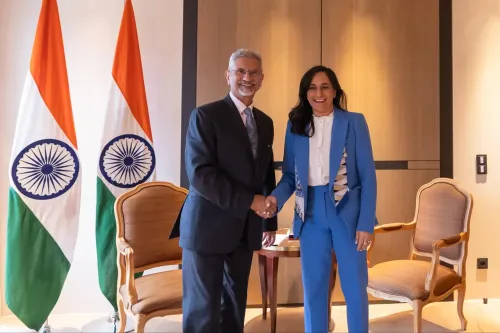
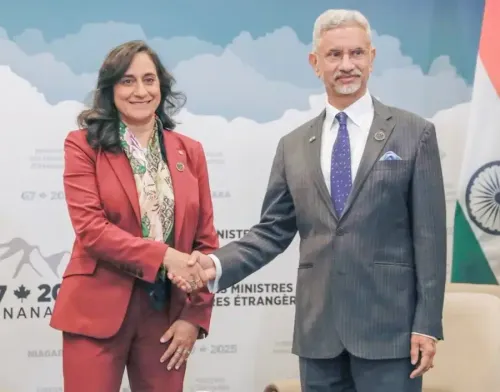
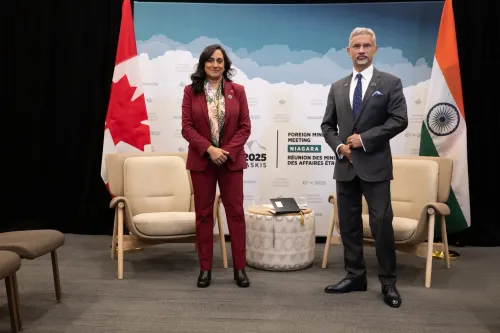
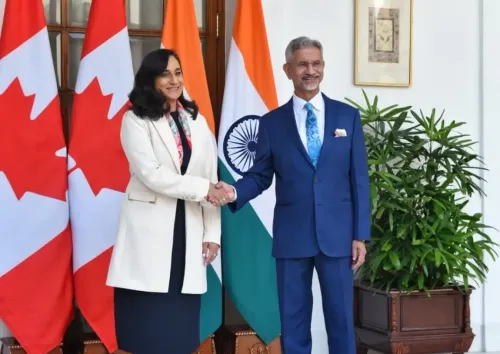
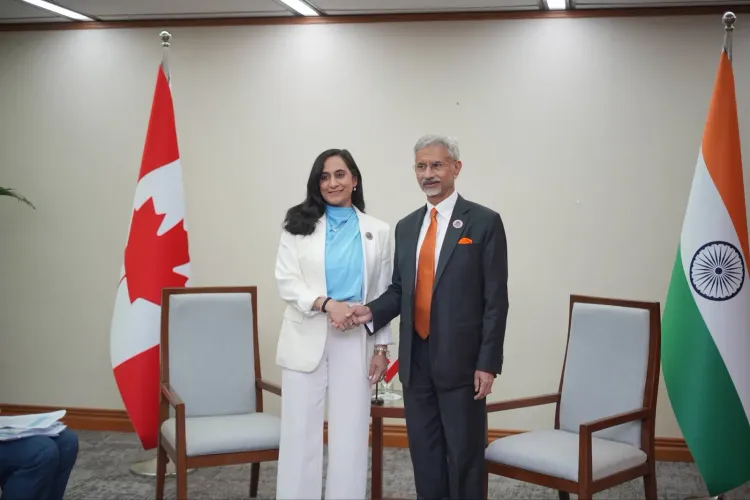
External Affairs Minister Dr. S. Jaishankar met Canadian FM Anita Anand on 22 July 2026, with talks centred on goals set by both nations' Prime Ministers as India-Canada cooperation continues to grow across trade, education and people-to-people ties.
Key Takeaways
Jaishankar held a bilateral discussion with Canadian Foreign Minister Anita Anand on 22 July 2026 .
Jaishankar described India-Canada cooperation as 'steadily growing' and said talks focused on PM-level goals.
India and Canada revived CEPA negotiations in 2022 after a hiatus, following the framework set during PM Modi 's 2015 Canada visit.
The Indian diaspora in Canada and bilateral trade negotiators are key stakeholders in the relationship's trajectory.
New Delhi is applying its structured, summit-driven diplomatic framework — used with the US, Japan and Australia — to its engagement with Ottawa .
Next milestones include progress on CEPA text and a potential leaders' meeting at a multilateral forum such as the G20 .
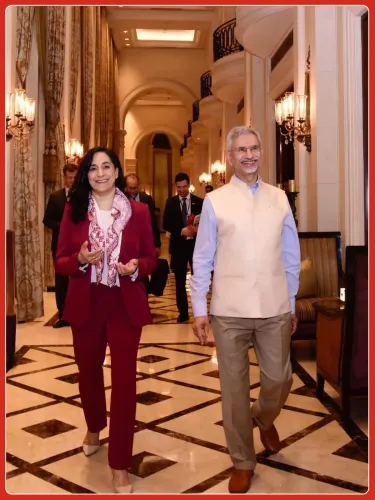
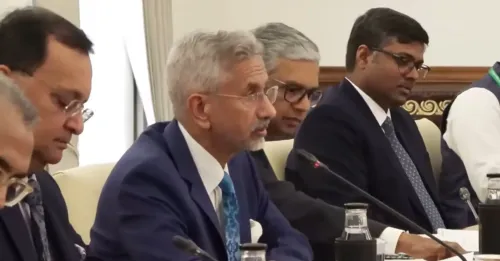
Union External Affairs Minister Dr. S. Jaishankar met with Canadian Foreign Minister Anita Anand on Wednesday, 22 July 2026, holding a focused bilateral discussion aimed at advancing the relationship between the two countries. Jaishankar described the conversation as productive, noting that India-Canada cooperation has been 'steadily growing' and that the talks centred on achieving goals set by the two nations' Prime Ministers.
Context
Posting on X, Dr. Jaishankar wrote: 'Appreciate the discussion with Canada FM @AnitaAnandMP this afternoon. India-Canada cooperation has been steadily growing. Our conversation focused on achieving the goals for the relationship set by our Prime Ministers.' The statement signals a structured, summit-driven approach to the bilateral relationship, consistent with how New Delhi manages ties with other major Western partners.
The reference to goals 'set by our Prime Ministers' anchors the current diplomatic engagement in a framework of leadership-level direction, rather than routine bureaucratic exchange. This framing elevates the meeting's significance and suggests both sides are working toward specific, pre-agreed benchmarks.
Policy Backdrop
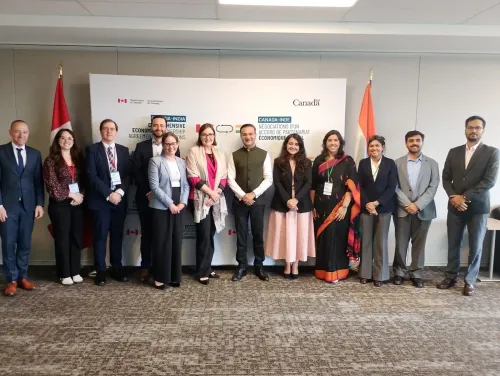
Prime Minister Narendra Modi visited Canada in April 2015, establishing the annual leaders' summit and directing officials to pursue a Comprehensive Economic Partnership Agreement (CEPA) between the two countries. Negotiations on the CEPA were revived in 2022 after a period of pause, reflecting renewed political will on both sides to deepen economic integration.
India and Canada share substantial people-to-people ties, anchored by one of the world's largest Indian diaspora communities settled in cities such as Toronto, Vancouver, and Brampton. Bilateral merchandise trade has grown incrementally in recent years, with Canadian investment flowing into Indian infrastructure and agri-food sectors alongside growing student mobility and clean technology cooperation.
Stakeholders and Impact
The Indian diaspora in Canada — numbering in the millions — stands as a primary stakeholder in the health of this bilateral relationship, with their interests spanning consular services, trade linkages, and educational pathways. Trade negotiators on both sides are closely watching progress on the CEPA text, which, if finalised, would be among India's most significant trade agreements with a G7 nation.
Indian students represent one of the largest foreign-student cohorts in Canada, making education policy and visa frameworks a sensitive and consequential dimension of the relationship. Any positive momentum from ministerial-level engagement tends to have downstream effects on processing timelines and bilateral mobility arrangements.
What's Next
Diplomatic observers will watch for concrete next steps on CEPA text finalisation and any scheduled interaction between the two Prime Ministers on the margins of multilateral forums such as the G20 or Commonwealth summit. The structured language used by Dr. Jaishankar — emphasising goals 'set by our Prime Ministers' — suggests both governments are calibrating the relationship at the highest level.
New Delhi's consistent emphasis on summit-driven frameworks with Washington, Tokyo, and Canberra is now visibly being applied to Ottawa as well, indicating that India views the Canada relationship as an integral part of its broader Western engagement strategy going forward.
Point of View
This meeting marks a visible effort to reset the relationship on a forward-looking, outcome-oriented basis. The timing, ahead of likely multilateral engagements later in 2026, suggests both sides are building toward a substantive leaders' interaction. For New Delhi, deepening ties with Ottawa fits squarely within its broader strategy of trade diversification and engagement with G7 democracies.
NationPress
22 Jul 2026
Frequently Asked Questions
Why did Jaishankar meet Canada's Foreign Minister Anita Anand?
Dr. S. Jaishankar met Canadian FM Anita Anand on 22 July 2026 to advance goals for the India-Canada relationship set by the two countries' Prime Ministers, covering areas of growing bilateral cooperation.
What is the current state of India-Canada relations in 2026?
India-Canada cooperation has been described as 'steadily growing,' with both sides pursuing a Comprehensive Economic Partnership Agreement (CEPA), expanding trade, and deepening people-to-people ties through education and diaspora linkages.
What is the India-Canada CEPA?
The Comprehensive Economic Partnership Agreement (CEPA) is a proposed free trade deal between India and Canada. Negotiations were revived in 2022 after a pause, following the framework established during PM Modi's April 2015 visit to Canada.
How large is the Indian diaspora in Canada?
The Indian diaspora in Canada numbers in the millions and is concentrated in cities such as Toronto, Vancouver, and Brampton, making it one of the largest Indian communities outside India and a key stakeholder in bilateral relations.
What are the next steps for India-Canada ties after this meeting?
Diplomatic observers are watching for progress on CEPA text finalisation and a potential meeting between the Indian and Canadian Prime Ministers on the sidelines of multilateral forums like the G20 or Commonwealth summit.