Chhattisgarh CMO highlights labour welfare scheme in Mahasamund
Synopsis
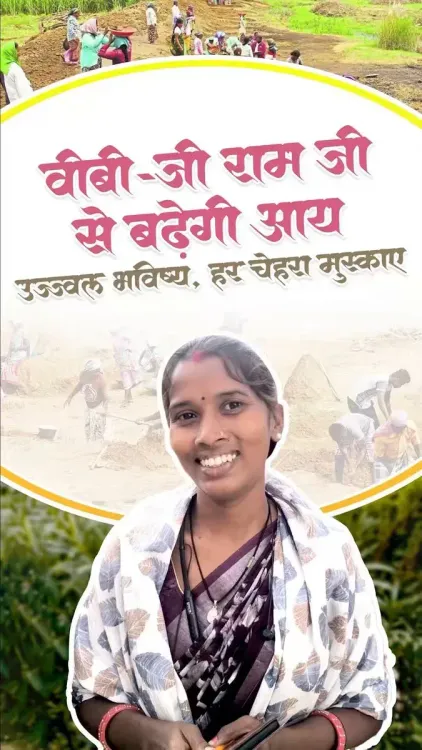
The Chhattisgarh CMO on 7 July 2026 amplified a statement from Smt. Anita Manikpuri of Mahasamund, backing a welfare scheme she says will give new strength to the livelihoods of rural labour families in the district.
Key Takeaways
The Chief Minister's Office of Chhattisgarh posted the statement on 7 July 2026 .
Anita Manikpuri of Mahasamund stated the scheme will give 'new wings to the dreams of labour families and new strength to their livelihoods.' The post was tagged under #RuralEmployment , #LabourWelfare , and #GoodGovernance , reflecting the state's welfare messaging priorities.
Mahasamund district is a key implementation site for rural employment and labour welfare programmes in Chhattisgarh.
Chhattisgarh has a long history of supplementing MGNREGA with state-specific livelihood schemes targeting agricultural and daily-wage workers.
The Chief Minister's Office of Chhattisgarh on Tuesday, 7 July 2026 shared a statement from Smt. Anita Manikpuri of Mahasamund, underscoring a welfare scheme aimed at strengthening the livelihoods of labour families in the district.
Context
The post quotes Smt. Anita Manikpuri, identified as being from Mahasamund, as saying: 'Yah yojana shramik parivaron ke sapnon ko nayi udaan aur aajivika ko nayi mazbooti degi.' ('This scheme will give new wings to the dreams of labour families and new strength to their livelihoods.') The statement was amplified by the official CMO handle under hashtags including #RuralEmployment, #LabourWelfare, and #GoodGovernance, signalling the state government's intent to associate the initiative with its broader welfare agenda.
Policy Backdrop
Chhattisgarh, a central Indian state formed in 2000, has a large rural and tribal population that depends heavily on agricultural and manual labour. The state has consistently supplemented the Mahatma Gandhi National Rural Employment Guarantee Act (MGNREGA) — which guarantees up to 100 days of wage employment to rural households — with state-specific livelihood and labour welfare schemes.
These state-level initiatives have historically targeted seasonal migration, household income stability, and skill development among non-urban workers. Mahasamund district has been a frequent site for the implementation and public outreach of such programmes, reflecting the region's demographic profile of agricultural and daily-wage labourers.
Stakeholders and Impact
The primary beneficiaries of such schemes are rural labour families and agricultural workers in Mahasamund and surrounding areas. For these households, supplementary employment and livelihood support can directly affect income levels, reduce dependence on seasonal migration, and improve economic stability.
The CMO's decision to amplify the statement through its official channel suggests the scheme is being positioned as a flagship welfare delivery effort at the district level, with the government using social media to communicate impact and reach directly to citizens.
What's Next
Observers will look to district-level rollout data from Mahasamund to assess the scheme's measurable impact on household earnings and migration patterns. Beneficiary feedback and enrolment numbers are expected to be the key metrics by which the initiative's success will be evaluated in the months ahead. The government's continued social media engagement on the subject indicates that further updates on implementation progress are likely.
Point of View
A vote-bank that has been central to electoral outcomes in the state. The hashtag cluster, combining rural employment with good governance, signals an effort to link administrative performance with political messaging ahead of any future electoral cycle. Whether the scheme delivers measurable outcomes will depend on district-level execution, which remains the persistent weak link in India's rural welfare architecture.
NationPress
7 Jul 2026
Frequently Asked Questions
What did the Chhattisgarh CMO post about on 7 July 2026?
The Chhattisgarh CMO shared a statement from Smt. Anita Manikpuri of Mahasamund, saying a welfare scheme will give new strength to the livelihoods of rural labour families in the district.
Who is Anita Manikpuri from Mahasamund?
Smt. Anita Manikpuri is identified in the CMO post as being from Mahasamund district in Chhattisgarh. Her exact official role has not been independently confirmed in available public records.
What is the labour welfare scheme mentioned by the Chhattisgarh CMO?
The specific name and launch date of the scheme were not mentioned in the post. It was referred to in general terms as a scheme to benefit rural labour families in Mahasamund.
How does Chhattisgarh support rural labour families?
Chhattisgarh implements the central government's MGNREGA, which guarantees up to 100 days of wage employment to rural households, and has historically supplemented it with state-specific livelihood and labour welfare schemes.
Why is Mahasamund significant for rural employment schemes in Chhattisgarh?
Mahasamund is a district with a large agricultural and daily-wage labour population, making it a frequent site for the implementation and public outreach of rural employment and welfare programmes in the state.