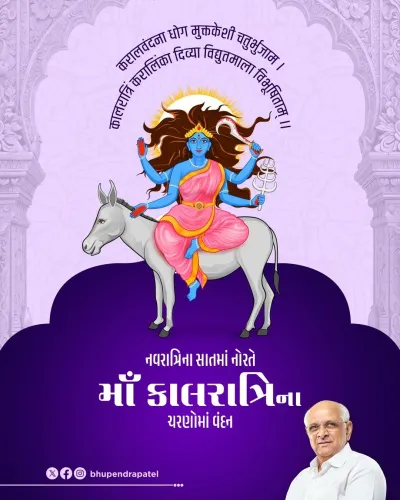
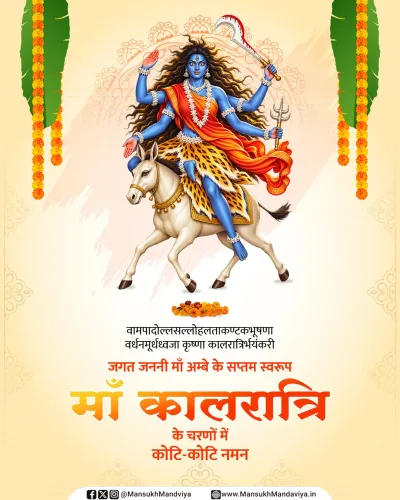
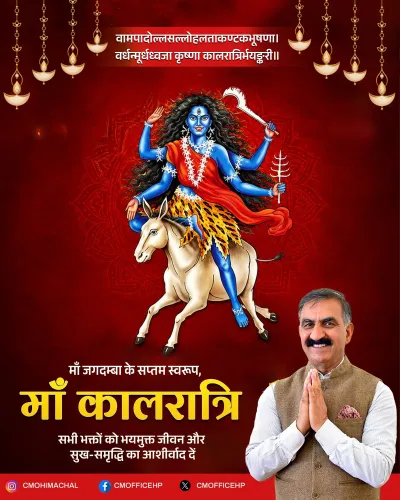
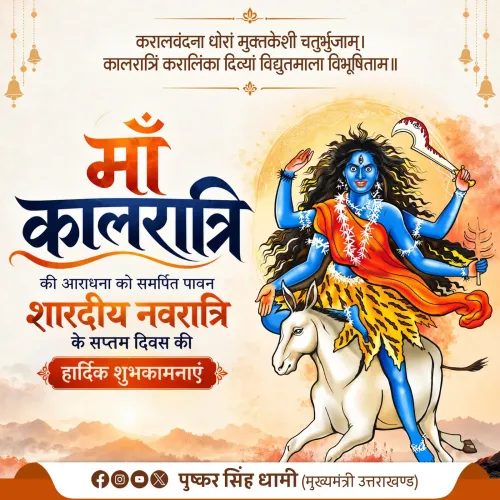
Chhattisgarh CMO marks Navratri Day 7 with Maa Kalaratri tribute
Synopsis
The Chief Minister's Office of Chhattisgarh greeted citizens on Navratri's seventh day by honouring Maa Kalaratri, the fierce destroyer of fear and ignorance, praying for prosperity and peace across the state.
Key Takeaways
The Chhattisgarh CMO posted devotional greetings for Maa Kalaratri on 17 October 2026 , the seventh day of Sharadiya Navratri.
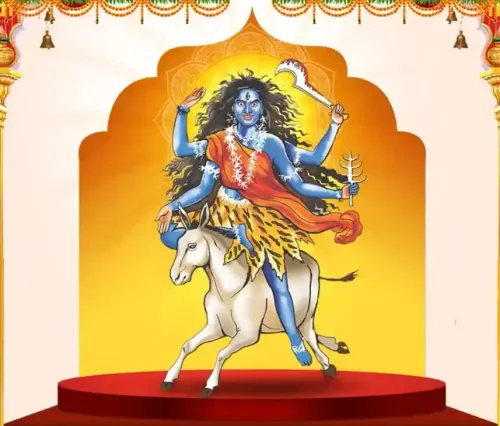
Maa Kalaratri is the seventh of nine forms of Goddess Durga, associated with the destruction of fear, ignorance, and unrighteousness.
The message prayed for prosperity, peace, and positivity in the lives of all citizens.
State-specific hashtag #CGNavratri2026 and cultural tag #महतारी_का_सम्मान were used, reflecting a local identity around the national festival.
Indian state governments routinely issue such messages during major festivals to connect official governance with cultural occasions.
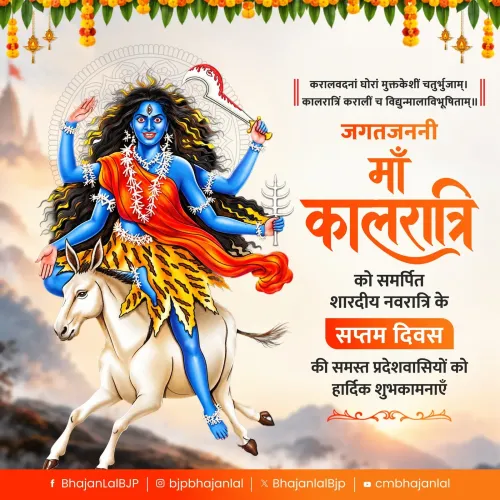
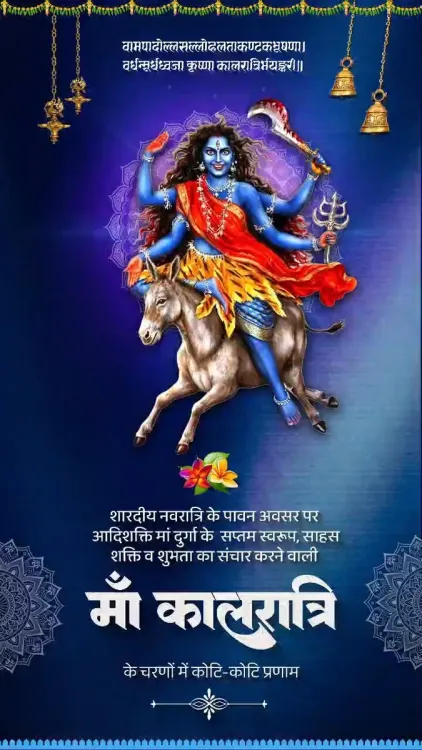
On the seventh day of Sharadiya Navratri 2026, the Chief Minister's Office of Chhattisgarh offered its reverence to Maa Kalaratri — the fierce, fearless seventh form of Goddess Durga — with a prayer for prosperity, peace, and positivity for every resident of the state.
The official post, shared on Saturday, 17 October 2026, invoked the Sanskrit salutation ॐ कालरात्र्यै नम: ('Om, salutations to Kalaratri') and described the deity as the destroyer of fear, ignorance, and unrighteousness. The message read: 'On the auspicious occasion of Sharadiya Navratri, we offer crores of salutations at the feet of Maa Kalaratri, the seventh form of Maa Durga, who annihilates fear, ignorance and adharma. May the blessings of Mata Rani bring prosperity, peace and positivity into everyone's life — this is our prayer.'
Who is Maa Kalaratri?
In the nine-day Navratri cycle, each night is devoted to a distinct avatar of the goddess. Maa Kalaratri — dark-complexioned, fierce, and radiant — is traditionally propitiated on the seventh night. Devotees believe she dissolves deep-seated fears and dispels the darkness of ignorance, making her among the most spiritually potent of Durga's nine forms. The hashtag #महतारी_का_सम्मान (honour for the mother) used in the post also echoes the state government's ongoing cultural emphasis on the reverence of the feminine.
State governments and festival outreach
It has become standard practice for Indian state administrations to mark major Hindu festivals on official social-media channels — a way of connecting government to the cultural pulse of their populations. Chhattisgarh's CMO post, carrying the state-specific tag #CGNavratri2026, reflects that tradition while reinforcing a local identity around pan-Indian observance. With Navratri celebrations spread across temples, community pandals, and homes throughout the state, such messages from the seat of government carry both ceremonial and civic weight.
As the festival moves into its final two nights, the attention of devotees in Chhattisgarh — and across India — will turn to the eighth and ninth forms of Durga, with the grand conclusion of Navami marking the ritual close of the season.
Point of View
Even ceremonial posts carry a subtle policy-cultural resonance. Such outreach normalises government presence in the devotional calendar, blurring the line between civic communication and cultural participation.
NationPress
17 Oct 2026
Frequently Asked Questions
Who is Maa Kalaratri and why is she worshipped on the seventh day of Navratri?
Maa Kalaratri is the seventh of nine forms of Goddess Durga, believed to destroy fear, ignorance, and evil. She is traditionally worshipped on the seventh night of Navratri, a night considered especially powerful for spiritual protection.
What did the Chhattisgarh CMO post for Navratri 2026?
The Chief Minister's Office of Chhattisgarh posted a devotional message on 17 October 2026 offering salutations to Maa Kalaratri and praying for prosperity, peace, and positivity for all citizens on the seventh day of Sharadiya Navratri.
What is Sharadiya Navratri?
Sharadiya Navratri is the autumn edition of the nine-night Hindu festival dedicated to Goddess Durga, celebrated across India typically in September or October. Each of the nine days honours a different form of the goddess.
What does the hashtag #महतारी_का_सम्मान mean?
#महतारी_का_सम्मान translates to 'honour for the mother' in Hindi/Chhattisgarhi. It reflects the Chhattisgarh government's cultural emphasis on reverence for the feminine, which also aligns with the state's welfare branding around the word 'Mahtari' (mother).
Do Indian state governments officially observe Navratri?
Yes, it is common practice for Indian state governments to post religious greetings on official social-media handles during major festivals like Navratri, Diwali, and Eid to mark cultural occasions and engage with citizens.