Chhattisgarh CMO pays tribute to martyr Ram Prasad Bismil
Synopsis
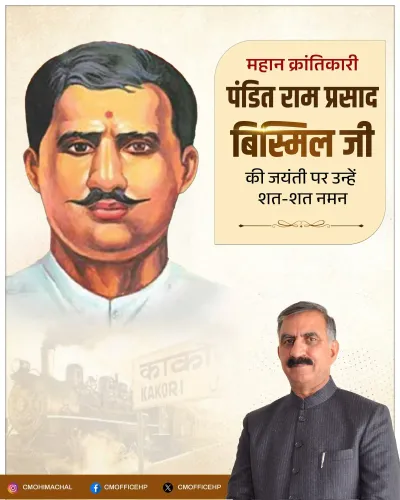
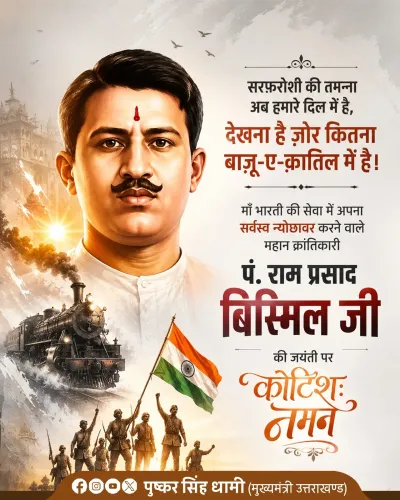
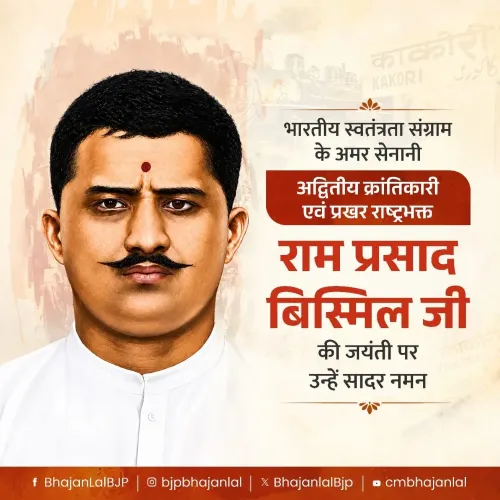
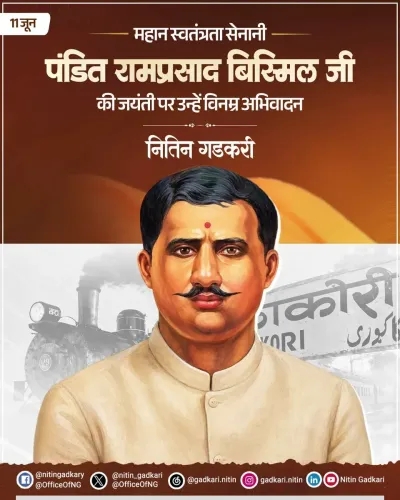
The Chief Minister's Office of Chhattisgarh on 11 June 2026 paid homage to revolutionary freedom fighter Ram Prasad Bismil on his birth anniversary, joining a long-standing national tradition of officially commemorating armed revolutionaries of India's independence movement.
Key Takeaways
The Chhattisgarh CMO posted an official tribute to Ram Prasad Bismil on 11 June 2026 , his birth anniversary.
Bismil was born on 11 June 1897 in Shahjahanpur and was a leading armed revolutionary of the Indian independence movement.
He was a key figure in the Kakori train robbery of 1925 and was executed by the British on 19 December 1927 in Gorakhpur .
Indian state governments have marked Bismil's anniversary annually since 1947 as part of official freedom-struggle commemorations.
The tribute reflects a broader pattern since the 2010s of official emphasis on militant nationalists in state memory and public discourse.
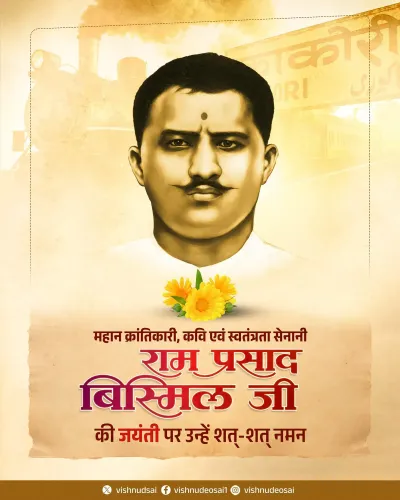
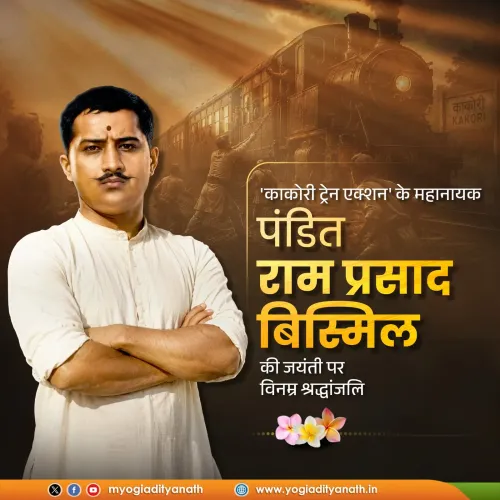
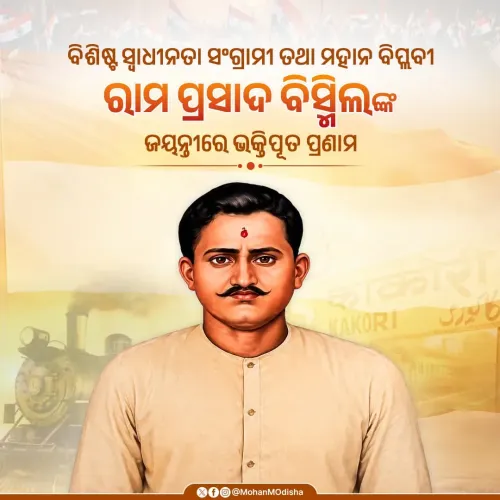
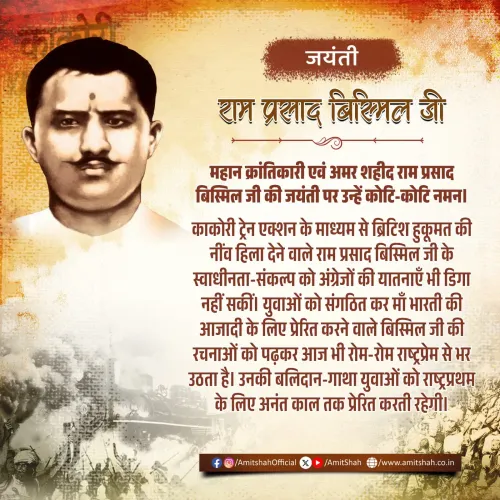
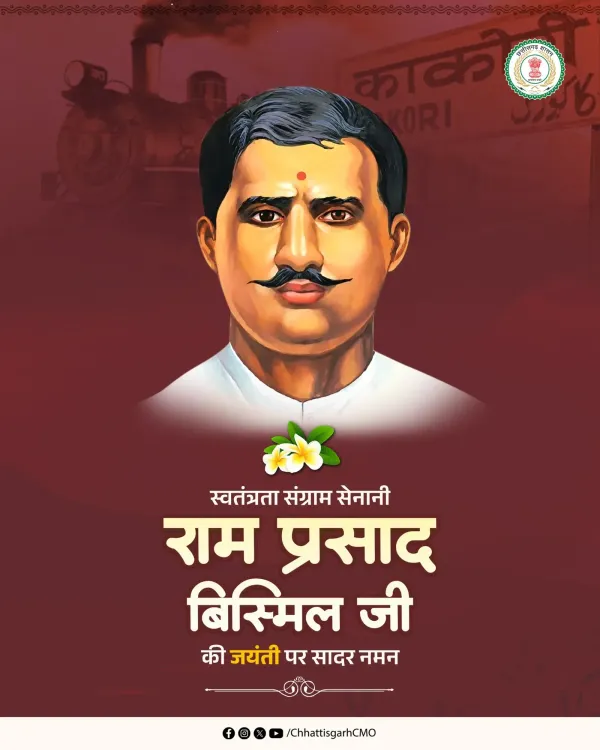
The Chief Minister's Office of Chhattisgarh on Thursday, 11 June 2026 paid homage to revolutionary freedom fighter Ram Prasad Bismil on his birth anniversary, offering tribute through an official post on X.
The post reads: 'Mahan swatantrata sangram senani, amar shaheed Ram Prasad Bismil ji ki jayanti par unhe shat-shat naman' — ('Heartfelt salutations to the great freedom fighter and immortal martyr Ram Prasad Bismil on his birth anniversary.')
Context
Ram Prasad Bismil was born on 11 June 1897 in Shahjahanpur, in present-day Uttar Pradesh. He became one of the most prominent armed revolutionaries of India's independence movement, known for his fierce opposition to British colonial rule and his literary contributions to Hindi and Urdu poetry. Bismil is perhaps best remembered for his central role in the Kakori train robbery of 1925, in which a group of revolutionaries looted a British government train in Kakori, Uttar Pradesh, to fund the independence movement. He was subsequently arrested, tried, and executed by the British administration on 19 December 1927 at Gorakhpur jail, at the age of 30.Policy Backdrop
Since independence in 1947, both central and state governments across India have observed the birth and death anniversaries of armed revolutionaries as part of official historical commemoration. These observances are intended to highlight the full spectrum of the freedom struggle, including its militant nationalist strand, alongside the more widely taught non-violent movement. Since the 2010s, there has been a discernible increase in official emphasis on figures like Bismil, as administrations at various levels have sought to foreground revolutionary nationalists in state memory and public education. The digital presence of state Chief Ministers' Offices on social media platforms has made such tributes a standard part of official communication calendars.Stakeholders and Impact
Such official tributes carry symbolic weight for Indian citizens, particularly students and those engaged with the history of the independence movement. By publicly commemorating Bismil, the Chhattisgarh CMO reinforces the state government's alignment with national historical narratives that honour the sacrifices of armed revolutionaries. Bismil's legacy also extends beyond politics — his poetry, including the iconic lines associated with the phrase 'Sarfaroshi ki tamanna' ('the desire for self-sacrifice'), remains widely recited and continues to inspire cultural and educational discourse across India.What's Next
Official tributes of this nature are expected to continue annually on 11 June from state governments and central institutions alike. Any state-level memorial events, educational programmes, or cultural functions in Chhattisgarh tied to Bismil's legacy would represent a deepening of such commemorations beyond the digital sphere. The broader pattern of state CMOs engaging with revolutionary history on social media is likely to persist as administrations seek to connect regional governance with national historical identity.Point of View
A trend that has gathered momentum across administrations since the 2010s. For a state like Chhattisgarh, with no direct historical connection to Bismil, the post underscores how national revolutionary icons have become common cultural currency for regional governments. The consistency of these tributes across party lines suggests they function as low-cost, high-resonance acts of institutional patriotism.
NationPress
25 Oct 2026
Frequently Asked Questions
Who was Ram Prasad Bismil?
Ram Prasad Bismil was a revolutionary Indian freedom fighter born on 11 June 1897 in Shahjahanpur, Uttar Pradesh. He was a key organiser of the Kakori train robbery of 1925 and was executed by the British in 1927.
Why is Ram Prasad Bismil remembered?
Bismil is remembered for his armed resistance to British colonial rule, his role in the Kakori train robbery, and his Hindi and Urdu poetry, including verses associated with 'Sarfaroshi ki tamanna.'
When was Ram Prasad Bismil executed?
Ram Prasad Bismil was executed on 19 December 1927 at Gorakhpur jail by the British colonial administration, at the age of 30.
Why did the Chhattisgarh CMO pay tribute to Bismil?
The Chhattisgarh CMO paid tribute on Bismil's birth anniversary, 11 June, as part of a long-standing official practice by Indian state governments to commemorate armed revolutionaries of the independence movement.
What was the Kakori train robbery?
The Kakori train robbery was a 1925 operation in which Ram Prasad Bismil and fellow revolutionaries looted a British government train in Kakori, Uttar Pradesh, to fund the Indian independence movement.